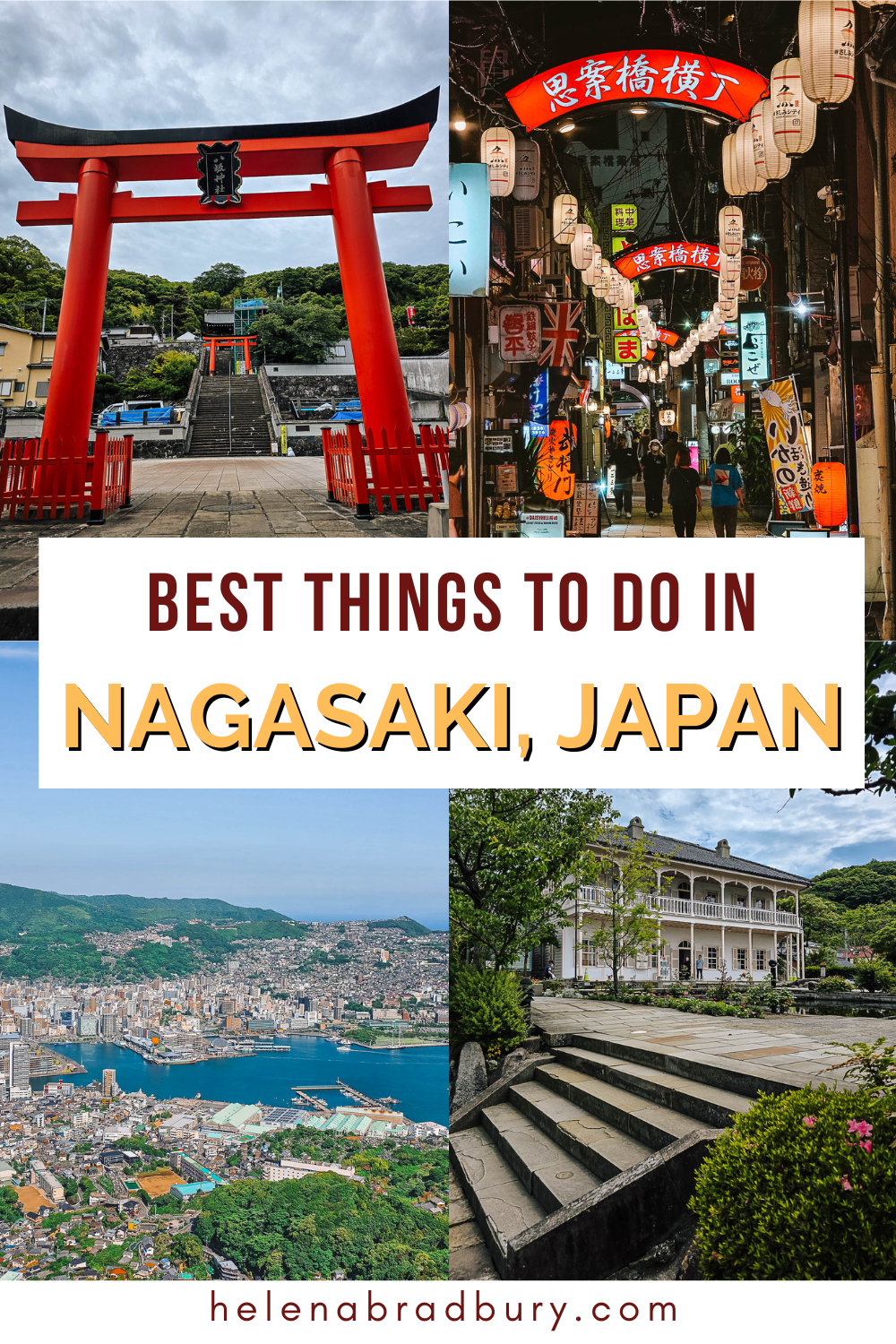
I think a Nagasaki 2 day itinerary is a great amount of time to see the main things that the city has to offer, however I could easily have spent an extra day or two here to see everything else there is to see, including a day trip from Nagasaki.
I also could have easily spent a week exploring more of Nagasaki prefecture, but we were on a time crunch so a two day itinerary in Nagasaki was all that was on the cards.
And honestly? I think it’s in my top 3 favourite cities in Japan after Tokyo and Sapporo.
I also love how underrated Nagasaki is. Don't get me wrong, a lot of people have heard of the city, but its geographical location in the south of Japan means it is a lot less visited than other major cities in Japan.
So what makes Nagasaki so great? What are the best things to do in Nagasaki, Japan?
I'm going to share my exact 2 day Nagasaki itinerary, I stayed the night before (so 3 nights total) so I had a full 2 days for this itinerary - let's get into it.
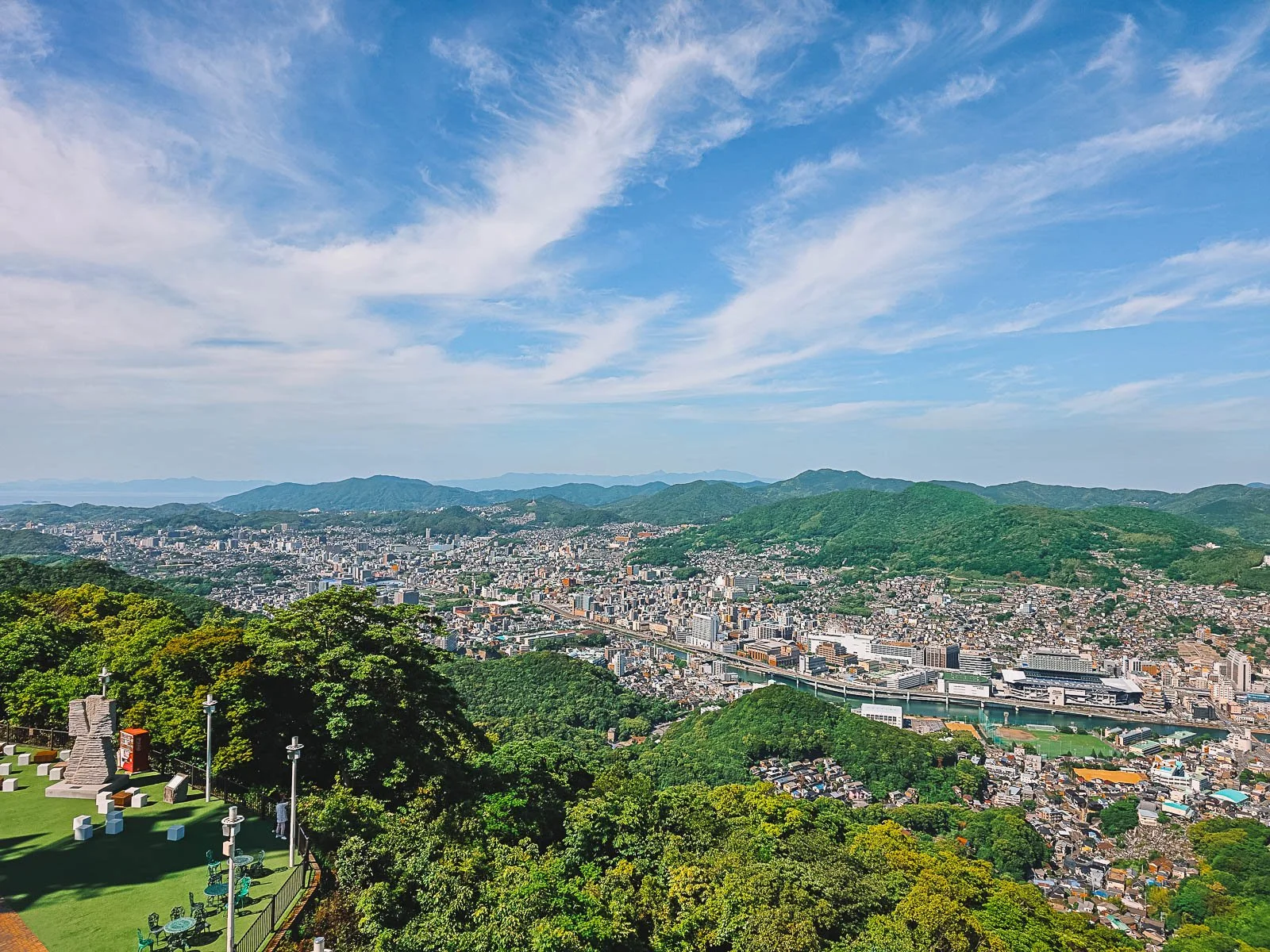
Nagasaki City
Disclosure: This post may contain affiliate links, which means I may receive a commission if you click a link and purchase something. While clicking these links won't cost you anything, they will help me to keep this site up and running! Check out the full disclosure policy for more details. Thank you so much!
How to get to Nagasaki
How to get to Nagasaki city totally depends where you’re coming from.
If you’re elsewhere in Japan on Honshu island which includes Tokyo or Osaka, or if you’re in Hokkaido or Okinawa then the easiest and most direct way to get to Nagasaki is to fly. Domestic flights in Japan are pretty affordable and a super easy way to get around.
However if you’re planning on driving around Kyushu like we did, then driving to Nagasaki is easy too. It’s about 2 hours drive from Fukuoka which is how we got to Nagasaki. Our international flights were in and out of Fukuoka so this was our easiest option for returning the car rental too.
We used Klook car rental as we found that Klook has local car rental agencies listed which are much more affordable than the big global car rental companies.
You could also take the Shinkansen, although there isn’t a direct train from Tokyo or Osaka. You’d need to take the Nishi-Kyushu Shinkansen or Tokaido Shinkansen to Fukuoka and then change to the Relay Kamome Limited Express at Fukuoka Hakata Station. This takes you to Takeo-Onsen station where the new Shinkansen line to Nagasaki starts from and you take the Nishi-Kyushu Shinkansen from there to Nagasaki Train Station.
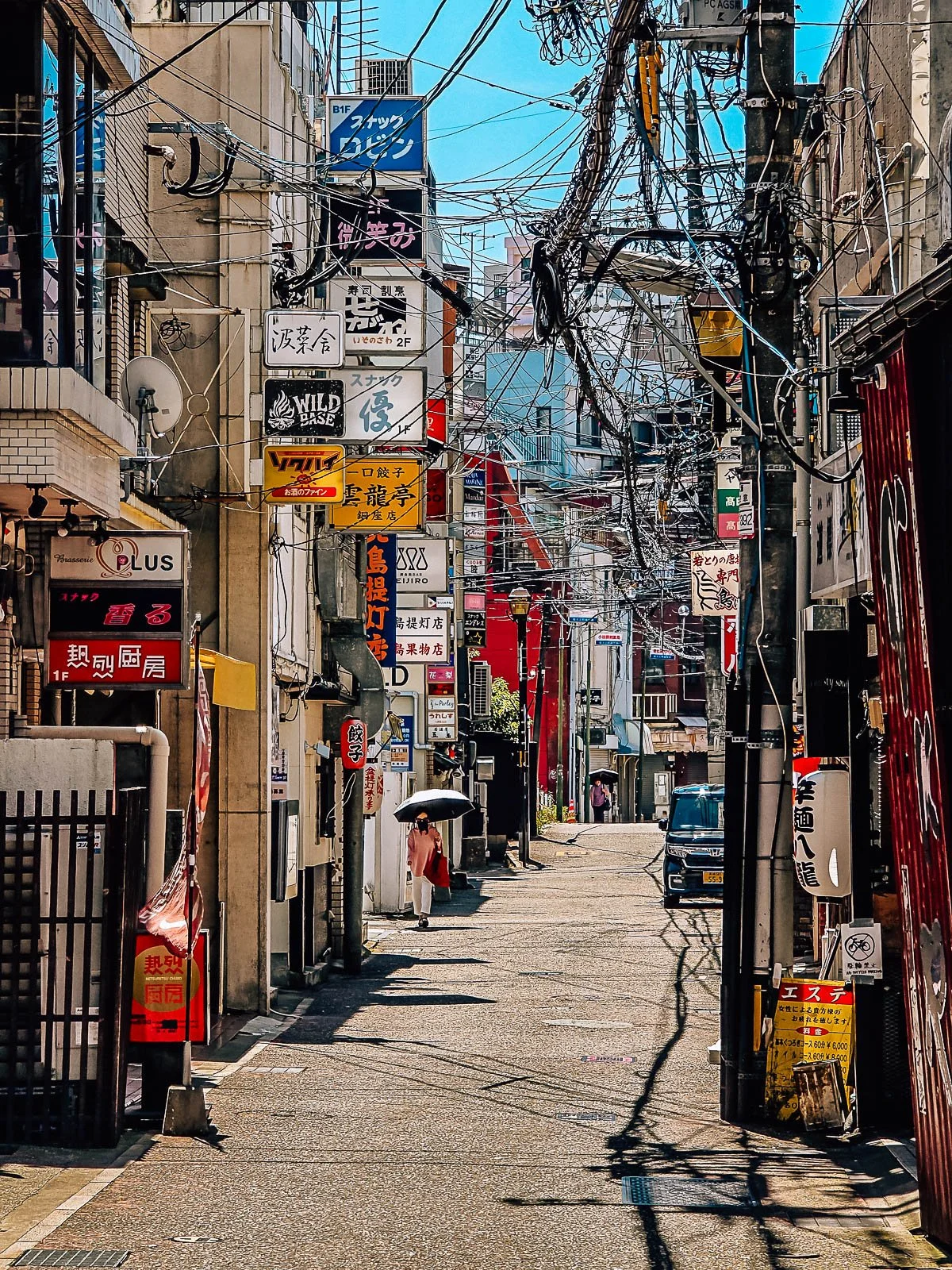
Nagasaki downtown street
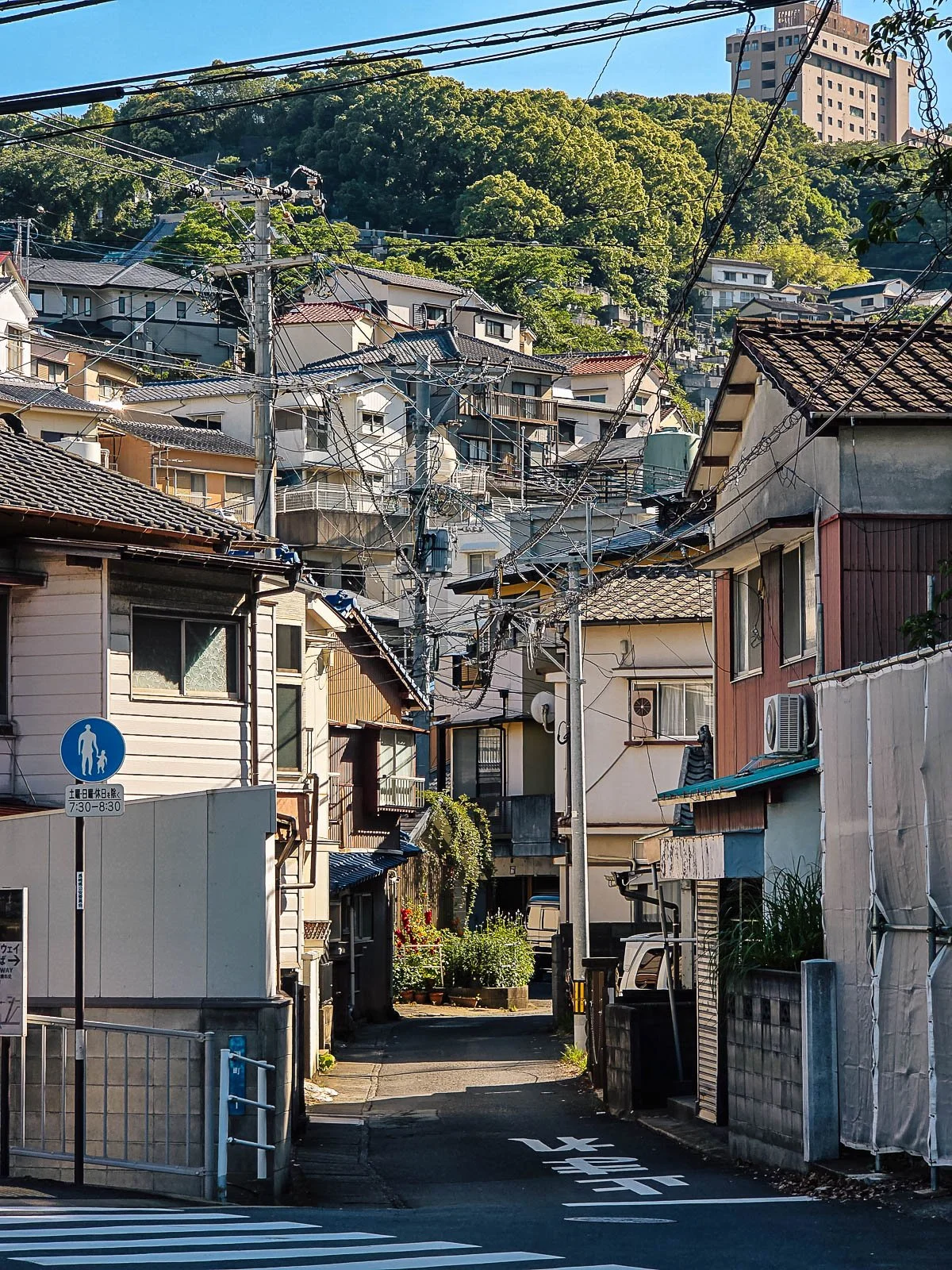
Nagasaki residential street
Where to stay in Nagasaki, Japan
We were fairly limited with our choice as we ended up swapping our Kyushu itinerary last minute and moving our 2 days in Nagasaki earlier. So we drove directly from Fukuoka to Nagasaki which took 2 hours.
We stayed at Hotel Forza Nagasaki which was perfectly located in the centre of Nagasaki, on the edge of Chinatown and close to so many restaurants as well as the tram stop to get around the city.
The famous Ramen Hiiragi is just across the road, you can easily explore the oldest Chinatown in Japan and transport from here all over the city is so easy - we honestly lucked out with this location!
We also needed parking for the car and while there isn’t parking at the hotel, there is a secure car park nearby.
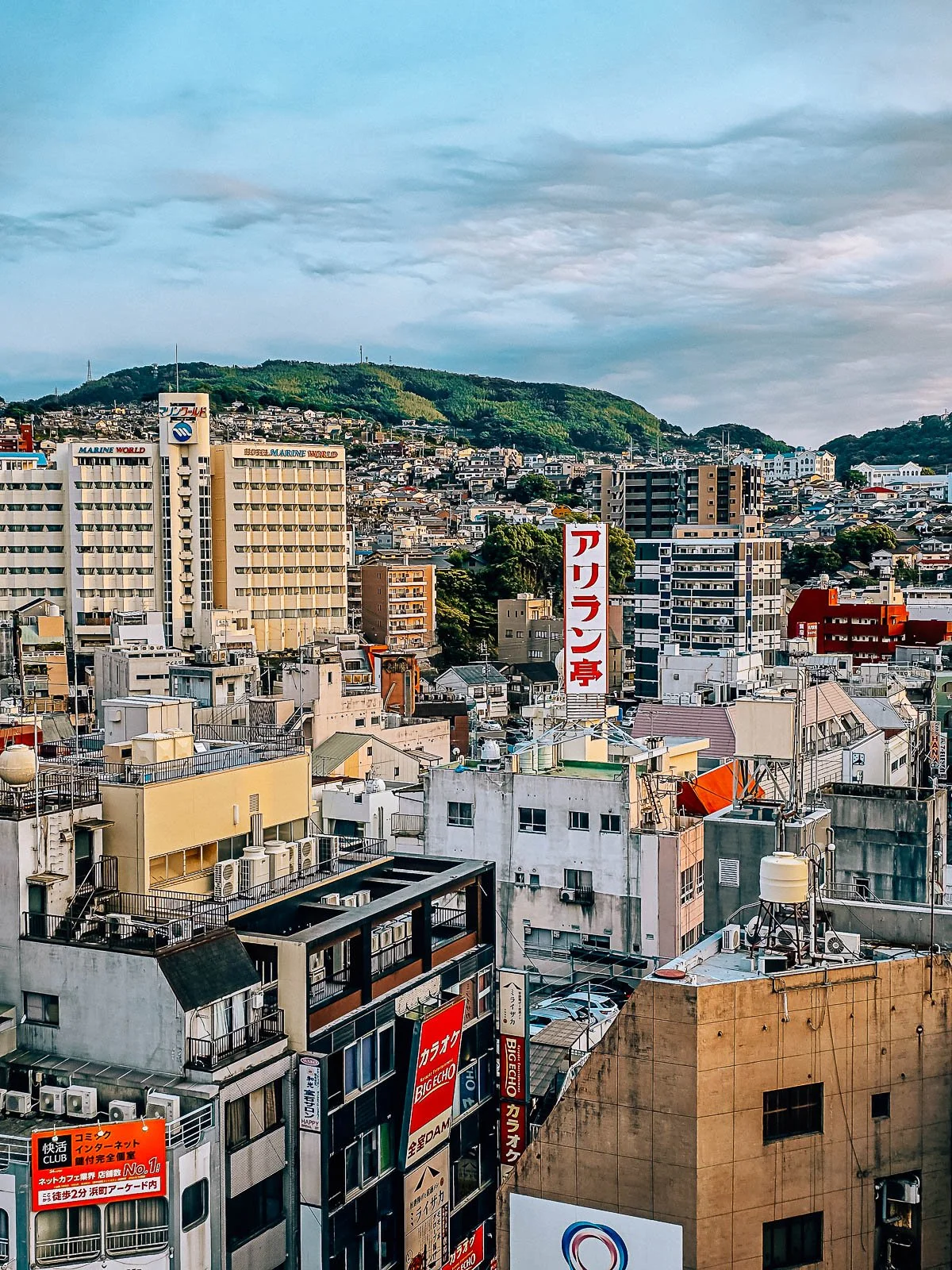
View from our hotel room in Nagasaki
How to get around Nagasaki
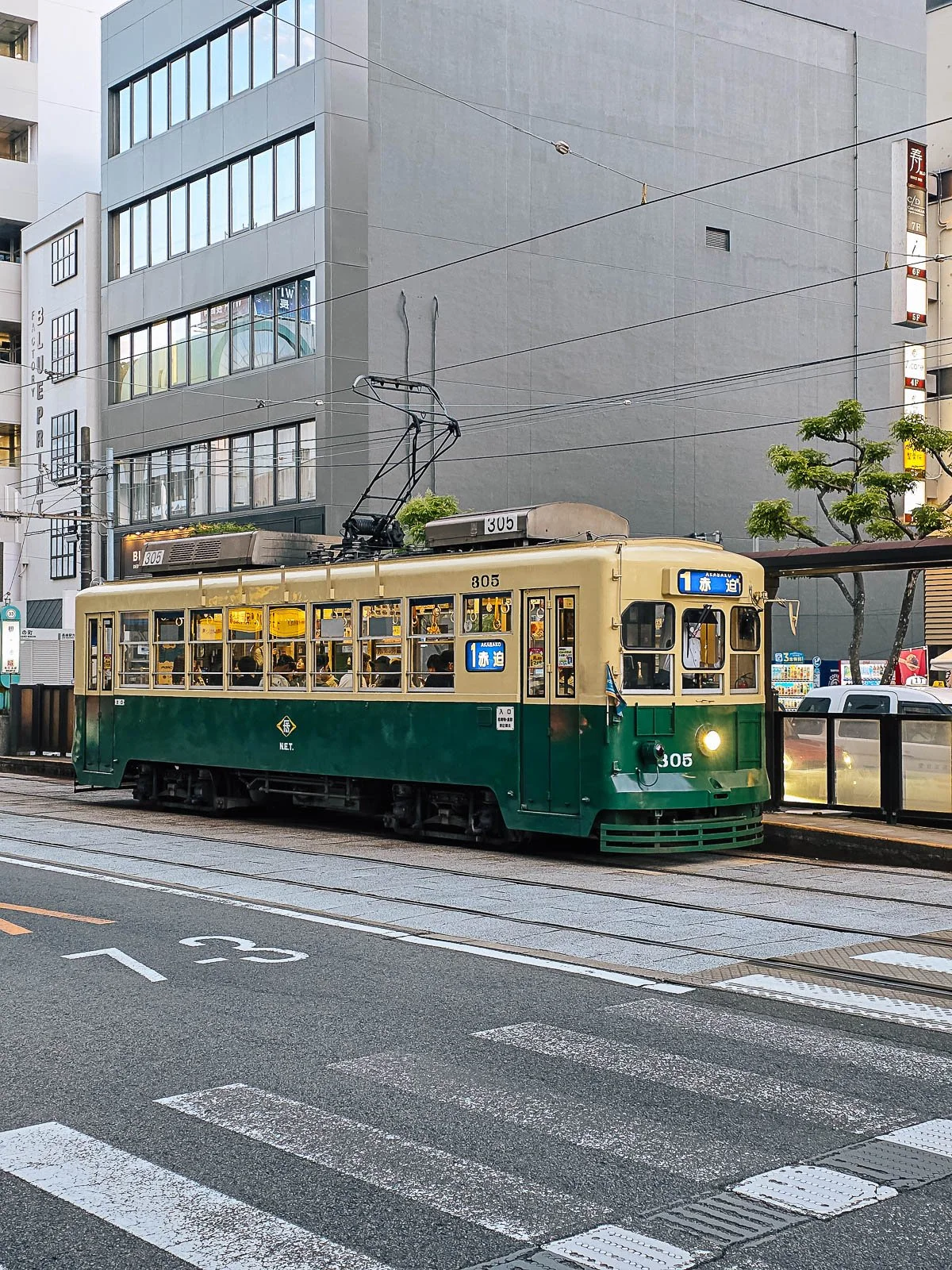
Nagasaki tram
We either walked or took the tram everywhere in Nagasaki city.
The charming, original trams are so fun to see in the city and of course to ride on! And several stops for the main tram lines were outside our hotel.
Tourists can buy a One Day Pass for the trams which cost 600 yen per day and are the easiest way to get around the city for sightseeing. These cannot be purchased onboard the tram, instead you can purchase them from Tourist Information points.
Alternatively it is 150 yen per single ride on the tram. We mostly ended up doing this as we we’re sure how much we would ride in a day (it probably worked out similar to the day pass cost). And we always have so much spare coin change when we travel in Japan!
To ride the tram in Nagasaki, make sure you have the exact 150 yen in change to drop in the coin machine when you board the tram.
The Atomic Bomb Museum and Nagasaki Peace Park are a bit further from the city centre so you’ll definitely need to take the tram to reach those.
We just used Google Maps to navigate between stops and figure out which tram to take - this worked really well for us and all times are very accurate.
Day 1 Nagasaki itinerary: The best things to do in Nagasaki, Japan
Nagasaki Atomic Bomb Museum
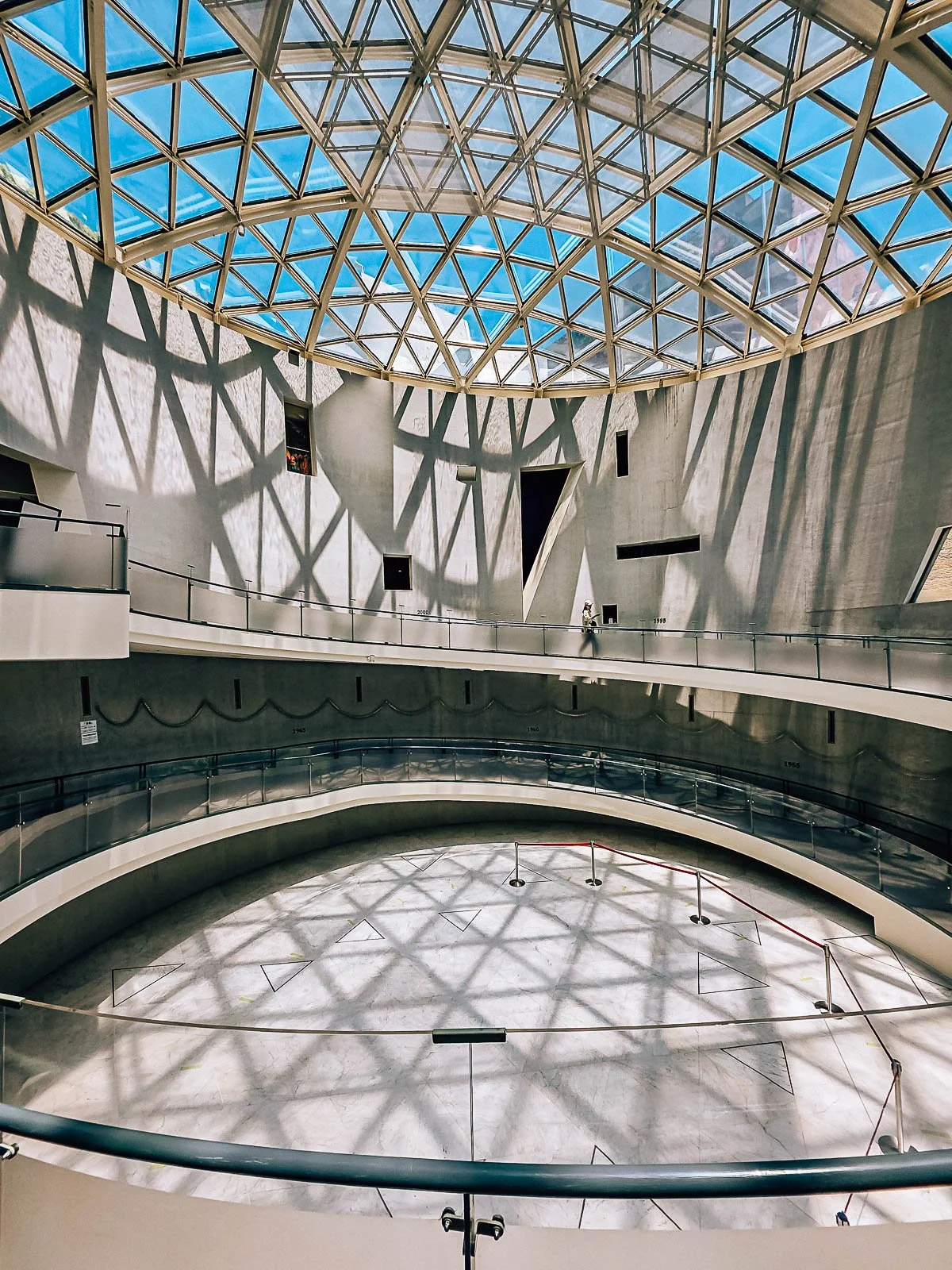
The atrium inside the Nagasaki Atomic Bomb Museum
All I can say is that you can't visit Nagasaki without visiting the Atomic Bomb Museum. Yes, it’s a very heavy experience but I think it’s a must-do during your visit to Nagasaki.
Most people travelling in Japan go to Hiroshima to learn about the Atomic Bombs dropped on Japan; being located in the very south of Japan's main islands means that Nagasaki is generally a lot less visited than Hiroshima, but that doesn't make the Museum, the memorials or the stories any less harrowing to learn about.
The Nagasaki Atomic Bomb Museum is incredibly well put together, with a mix of survivor testimonies, the physics of the A-Bomb and the timeline of what happened on the 6th August 1945 when the second atomic bomb was dropped on the city.
The museum also details the horrific aftermath and devastation, both on a local human scale and a global, political scale. There is also a section on the continuation of nuclear weapons testing and why we must avoid history repeating itself at all costs.
This is of course a harrowing museum to visit but also an important one and very thoughtfully put together, covering Nagasaki history and the impact of the war. I left feeling as if I’d learnt so much more than I’d ever really been taught about the Atomic bombs dropped on Japan.
What stuck with me was the scientific stats that came after the bombing. They said that nothing would grow on the land of Nagasaki for 75 years due to the radiation damage. We visited in June 2025 - almost exactly 75 years later and Nagasaki is one of the greenest and lushest cities in Japan - just go up to the Mt Inasa overlook and see for yourself.
Tickets to the museum cost just 200 yen (97p GBP).
Atomic Bomb Hypocenter
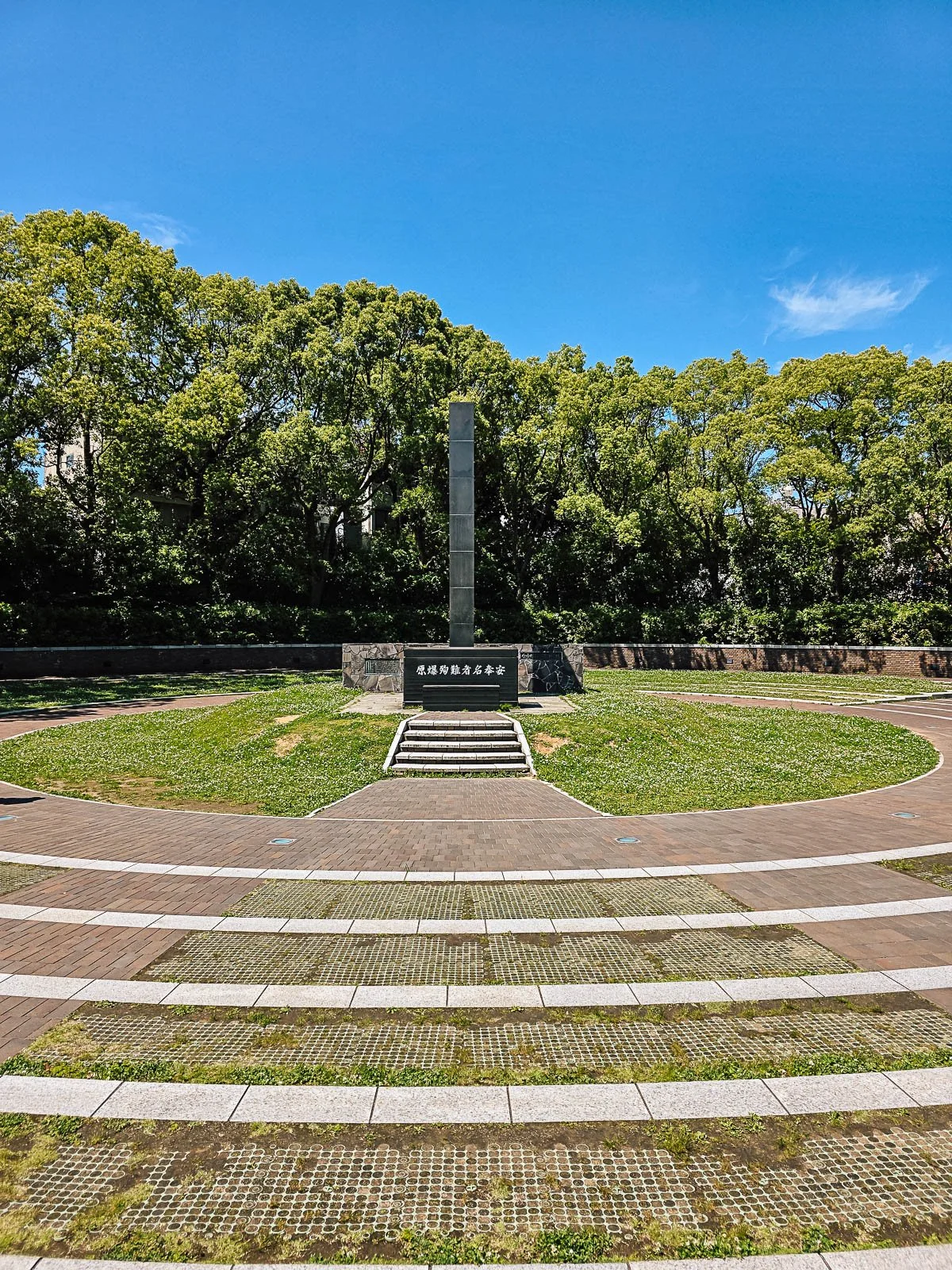
The exact spot where the atomic bomb detonated in Nagasaki
Just a short walk across the road from the museum is the Atomic Bomb Hypocenter Monument which marks the exact spot where the A-bomb detonated above Nagasaki in August 1945.
The park is a sombre experience and really gives you a sense of profound perspective to be able to stand in the exact spot of detonation.
On one side of the park there’s also some steps, below which you can see the ground as it was after the bomb was dropped. This area is encased in glass and you can see the rubble, along with personal belongings almost obliterated.
We saw a group of children on a school trip here also looking at the rubble displayed behind the glass and it was incredibly moving and somber, even though we couldn’t understand the language, seeing them be taught and told about the atomic bomb was surreal and very moving.
Nagasaki Peace Park
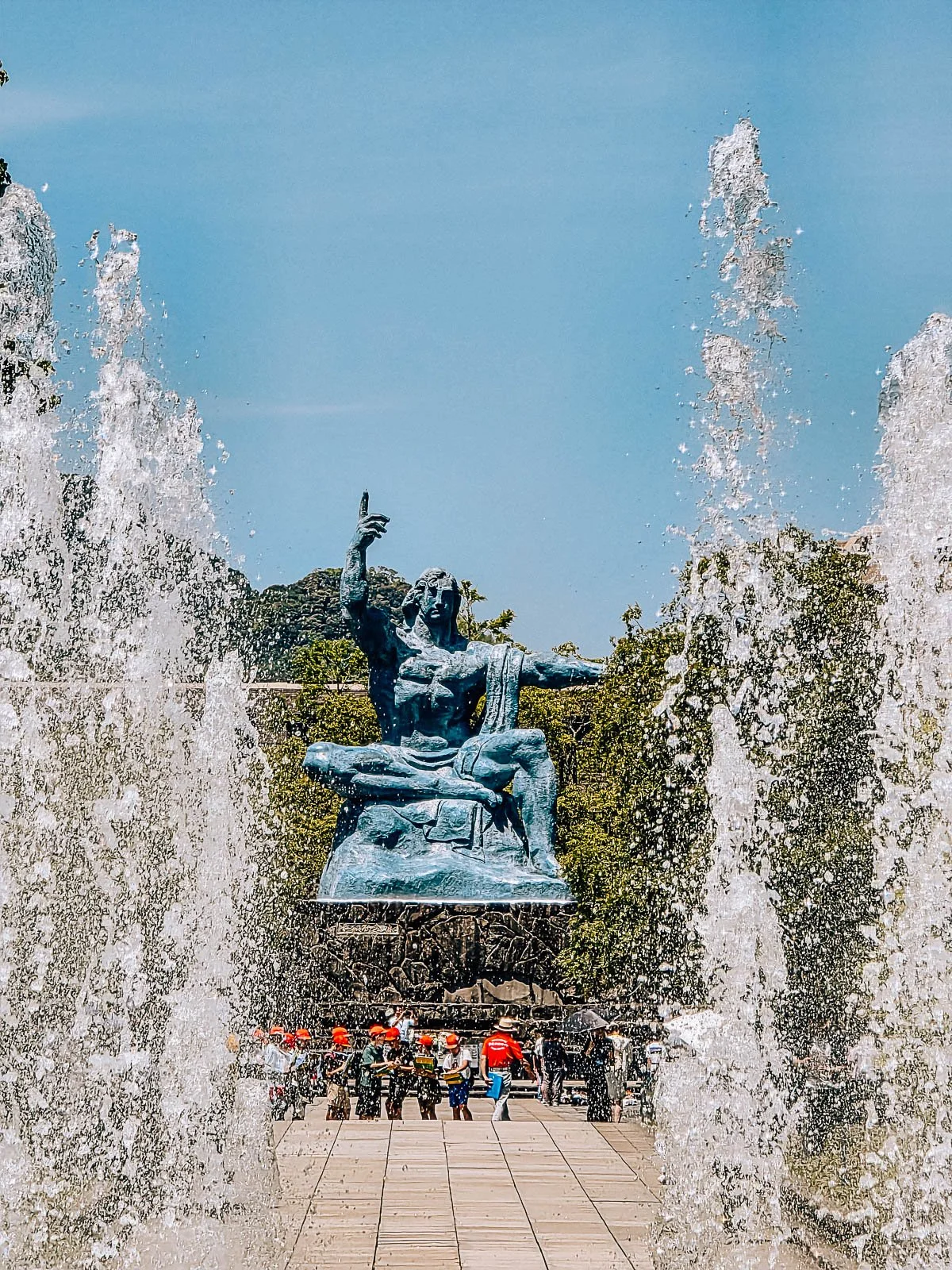
Nagasaki Peace Park
Just up the road from the museum and the hypocenter is the Nagasaki Peace Park.
It’s also free to visit and walk through and is a beautiful area with more school tours, people reading in the grass, individuals sitting quietly under trees.
It’s definitely worth walking through and seeing the famous Peace Bell, Peace Foundation and the Peace Statue.
Sanno Shrine one-legged Torii Gate
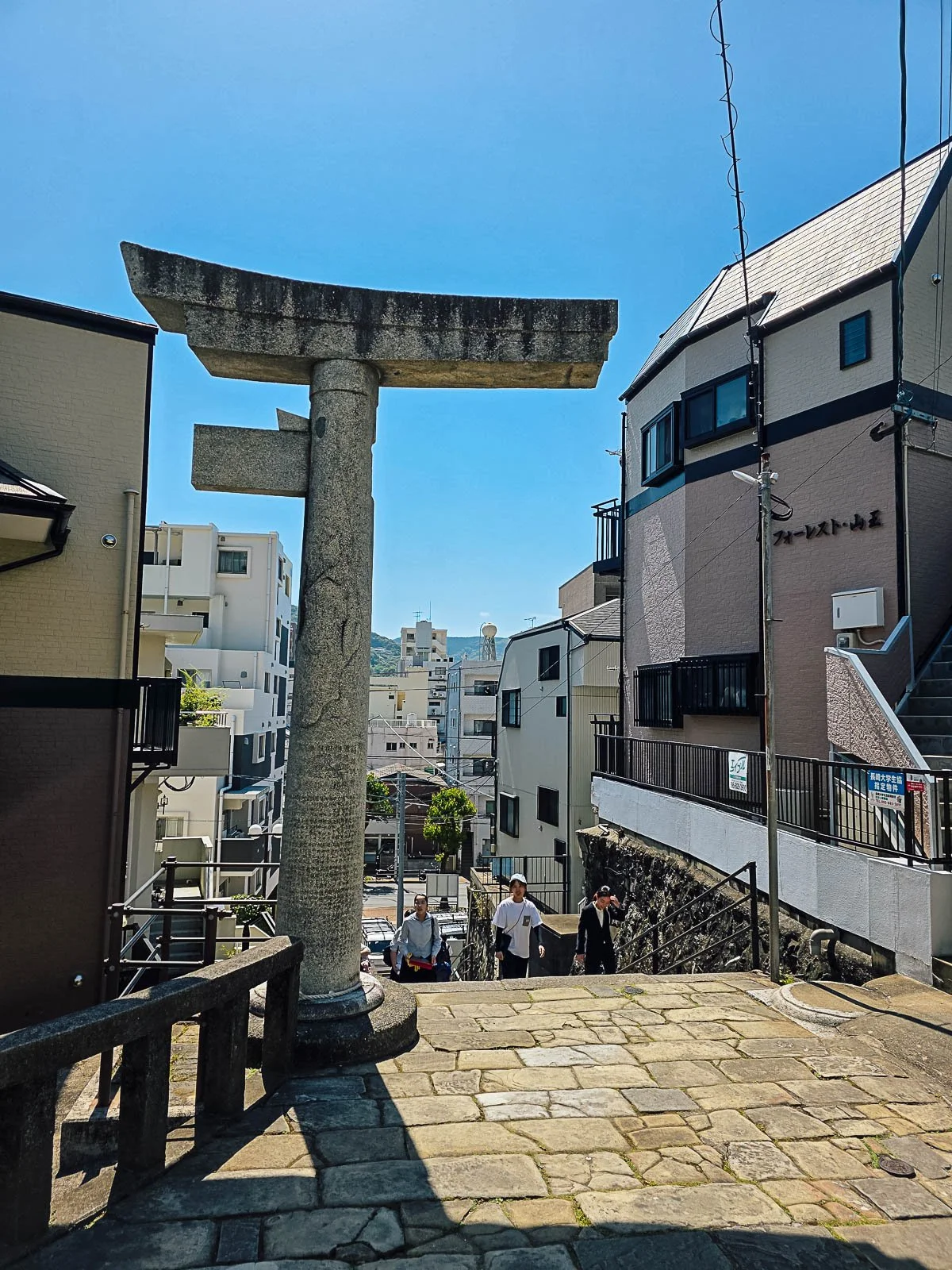
The one-legged torii gate in Nagasaki
Getting to the one-legged torii gate does mean going back on yourself a bit and it was very hot when we visited so I’d recommend the tram rather than walking!
But I wanted to visit the one-legged torii gate in Nagasaki after I’d been to the museum and peace park.
It felt a lot more significant to walk up the steps here and see the striking one side of the torii gate still standing.
When the atomic bomb hit Nagasaki, the rest of the torii gate was destroyed (you can see the remnants of it at the top of the stairs behind the remaining torii gate).
This site of the torii gate was protected by the layout of the buildings around it and is still standing today as a reminder of the resilience of Nagasaki.
This spot felt almost more poignant and stark than the museum and peace park, all of which are new landmarks. This one-legged torii gate is a landmark that stood when the A-bomb hit and is still standing today.
You can also walk up the steps and around the corner to see the shrine which is in a lovely, peaceful area.
Take the Nagasaki Ropeway up to Mount Inasa Overlook
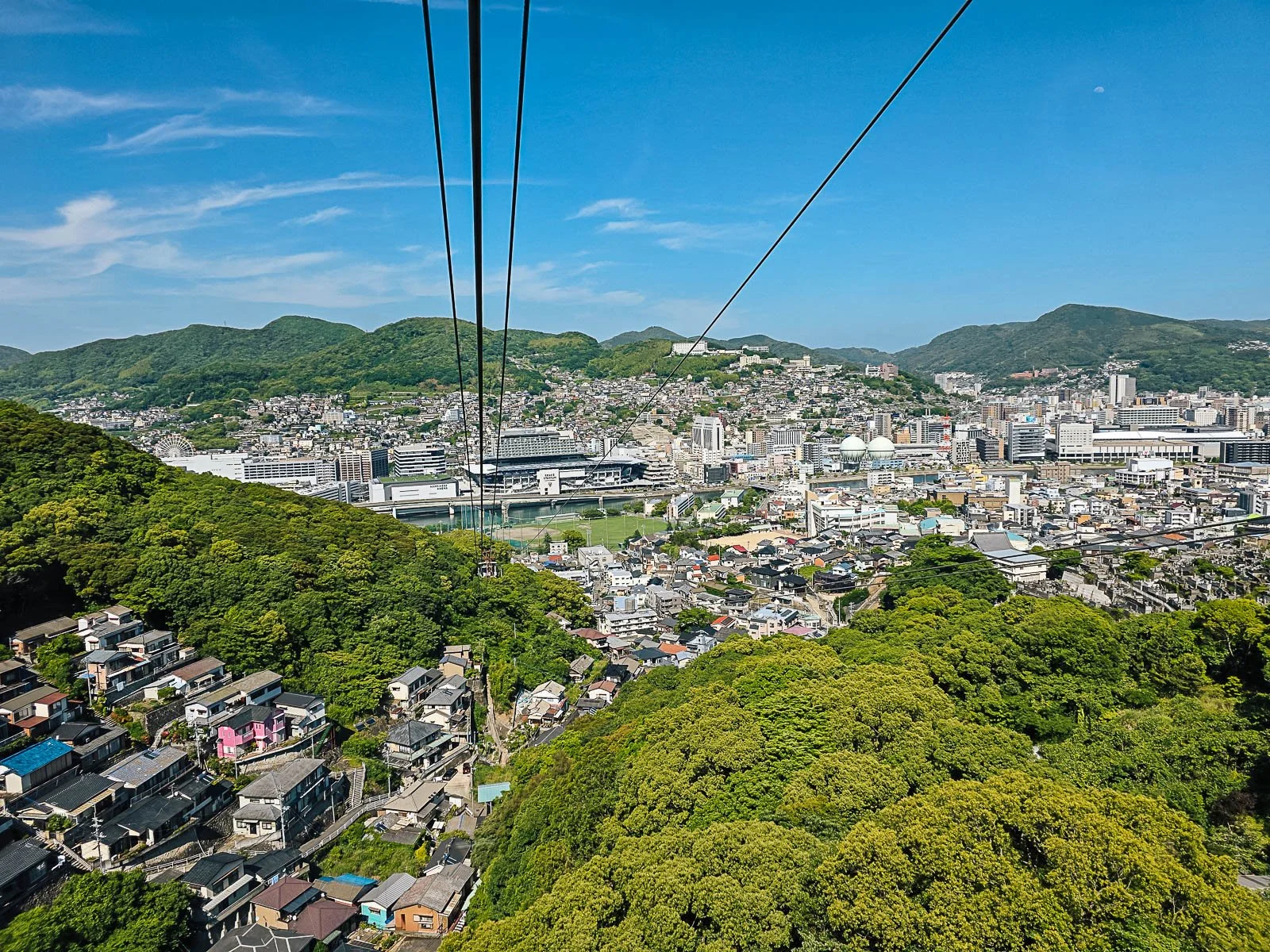
View from the Nagasaki cable car as we took it up the mountain to Mount Inasa
To get to the ropeway, we took the tram a couple of stops down the main street then walked over the bridge and up to the cable car station.
The cable car station is a bit tucked away in a shrine called Fuchi Shrine so you’ll need to walk through the car park and through the shrine itself to reach the station.
A round trip ticket on the gondola costs 1,250 yen and I highly recommend doing this on your 2 day Nagasaki itinerary!
Most people come here for sunset, apparently the views are spectacular and depending on how long you’ve spent at the other activities today, you might end up here for sunset.
However we’d read that it gets very busy at sunset and we arrived in the mid afternoon so we went up when it was sunny and daylight and it was just as beautiful, definitely quieter than it gets at sunset too!
Make sure you head up to the rooftop where you’ll find the observation deck of the Mount Inasa Overlook for the best 360 panoramic views!
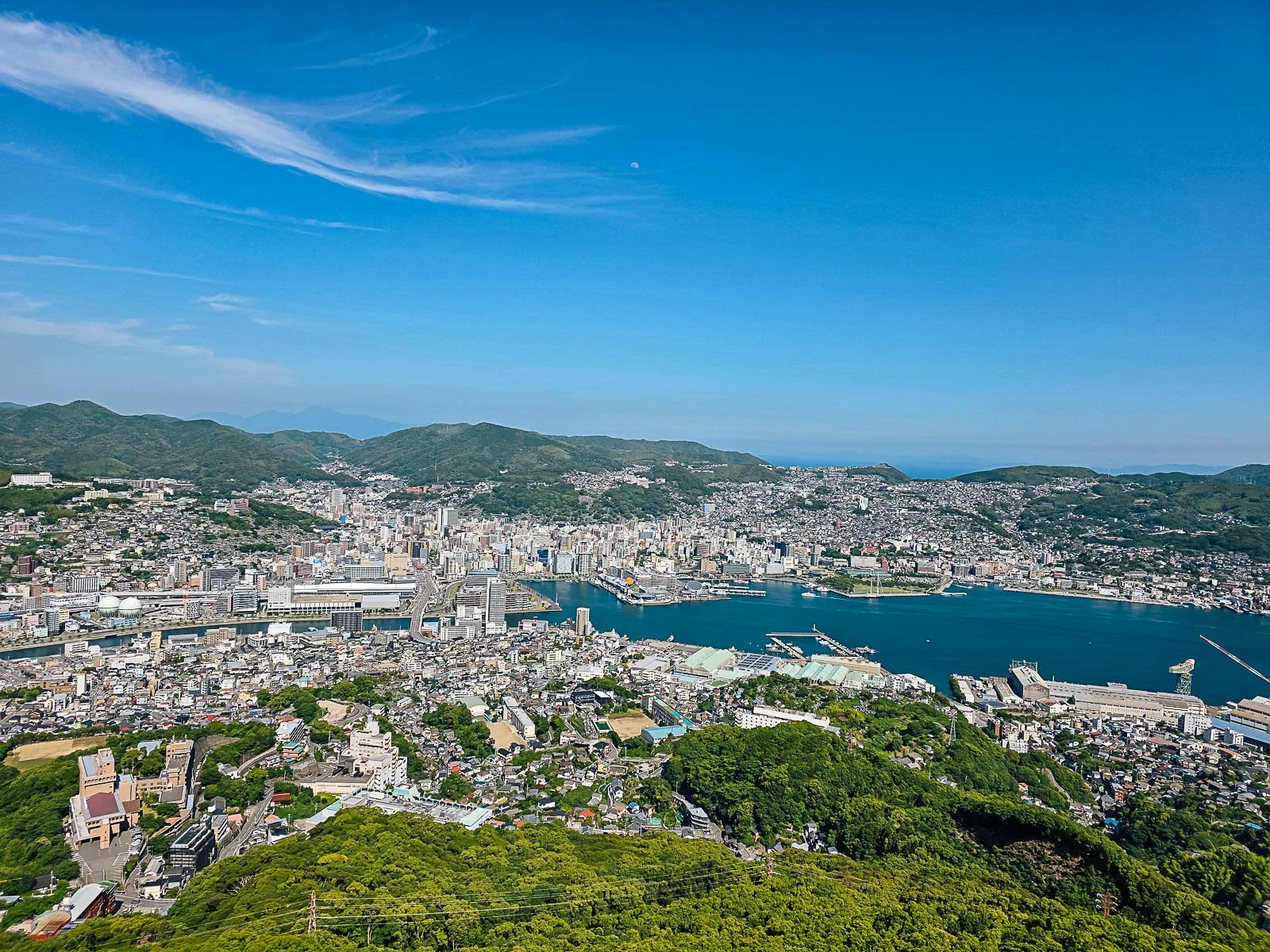
Nagasaki City and Harbour seen from Mount Inasa viewpoint
Dinner at Noukou Tonkotsu Kadoya
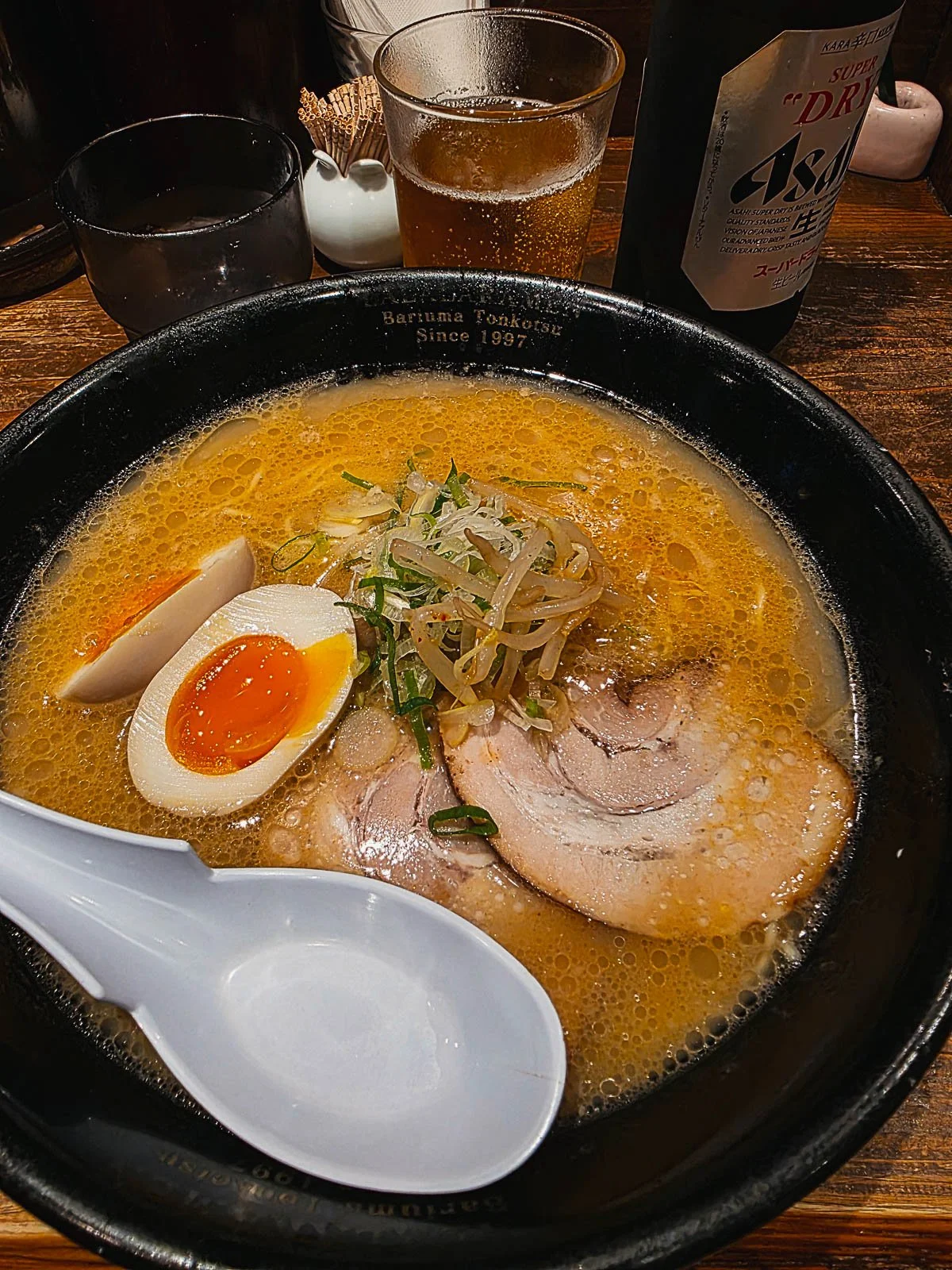
Ramen at Tonkotsu Kadoya
We got lucky with this ramen spot as it was just steps from our hotel!
After the day of adventures, we headed back to the hotel to freshen up for dinner and drinks in Nagasaki and were craving ramen - this absolutely hit the spot!
We went around 5pm which I think was a good time because it was right before the dinner rush and it's only small inside!
Nagasaki was our first stop after flying into Kyushu and this ramen really hit the spot, plus I always love ordering on the ticket machines - so easy!
Walk through Nagasaki Chinatown
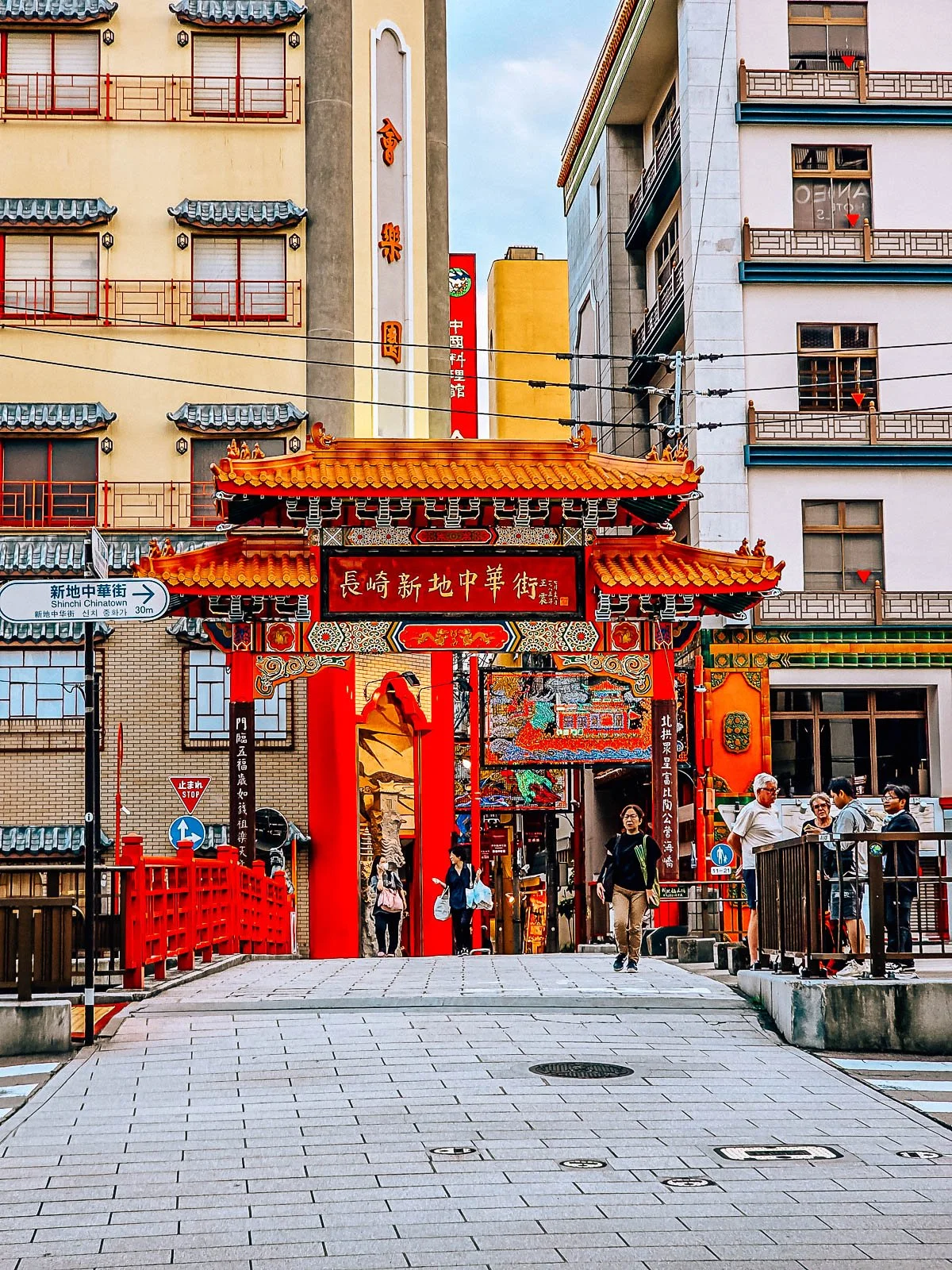
Nagasaki Chinatown
If you’re staying in the same area that we did (or even in the same hotel!) it’s worth wandering over the road and having a look around the Chinatown area.
Nagasaki Chinatown is actually the oldest Chinatown in Japan and one of the biggest. This is because during the Edo Period when Japan was isolated from the world, Nagasaki was the only major trading port still open and Chinese traders were one of the few foreign trade people still allowed in to trade.
It’s also where the famous Nagasaki lantern festival happens for Chinese New Year every year.
You can try famous Japanese-Chinese dishes here like Sara Udon in the countless Chinese restaurants in this area.
Local drinks and see Motoshikkuimachi street at night
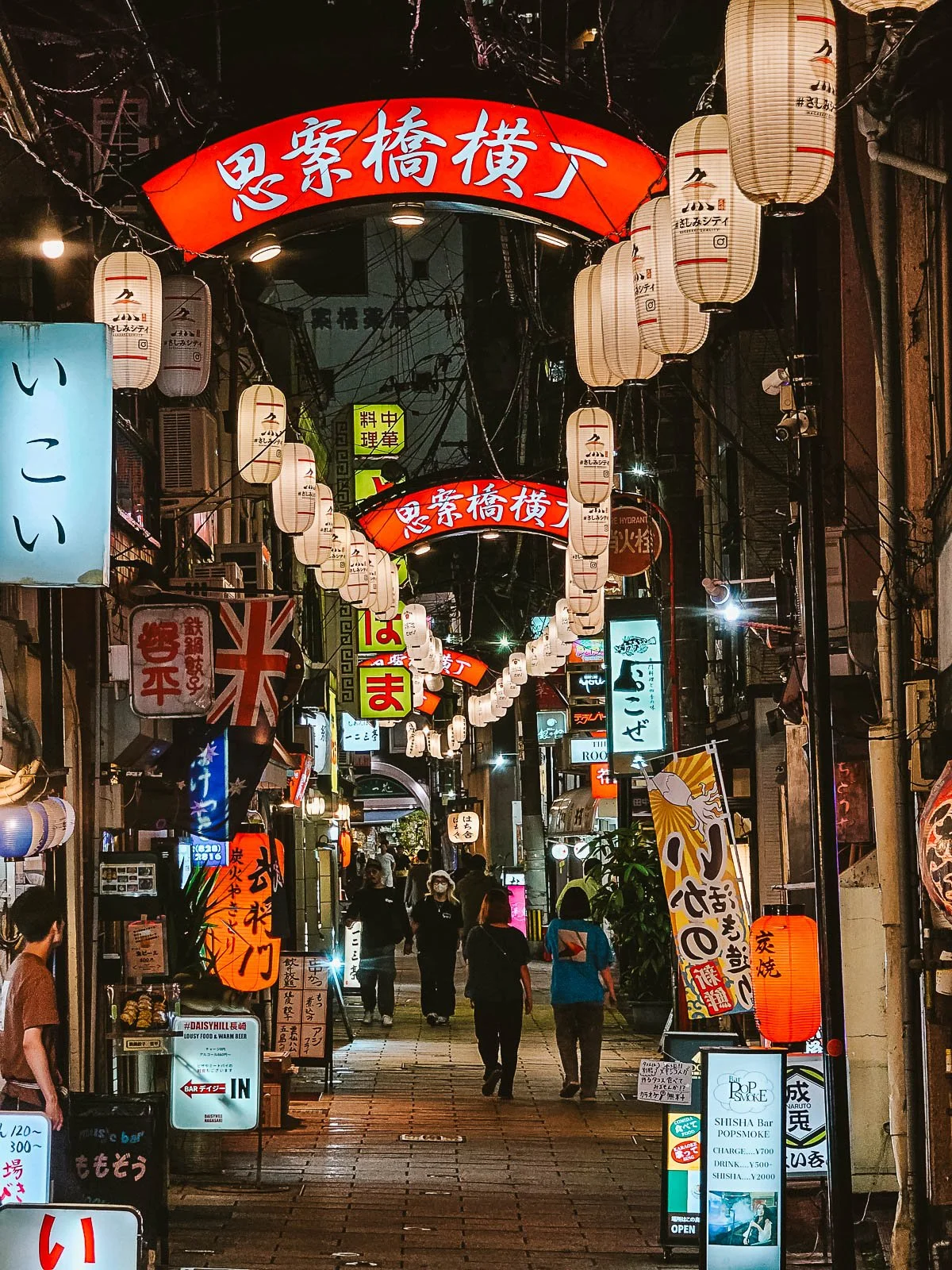
Motoshikkuimachi at night
I honestly loved the location of our hotel, so convenient for trams, for food, for seeing Chinatown and also for local night life, especially with only 2 days in Nagasaki!
Don’t worry, I’m not about to recommend clubbing - my clubbing years are behind me!
But I am going to recommend Motoshikkuimachi. This is a narrow street running parallel with the main Harusame Street where the trams run. But it’s a quiet street, lit with lanterns and with lots of small restaurants and bars.
You don’t even have to eat or drink here, it’s a beautiful spot for photos and so much quieter than any similar street you’d see in Tokyo!
We spontaneously stopped for a couple of drinks at Bar IWI and had such a fun night. The owner is from New Zealand and we ended up meeting some Chinese students and also some British people teaching English - one who was from the area I grew up in the UK!
Day 2 in Nagasaki, Japan
Visit Glover Garden
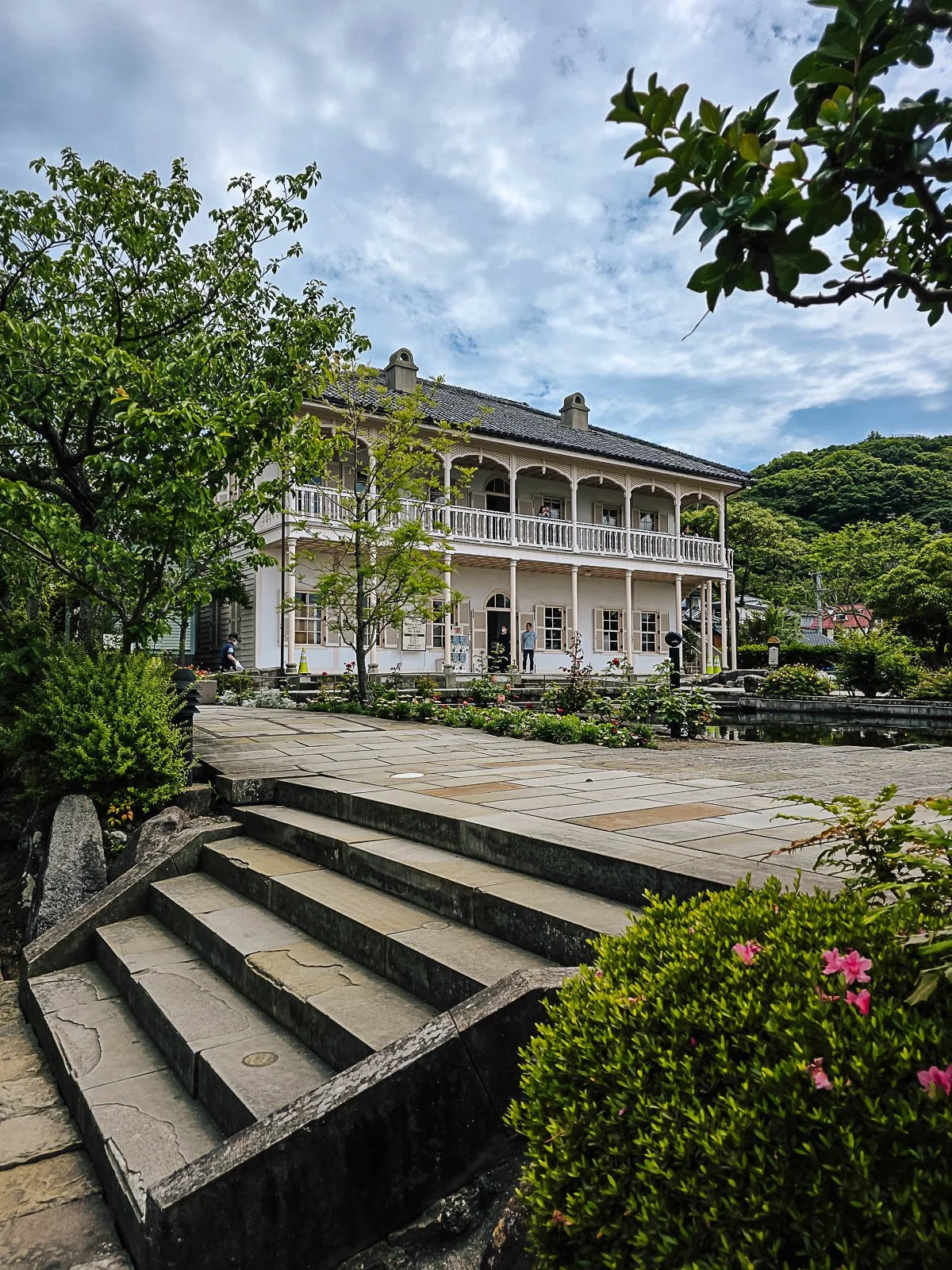
Glover Garden
Glover Garden is a landscaped garden with western-style historic houses and mansions which have been turned into museums. These are the oldest western-style buildings in Japan.
It was built for Thomas Blake Glover, a Scottish merchant, who came to Japan and revolutionised the Japanese shipbuilding industry.
Now, I felt a bit icky about visiting here to be honest - I didn’t go all the way to Japan to look at western buildings. But I will say that I see why this is a popular spot to visit with beautiful gardens and the former Glover residence is very unique to see in a Japanese city.
Not only are the gardens and houses beautiful, the view of Nagasaki city and the port is amazing and I actually learnt so much about the Japanese shipbuilding industry, why Nagasaki harbour was so pivotal to Japan’s growth and how Thomas Glover became linked with Mitsubishi.
From an informational perspective, I highly recommend visiting and the setting it’s in is much more dynamic than a normal museum.
Tickets are 620 yen.
Explore the Glover Street shops, food stalls and landmarks
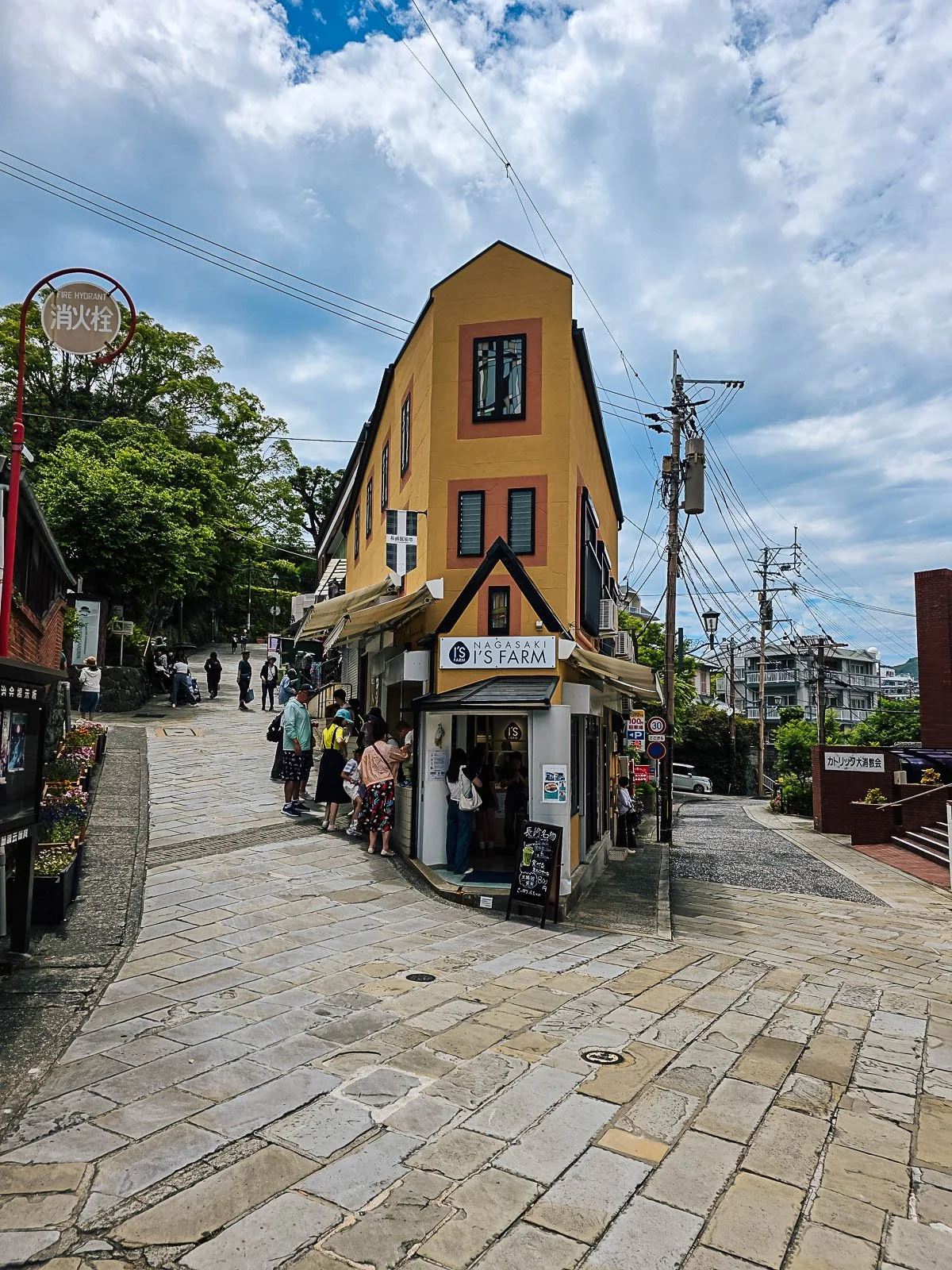
Glover Street
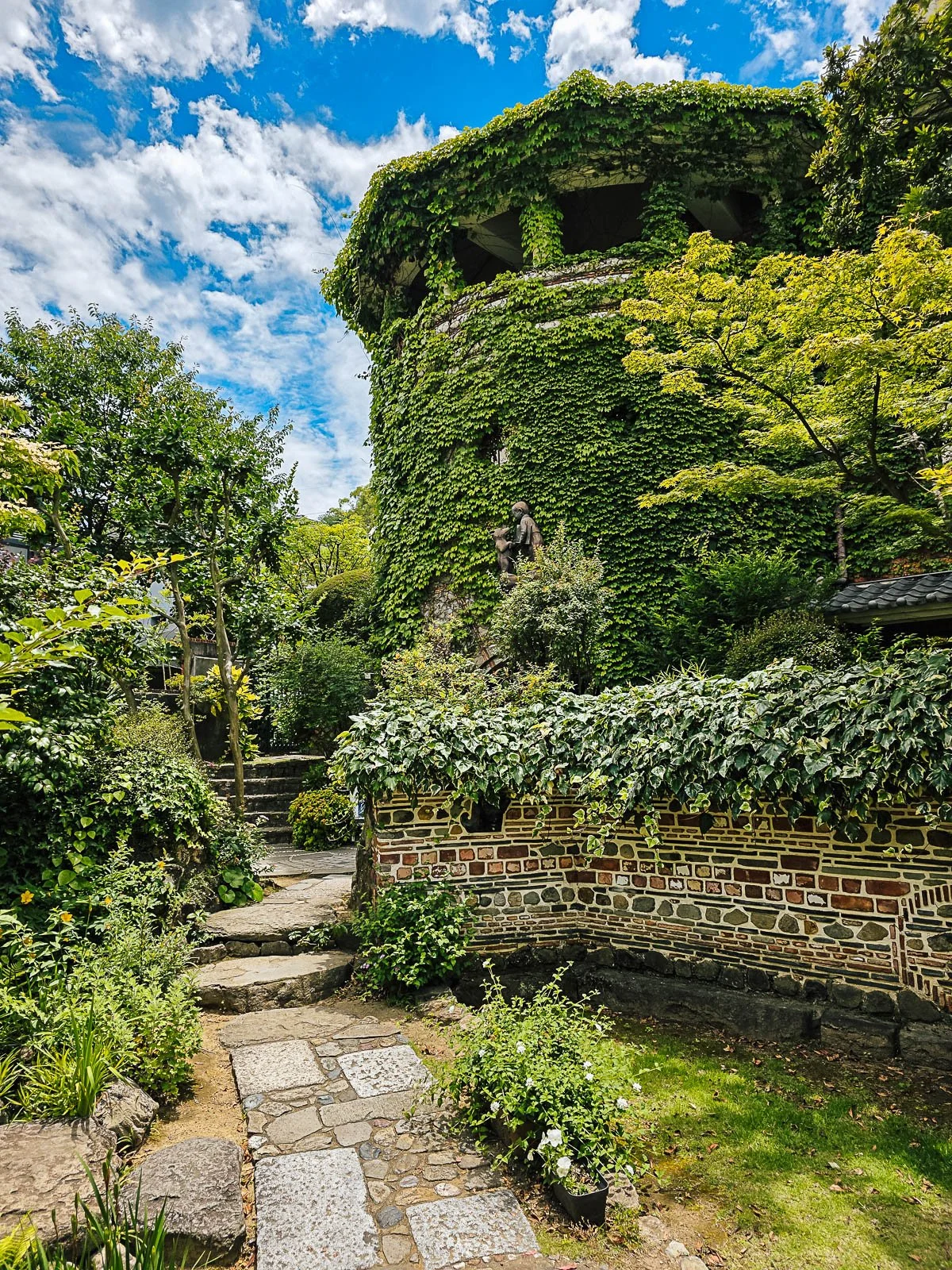
Inori Hill Picture Book Museum
After visiting Glover Gardens, I’d highly recommend taking some to explore Glover Street which is packed full of charming craft stores, shops, bookshops and food stalls.
Check out the ring making shop Itoaware Nagasaki for a unique souvenir.
On Glover Slope you’ll find lots of food snacks and European-style architecture.
Don’t miss Inori Hill Picture Book Museum, one of the most charming childrens’ book stores you’ll ever visit!
And see the Oura Cathedral. The Oura Catholic Church is a dominating 19th century church surrounded by lush greenery on the hill. We didn’t choose to pay to go inside but it’s worth seeing even from the outside.
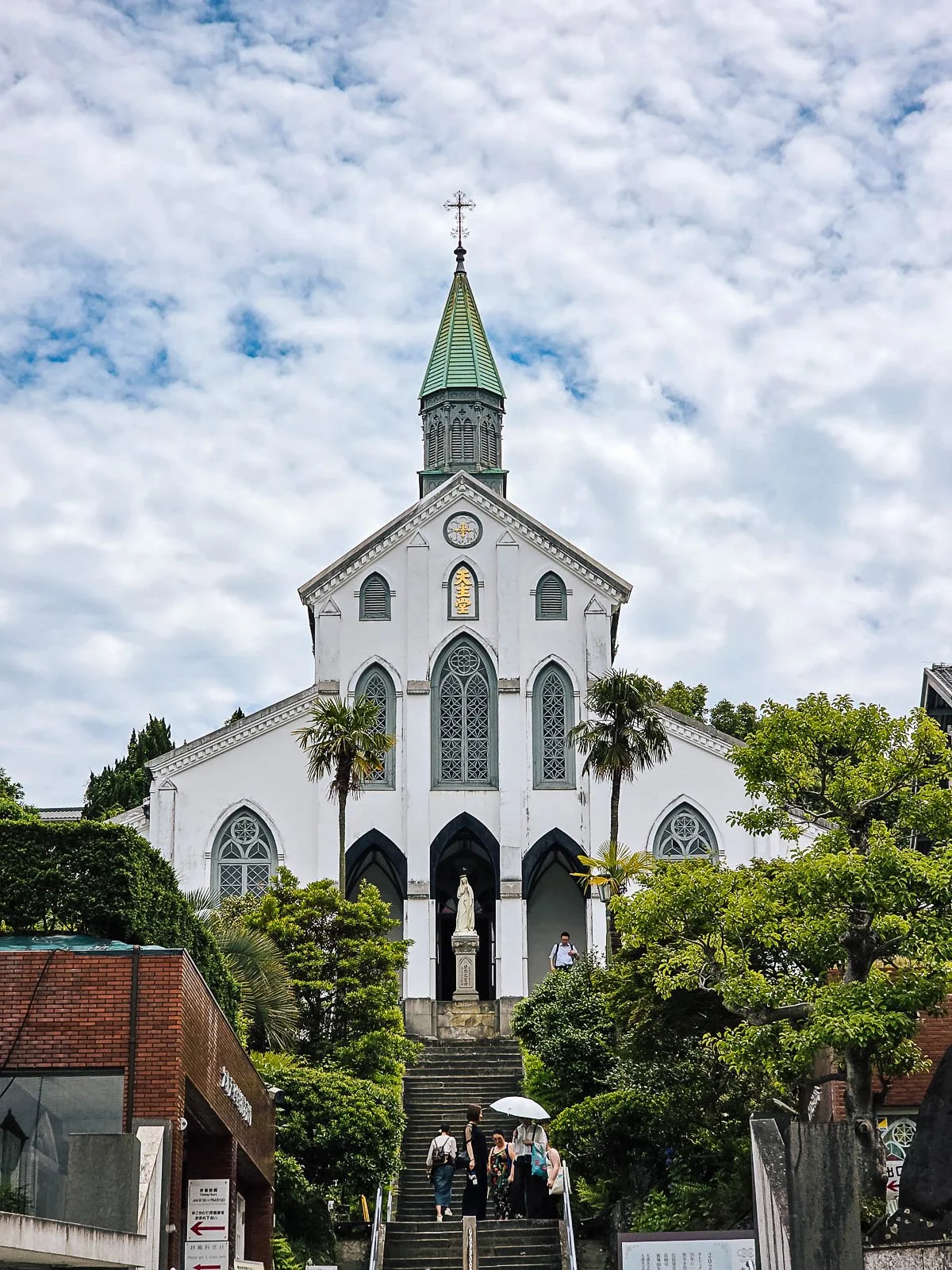
Oura Cathedral
Optional: Nagasaki Koshibyo Confucius Shrine and Historical Museum of China
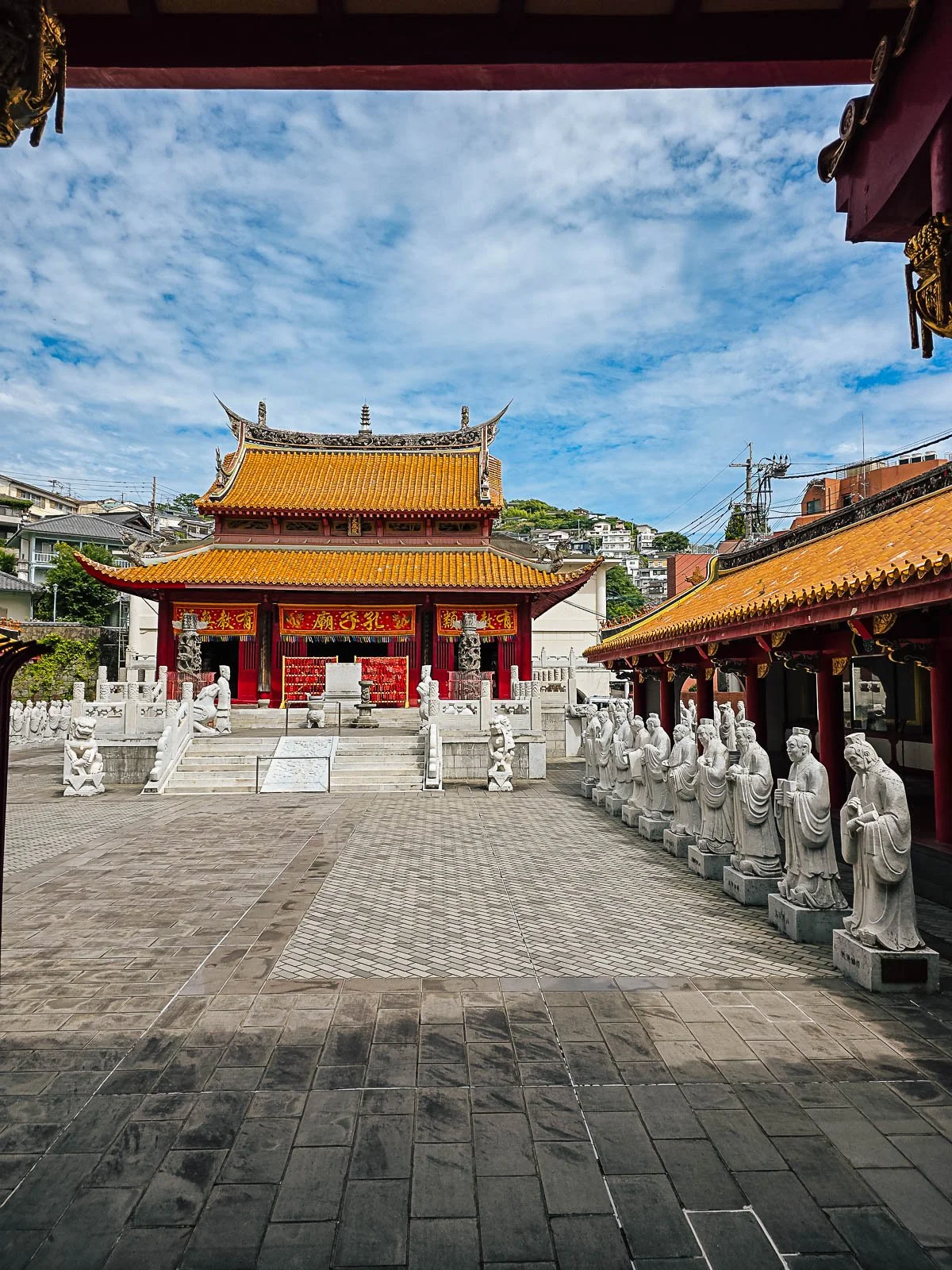
Koshibyo Confucius Shrine
This is totally optional and depends how much time you have and what you want to prioritise.
I saw this shrine just 6 minutes walk from Glover Slope and wanted to check it out because it’s a Confucian Chinese shrine.
I thought the entrance fee was a little steep at 800 yen but it was beautiful to explore and take pictures. The entrance fee also includes the museum at the back.
The architecture and sculptures are stunning, so vibrant and with no one else there, it was almost eerie with the many statues in the courtyard.
Lunch at Ramen Hiiragi
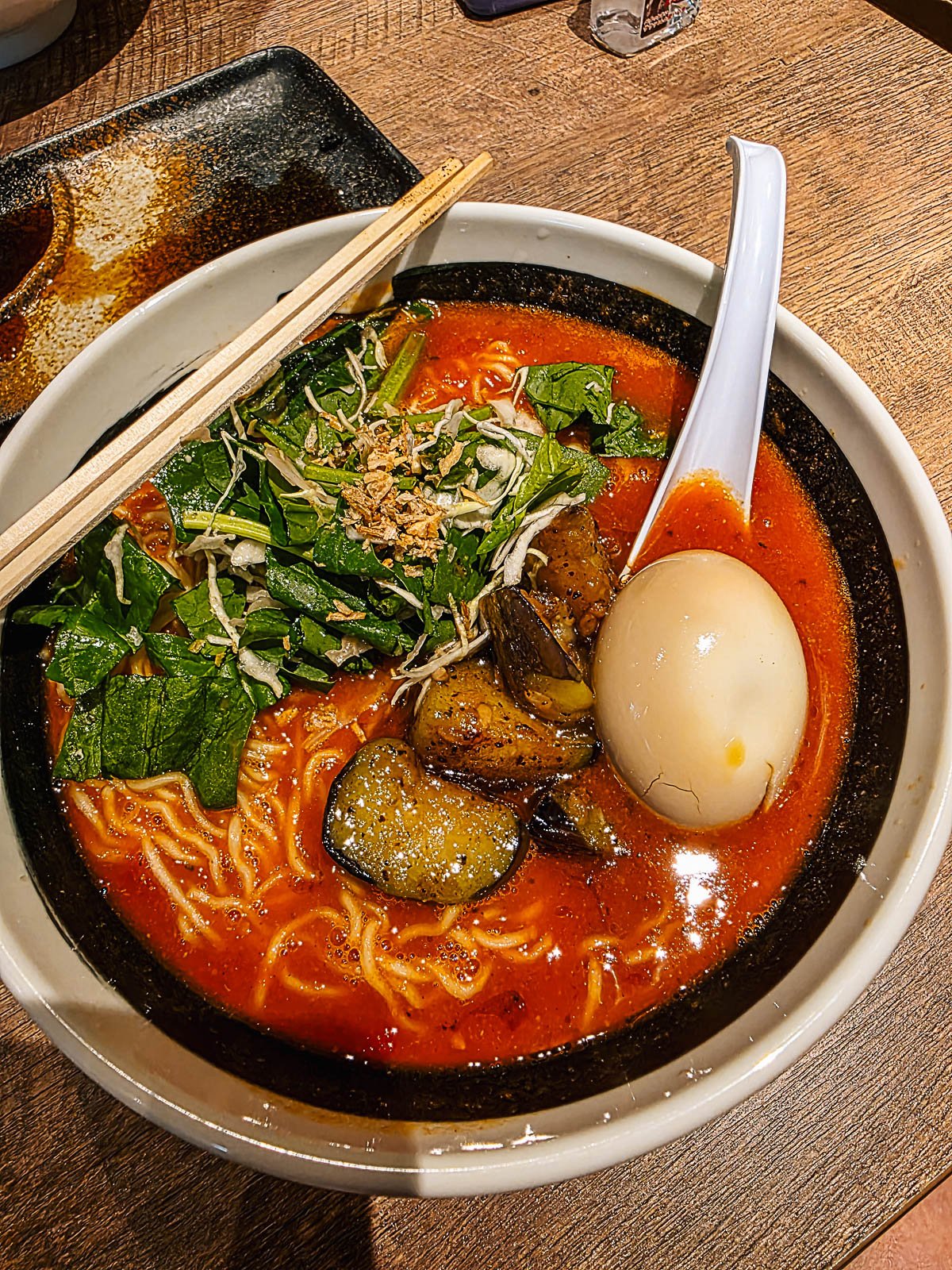
Ramen Hiiragi famous tomato based ramen broth
Nagasaki city is famous for its ramen using tomato broth which you can get at Ramen Hiiragi and once again, we lucked out with our hotel because it’s right across the road from this ramen shop!
I will say, if you don’t like tomato soup normally then you probably won’t like this. But as a HUGE tomato soup fan and ramen fan, this was basically my dream combination!
It tasted amazing, so warming and filling and probably one of my favourite ever ramens!
We saw people queuing outside this ramen shop at almost all hours of the day, but we managed to go in at around 4pm and there was no queue, I guess because it was an odd time; long after the lunch rush but too early for dinner. So I’d recommend doing similar if you want to try this ramen.
Suwa Shrine
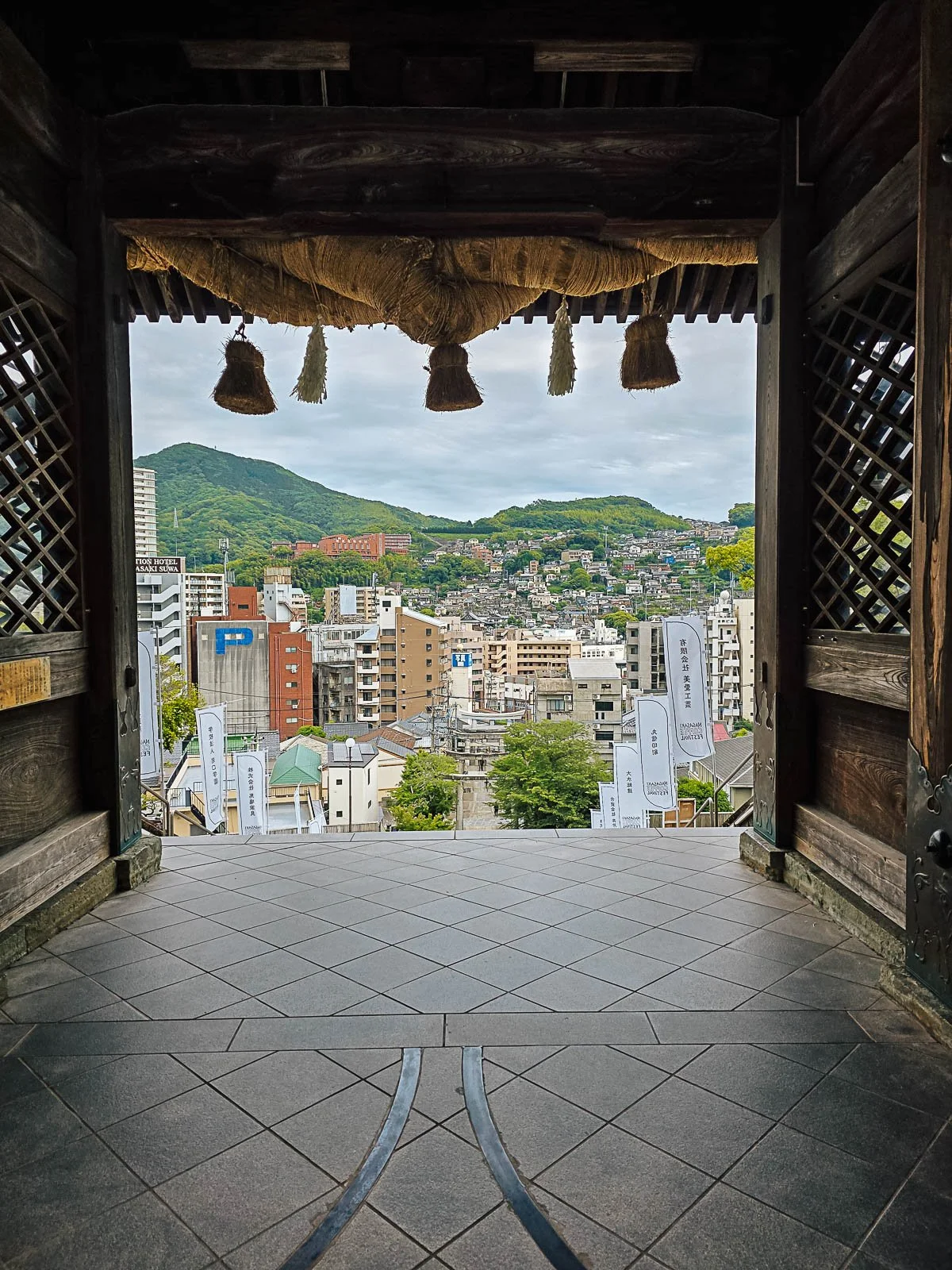
Suwa Shrine
We took the tram out to this shrine which is free to visit and has incredible views of the city through the gate.
It’s a 17th century Shinto shrine, beware of the number of steps up to it!
Also don’t miss going around the back of the shrine to find the line of torii gates.
We didn’t spend too long here, maybe 20-30 minutes to explore the temple complex and enjoy the unique shrine views.
Optional: Sofukuji Temple & Yasaka Shrine
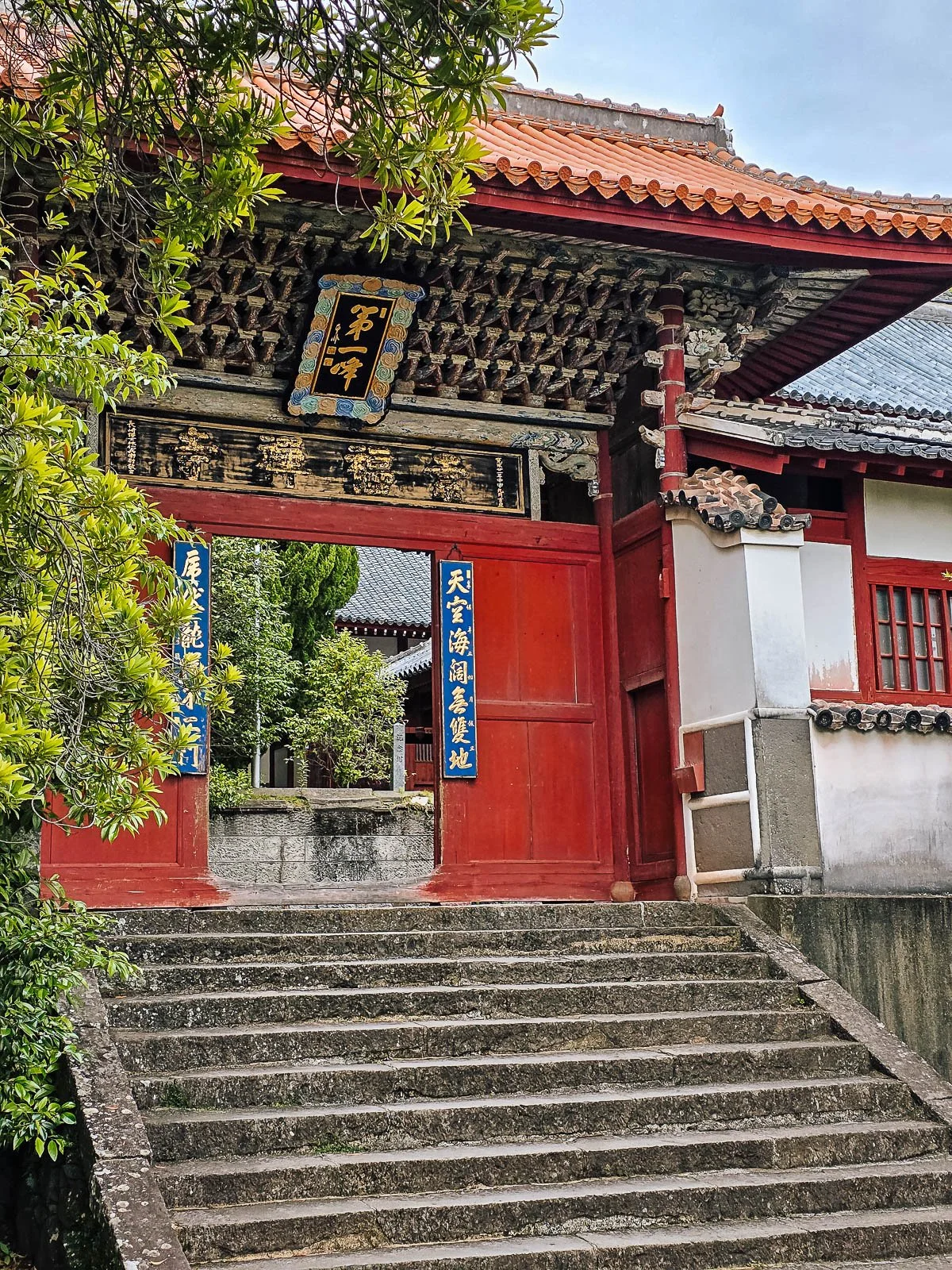
Sofukuji Temple
These are optional and we only visited because it was an easy tram ride from right outside our hotel. I was actually aiming to visit Yasaka Shrine which has a huge orange torii gate at the entrance.
However when I arrived, the entire shrine was covered in scaffolding and was under renovation so I couldn’t really see anything.
I actually went to Sofuku-ji Temple by accident, thinking it was Yasaka Shrine. It’s a lovely, peaceful Buddhist shrine to check out if you’re in the area but I wouldn’t go out of your way if you don’t have time.
Got 3 days or more on your Nagasaki itinerary?
Gunkanjima / Hashima Island
Our top thing that we wished we did in Nagasaki was a Gunkanjima tour. Also known as Battleship Island (because it looks like a battleship), this is an uninhabited island located 15km from Nagasaki. There are half-day tours running daily from Nagasaki port to this famous abandoned island.
The artificial island is an abandoned 16-acre island which was once a mining facility and built by Korean and Chinese prisoners after World War II. It’s an eerie island to see and you might know it as it was used as a filming location at the start of the James Bond Skyfall movie.
It’s now a UNESCO Heritage site and sits in semi-ruin, the shells of the concrete buildings crumbling gives it a post-apocalyptic feel.
The tours run daily but the weather and wind will determine if you can actually set foot on the island. Since the wind was so high on the day we wanted to visit we knew we wouldn’t be able to get off the boat and my husband gets incredibly sea sick so we decided against it.
This is the Gunkanjima-Battleship Island tour we would have done.
If you have an extra day in Nagasaki, I highly recommend it!
Huis Ten Bosch
This is another popular Nagasaki day trip to the Huis ten Bosch theme park.
Huis Ten Bosch is a recreation of a medieval Dutch town, including immersive attractions, canals and seasonal events across six different kingdoms.
Their seasonal festivals, particular flower festivals, are extremely popular.
We decided not to do this on this trip, but you can get tickets here: Huis Ten Bosch tickets.
Summary: Nagasaki itinerary 2 days
After 2 days in Nagasaki, I wished we had an extra day or 2 to see and do more in the city!
Nagasaki very quickly became one of my favourite Japanese cities, not only is there so much to do in Nagasaki, but there’s also incredible history, so much nature and greenery, incredible food, great views and more!
If you have the chance to take a trip to Nagaskai, I would absolutely recommend it and I hope this Nagasaki travel guide helps you to plan your trip!