Kyushu is one of the most underrated of Japan’s main islands to visit.
Being the southernmost main island in Japan, it’s not often that people make the trip either by plane or train from the main cities in Honshu like Tokyo or Osaka. But in reality, it’s only 2.5 hours on the Shinkansen from Osaka to Fukuoka - so if you’re considering visiting Kyushu, now is the time and it’s easily doable.
We spent just over 2 weeks doing a self-drive road trip around Kyushu and it was simply spectacular.
But I’ve spent a long time debating the best way to share my trip, so if you’re looking for the best places to visit in Kyushu or the most beautiful places to visit in Kyushu for inspiration for your own trip, then this guide is for you.
However if you’re also planning a Kyushu road trip, then make sure you check out my Kyushu itinerary here for a detailed day-by-day guide of the actual route that we did.
Here I’m sharing the best things to do in Kyushu so you can pick and choose which you might like to visit, perhaps as an overnight or day trip from Fukuoka, or as a stopover from Fukuoka to Nagasaki or Beppu.
First I’m going to share the most beautiful places in Kyushu, these are the places that have stayed with me long after we’ve left. They were beautiful places, some eerie or dramatic or so peacefully silent with no other visitors, or just so unique to Japan that you can’t help but visit!
Then I’ll share a list of the best cities to visit in Kyushu, these are the ones we used as bases throughout our road trip and will be helpful when deciding what to see in Kyushu if you’ll also be using cities as your base.
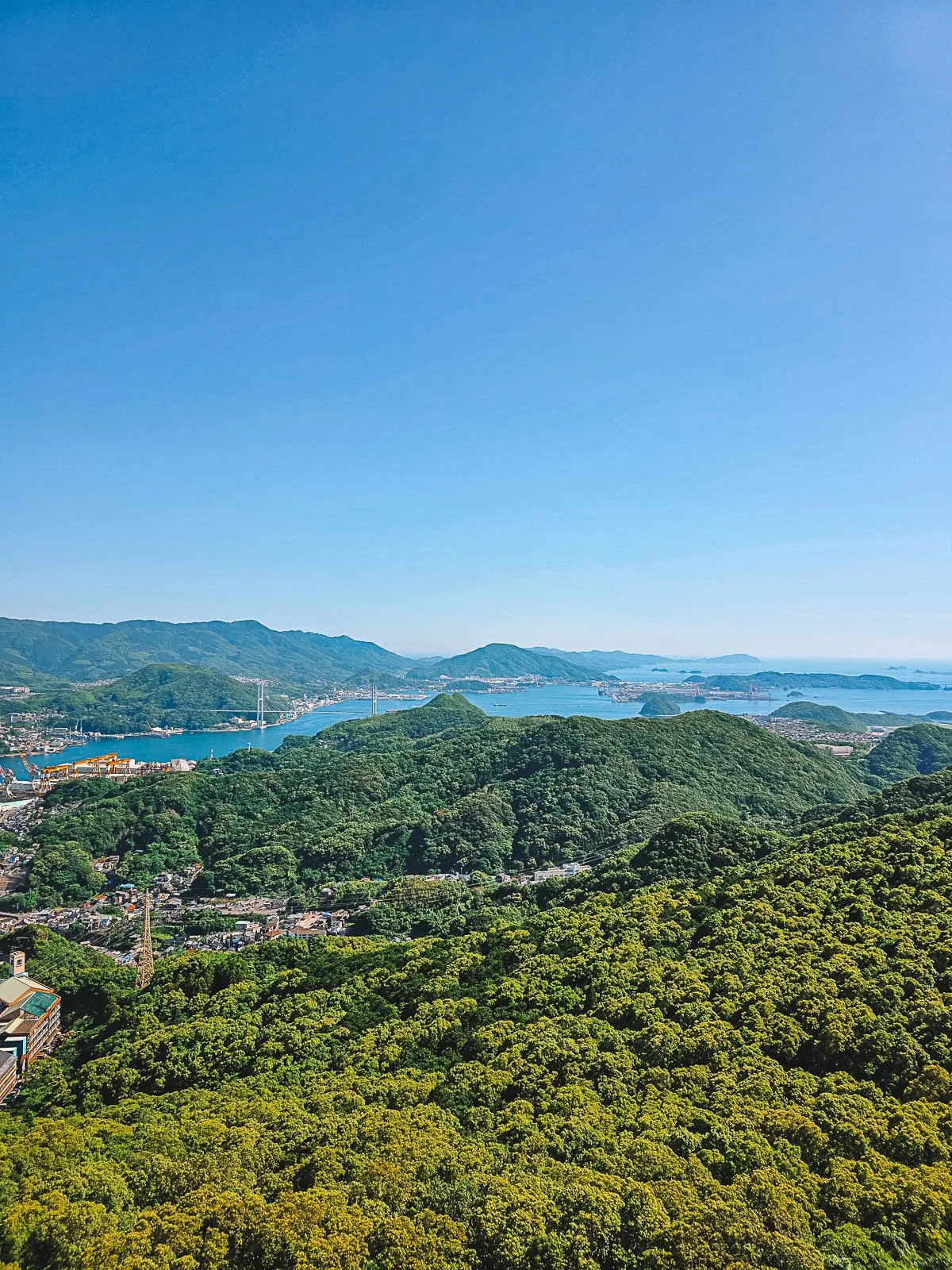
Nagasaki
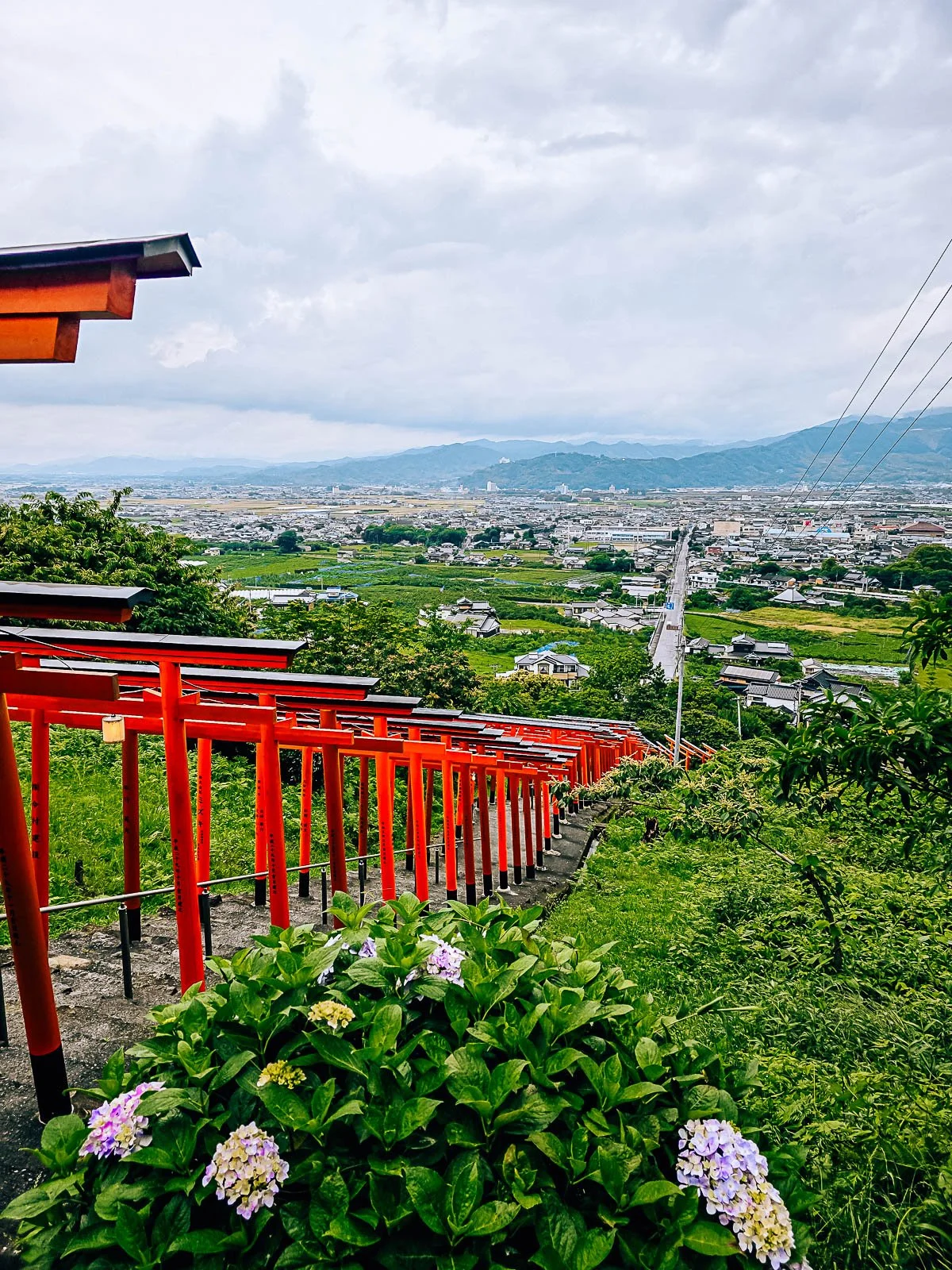
Ukiha Inari Shrine
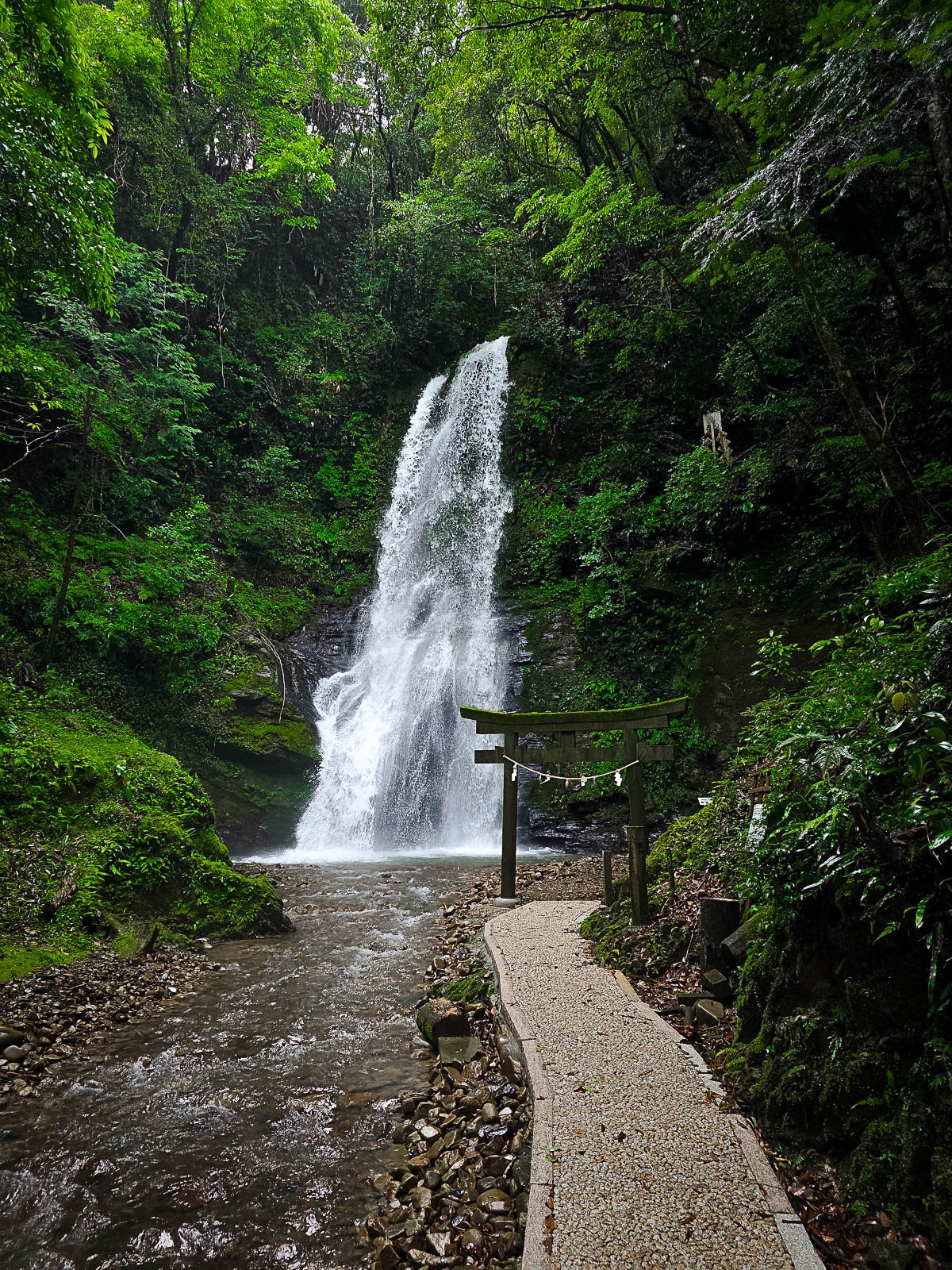
Hayahirakitohiuri shrine, Kyushu
Disclosure: This post may contain affiliate links, which means I may receive a commission if you click a link and purchase something. While clicking these links won't cost you anything, they will help me to keep this site up and running! Check out the full disclosure policy for more details. Thank you so much!
When is the best time to visit Kyushu?
This is tricky because it depends on what you’d like to do in Kyushu.
Spring (March-May) is mild, great for outdoor activities like hiking and of course seeing the cherry blossom. Similarly autumn (September-November) is gorgeous for autumn foliage and also for outdoor activities and exploring.
However we visited in May-June and the rainy season was early. We had some pretty torrential downpours in early June which is about a month earlier than they’d usually expect. Summer is great for beaches and summer events but the humidity and rainy season can also mean that the weather is hit-or-miss.
Be cautious about visiting too early in autumn (October) as there can still be some typhoons due to the Pacific typhoon season.
Winter in Kyushu is cooler but still fairly mild, snow is pretty uncommon in Kyushu but the cooler weather does mean it’s a great time for enjoying onsens like in Beppu or hot sand baths around Kagoshima.
The most beautiful places to visit in Kyushu, Japan
Kamishikimi Kumanoimasu Shrine
Well this Shinto shrine in Kyushu was just magical.
We stopped here on our drive through Aso-Kuju National Park from Takachiho Gorge on our way to Beppu.
This stunning shrine is tucked away in the cool, misty forest where you ascent hundreds of mossy stone steps lined with stone lanterns.
This shrine is all about the location and the setting, there were a handful of people at the bottom in the car park when we started but by the time we started climbing the steps, no one was around, we had this mystical place to ourselves and we kept saying: “if this was close to Tokyo or Kyoto it would be packed” - this is the joy of visiting Kyushu.
There is car parking on the side of the road that’s free and visiting the shrine is free. Just cross the road from the car park and start ascending the steps. There are also public toilets halfway up the steps to the shrine.
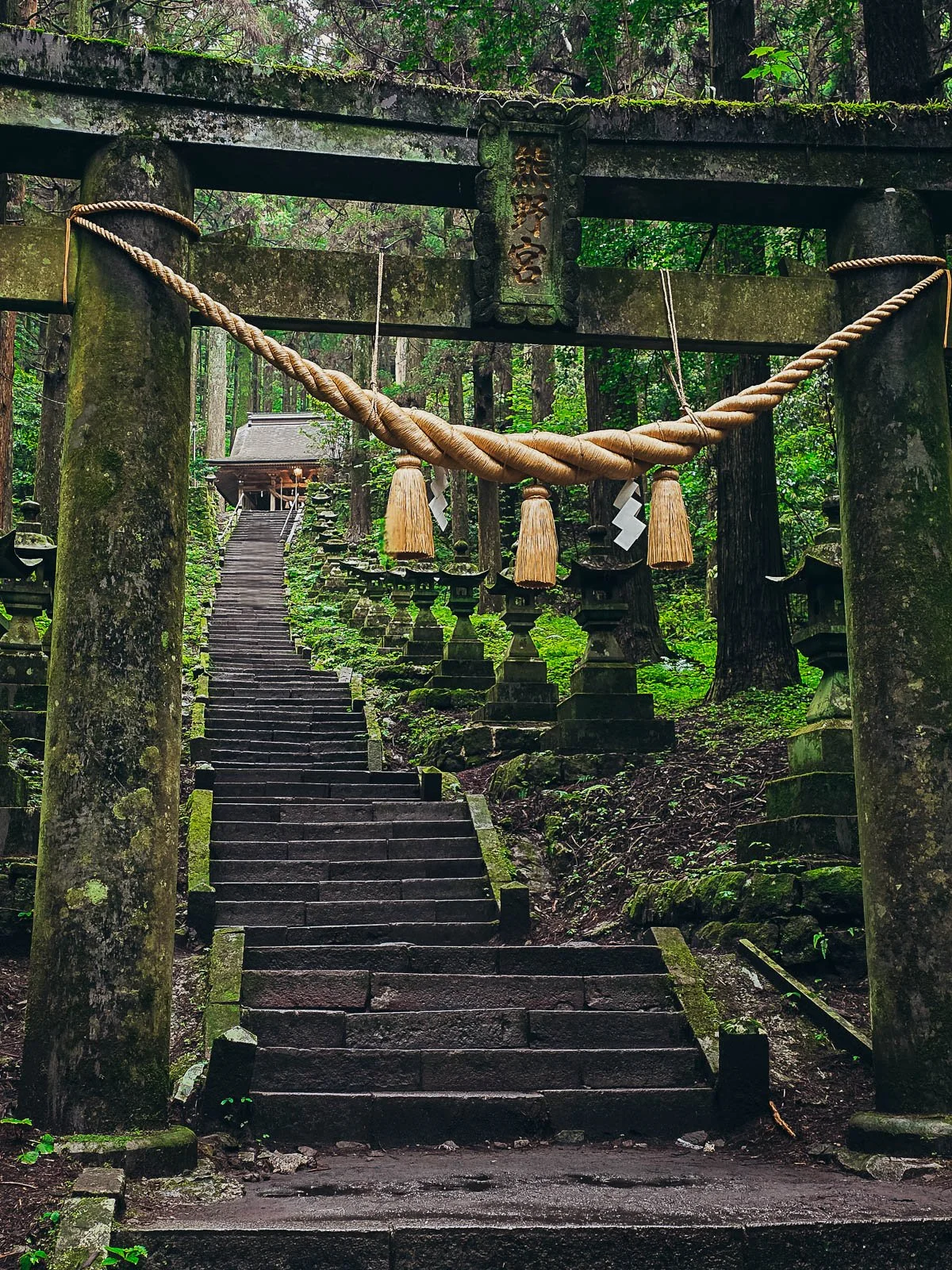
Steps to Kamishikim Kumanoimasu Shrine
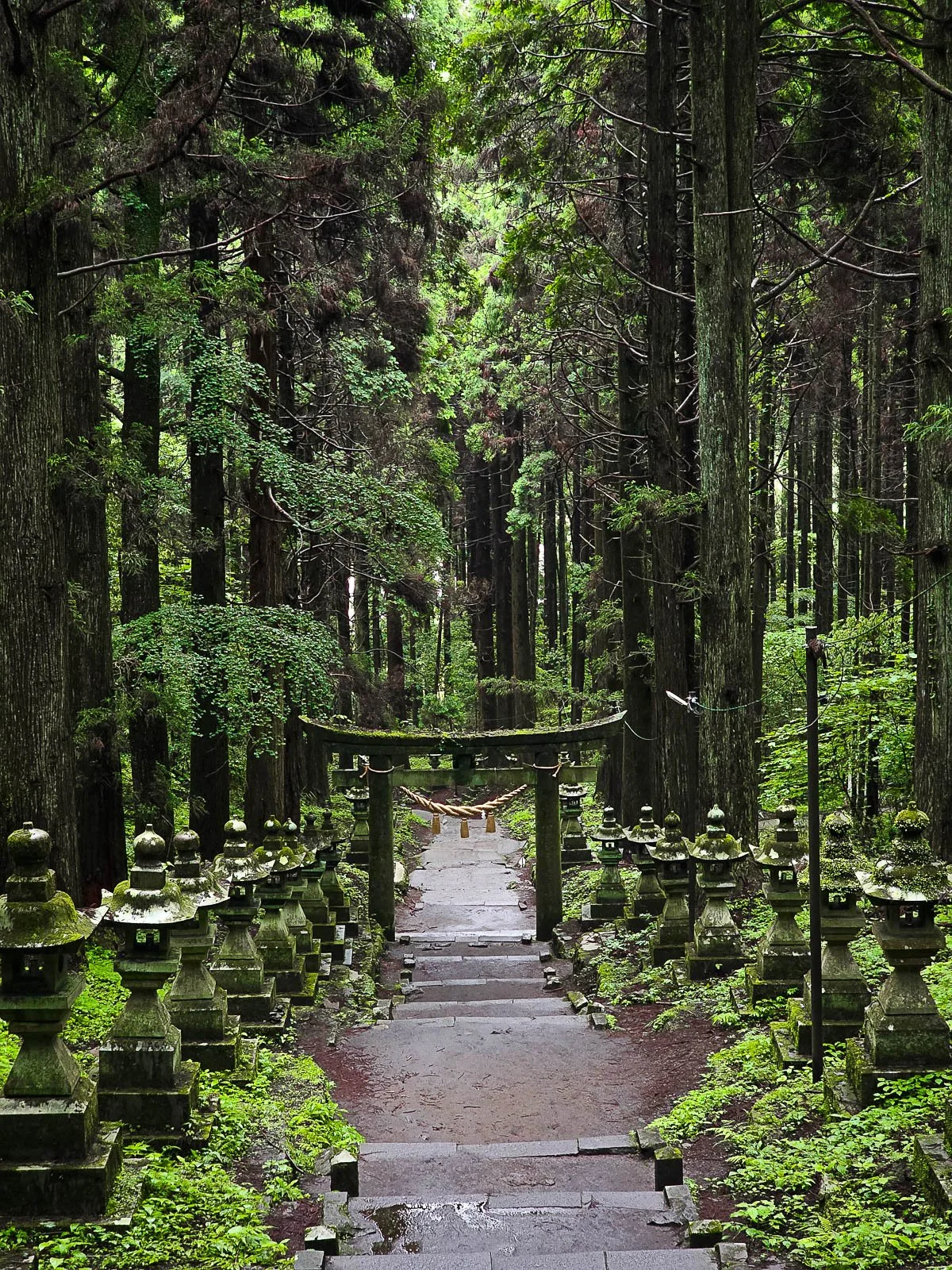
Kamishikimi Kumanoimasu Shrine
Hayahirakitohiuri Shrine
This is the place in Kyushu that we still talk about constantly and tell people about and I almost don’t want to share it because it was so gorgeous in its peacefulness.
From my personal experience, this was the best place we visited in Kyushu.
The atmosphere, the setting… It was a magical, almost transformational experience. I don’t think I’ve ever felt so immersed in a location in Japan, this was simply stunning.
We stopped here on our drive from Miyazaki to Huga (where we stayed for the night before going to Takachiho Gorge) and this is why it’s one of the best things to do in Kyushu and definitely one of Kyushu’s hidden gems.
The drive there was through a river gorge with low clouds and lush green hills. We parked up at the shrine and there was no one else around, not a single car, not a single soul.
To get to the shrine you walk across a suspension bridge over the river gorge and this in itself was stunning with the low cloud and mist, nothing but the sounds of water flowing and birds.
On the other side of the river we came across a deer on our path, making eye contact, both surprised to see each other when no one else was around.
We carried on along the path covered in damp leaves and through the mist until we reached the shrine, nestled in the forest between the cliff and the river and saw the unique bright blue torii gate and explored the shrine.
Then we walked along the trail through the shrine to see the path open up into a small canyon with a roaring waterfall at the far end and a single torii gate standing in the clearing at the foot of the waterfall.
We were literally jumping with whispered excitement, running down the path and getting covered in spray from the waterfall. We were soaked but soaking it all in in total awe and silence.
Being the only people here, surrounded by trees and the roaring waterfall was so eerie and mystical. If you visit, please be respectful of the shrine and the environment.
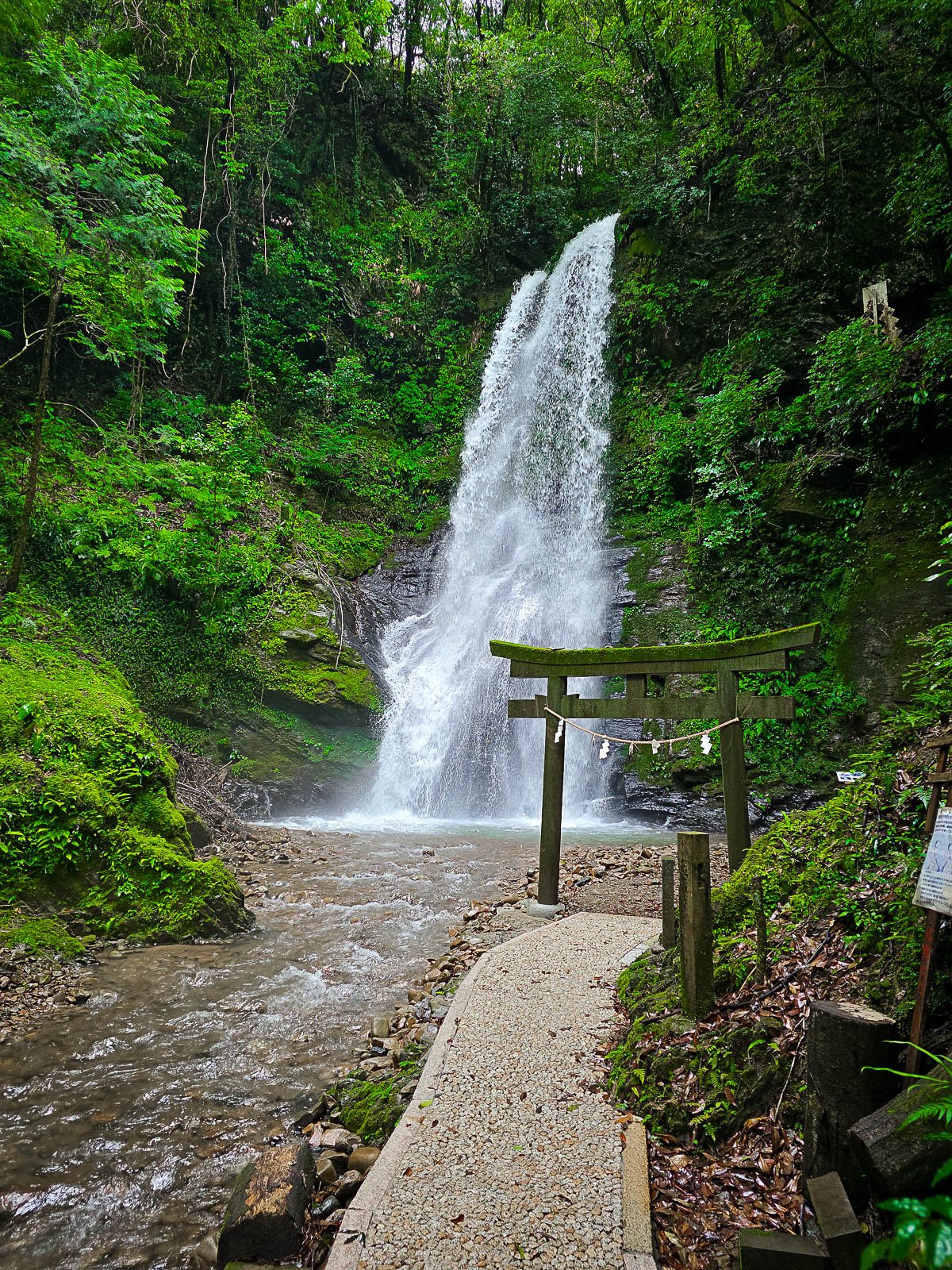
The waterfall and torii gate at Hayahirakitohiuri
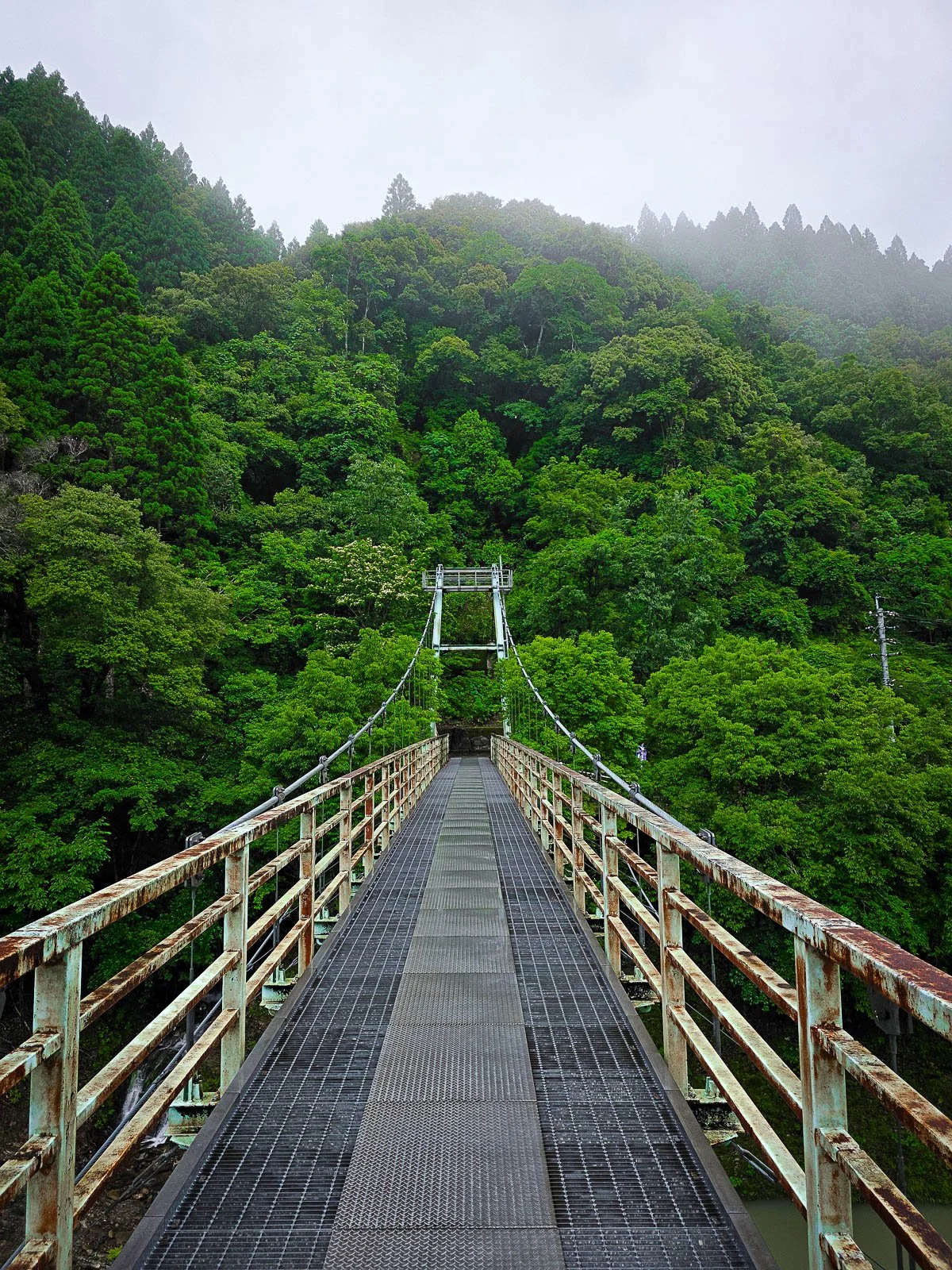
the suspension bridge from the car park
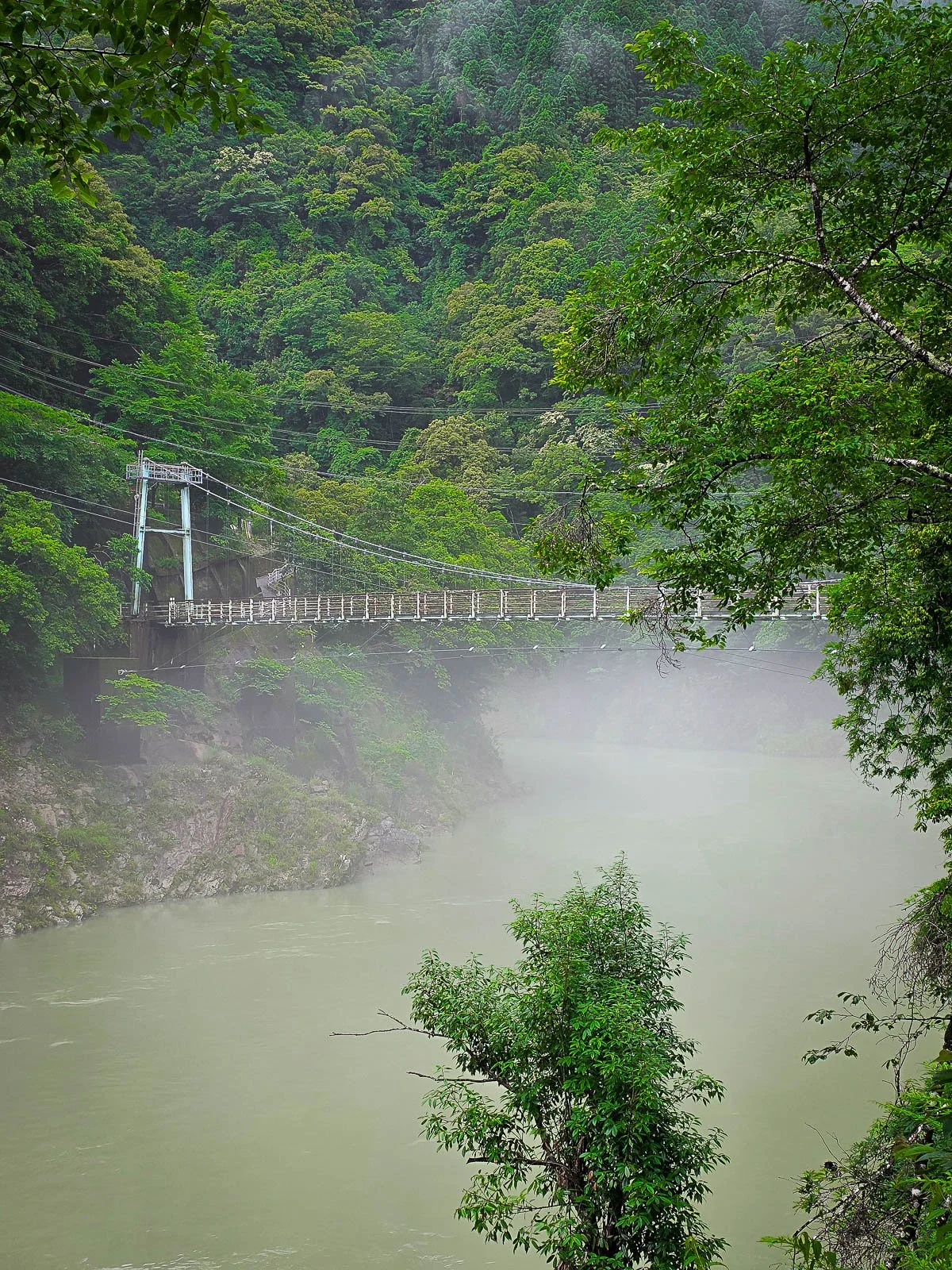
view of the bridge from the other side of the gorge
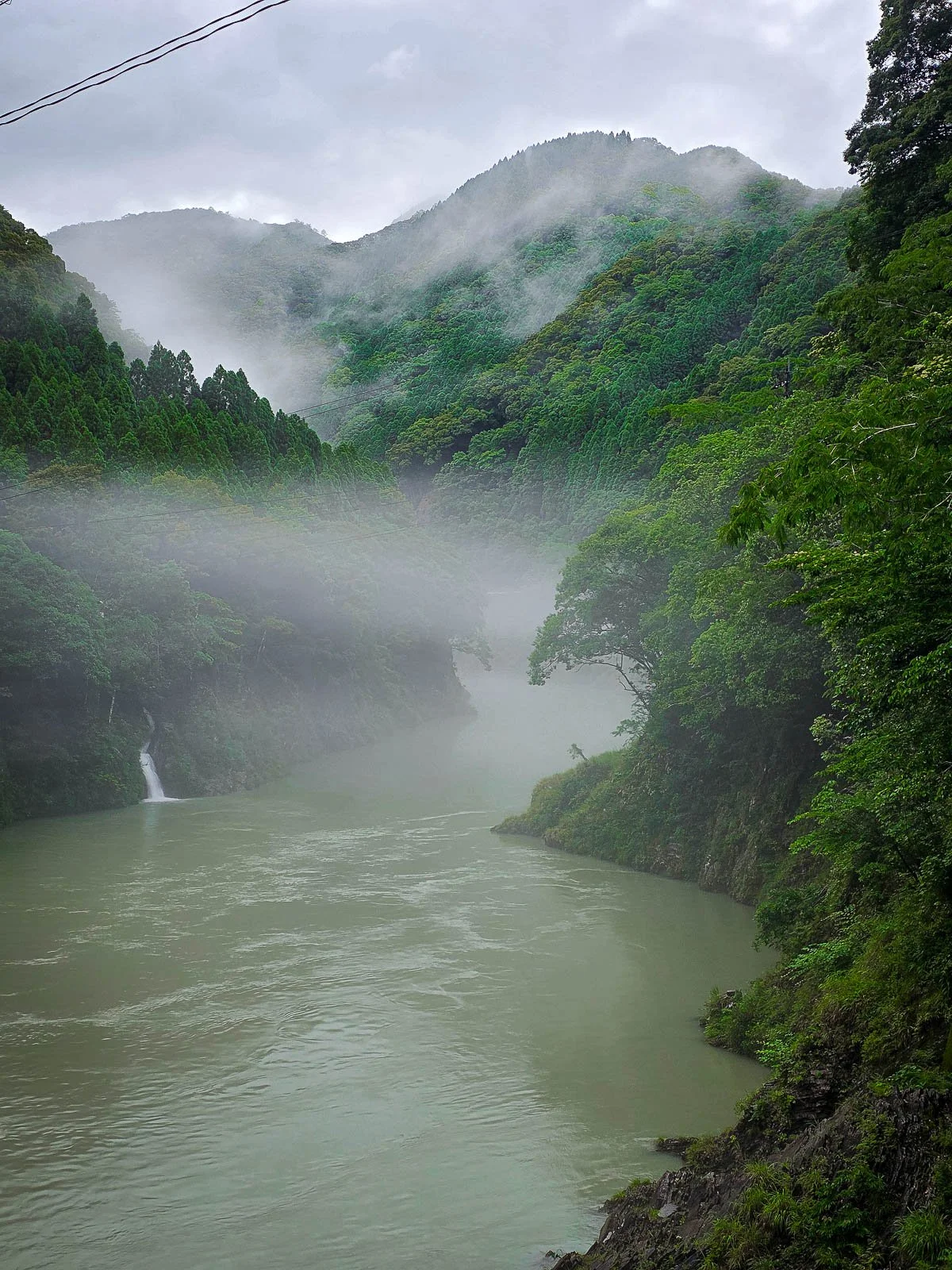
view of the gorge
Takachiho Gorge
Probably one of the most famous places to visit in Kyushu. I had known about Takachiho Gorge for years before visiting and it had always been a dream of mine to see it in real life.
This is a stunning gorge with basalt columns and vibrant blue-green water. You can rent a boat to paddle on the river or walk along the gorge path.
It’s an extremely photogenic area and because of this it gets very busy on weekends, so I would recommend visiting during the week if possible.
It’s free to visit although renting a boat prices vary depending on the season but usual rates are between 4,100 and 5,100 yen for a 30 minute boat ride.
Parking is 500 yen if you park at the gorge, however this car park was already full when we visited so we parked further away which was free.
You can read my full guide on visiting Takachiho Gorge, the best time to go, where to park, where to walk and things to do in the area.
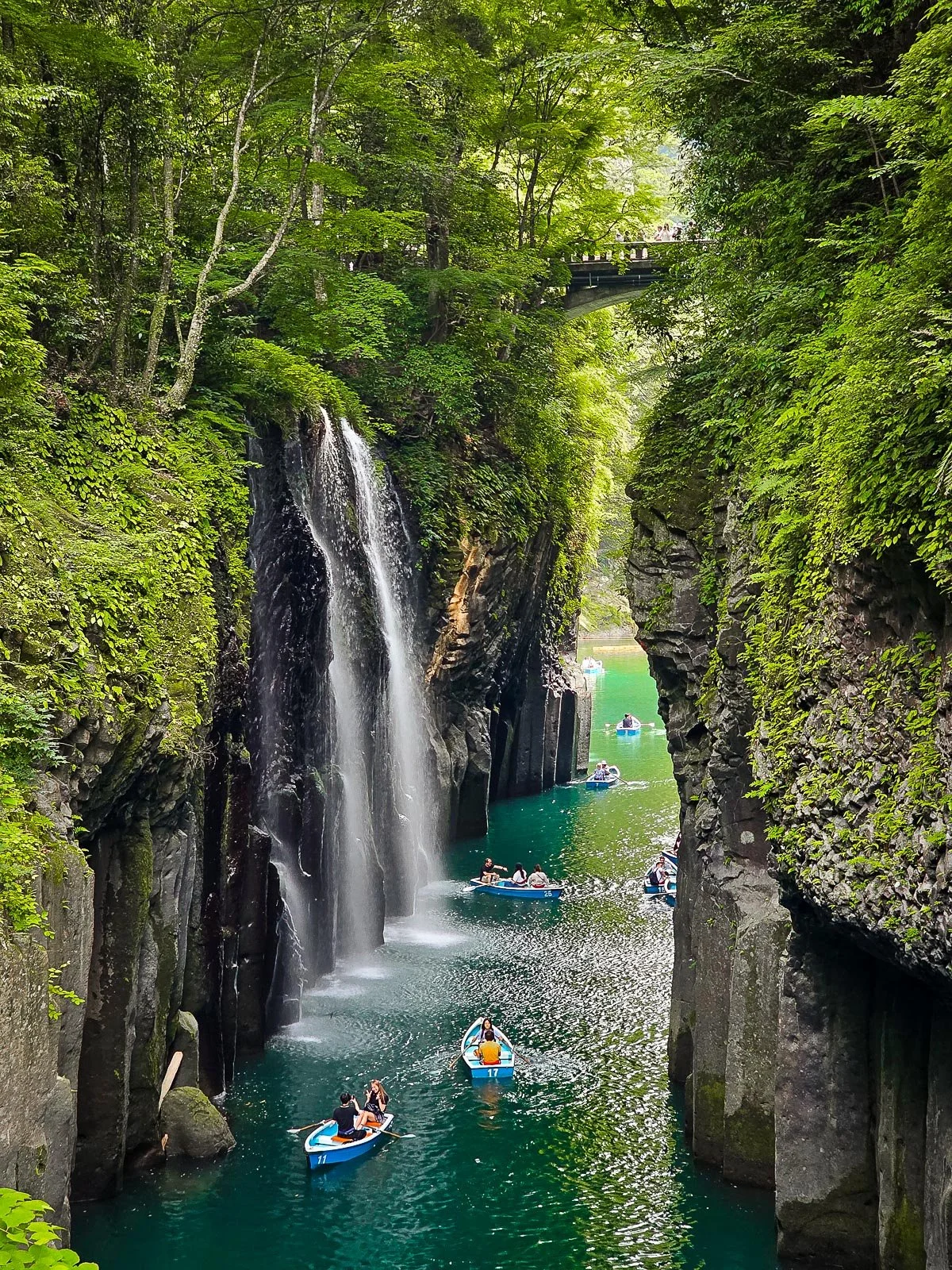
Takachiho Gorge

Takachiho Gorge viewpoint
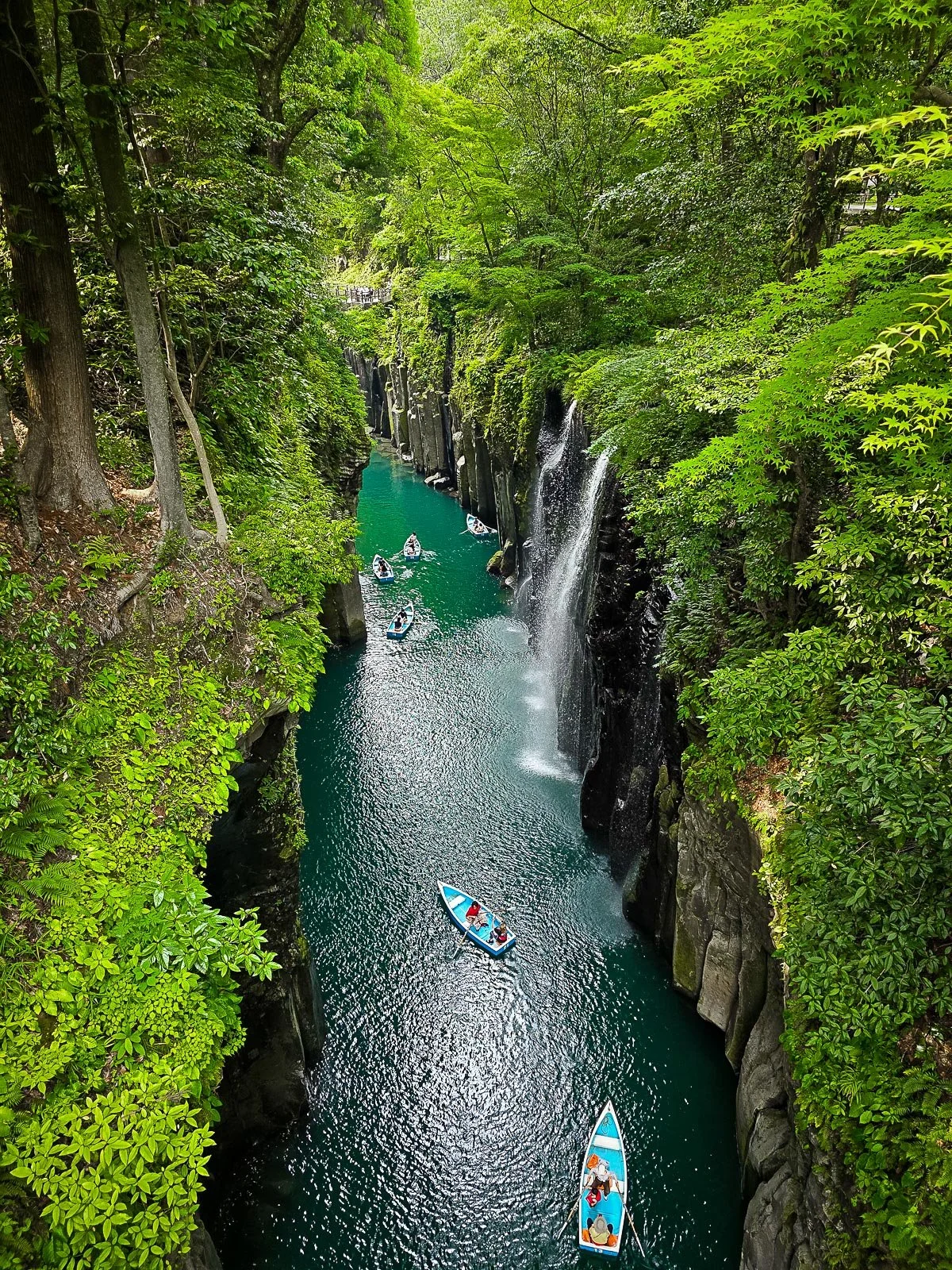
Looking down at Manai waterfall from the bridge
Yufuin
Located in Oita prefecture, Yufuin is one of the most popular places to visit in Kyushu and it was undoubtedly the busiest location we visited in the whole two weeks that wasn’t a city.
Yufuin is most famous for the Yufuin Floral Village which is supposedly designed to look like a village in the Cotswolds, England but is popular for its Ghibli themed stores and fairytale-like attractions and atmosphere.
The floral village is only a small part of Yufuin town which is itself a hot spring town with a charming shopping street and Kirin Lake also worth visiting.
The Yufuin Floral Village gets extremely busy with tour buses from around 11am onwards so I would recommend arriving earlier than that if you have your own transportation.
The village itself has pet goats, ducks and bunnies, there’s a cat cafe, souvenir stores, arts and craft stores and plenty of cafes and food stalls.
We parked at a local car park which cost something like 300 yen and spent an hour or two here - we found it overwhelmingly busy even though we weren’t visiting during peak season.
But there’s no doubt that it’s a cute and popular photo spot in Kyushu and is one of the best things to do in Kyushu if you like kitsch-y and/or Ghibli.
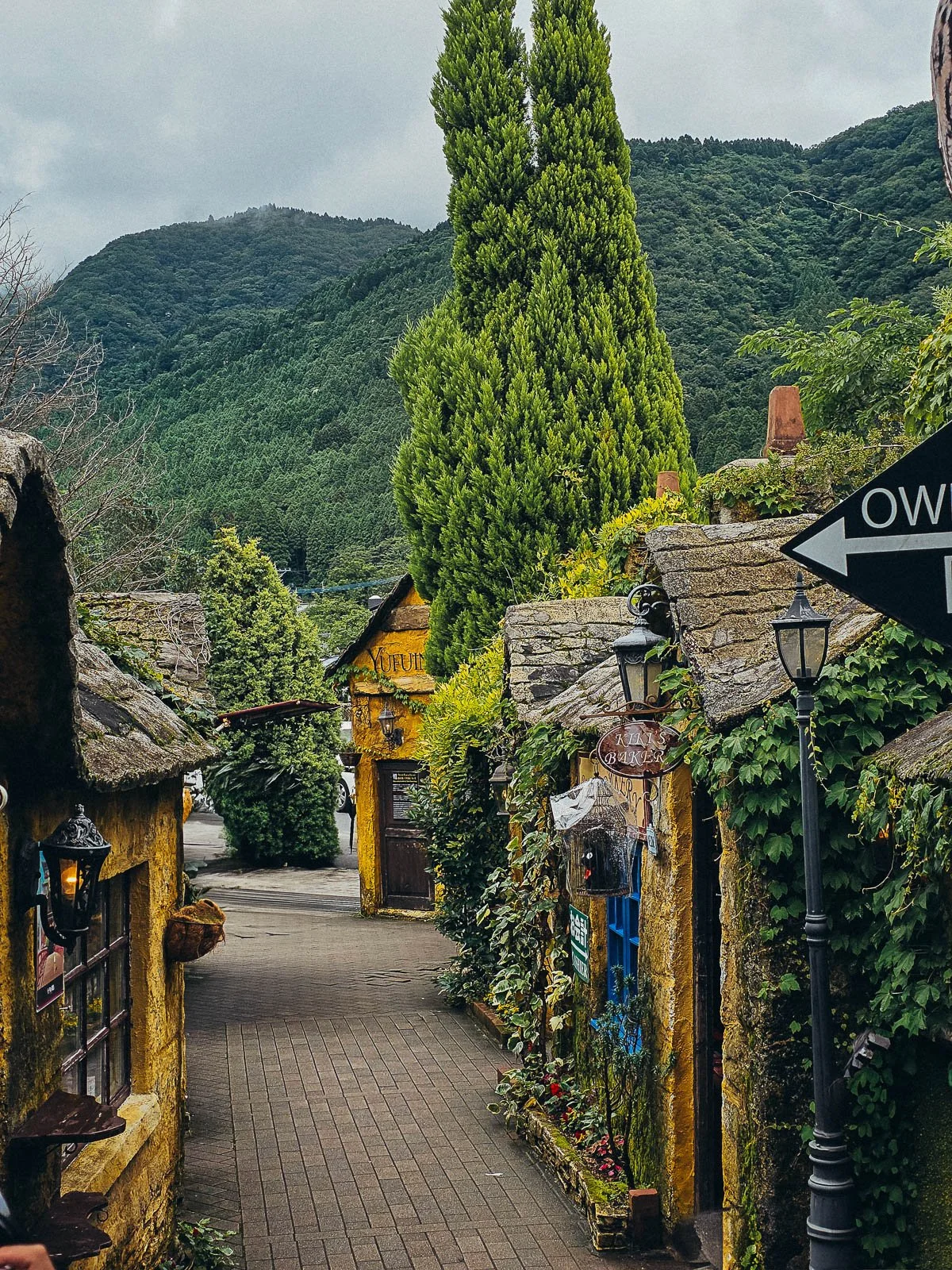
Yufuin village, Kyushu
Sun Messe Nichinan
This is definitely one of the more unusual things to do on Kyushu and I definitely didn’t expect to see Easter Island Moai Statues in Japan.
I will say, don’t go out of your way to visit here. It’s a bit of an odd place, they’ve sort of turned it into an amusement park of random sculptures and it’s 1000 yen to visit per person which we thought was a little steep for just a park with not much else to see or do apart from the Moai Statues.
However if you are driving the Nichinan Coast Road or visiting Udo Jingu Shrine, it might be worth stopping by.
Information boards at the park say that these are the only true replica Moai Statues in the world outside of Easter Island that have been created with the expressed permission of Easter Island authorities. This was as a sign of gratitude to the Japanese who helped to restore the statues that were damaged on Easter Island due to an earthquake in 1960.
The statues are on the edge of a grassy hill with the blue sea behind them in Miyazaki, just as they are in Easter Island.
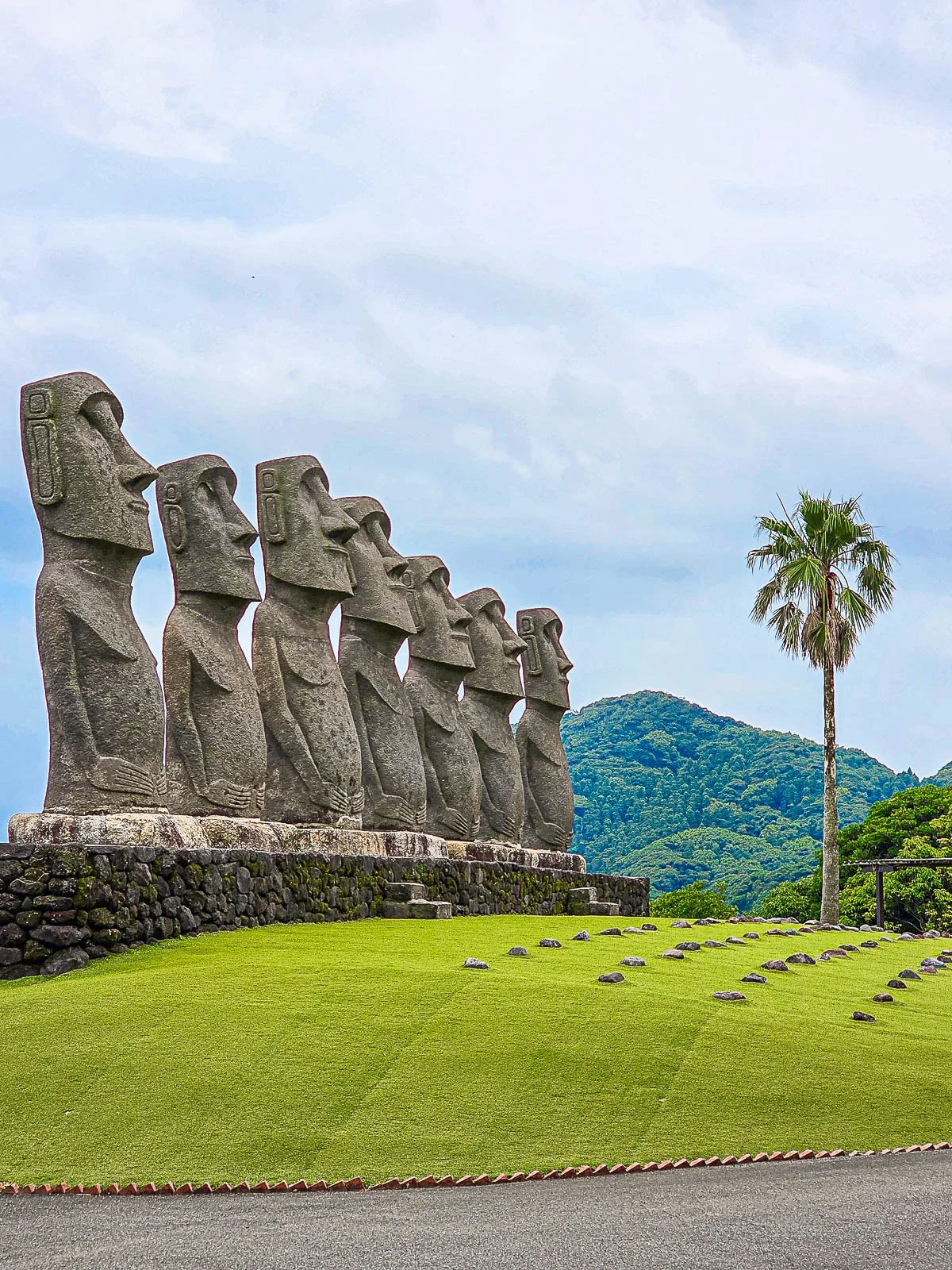
Moai statues in Japan
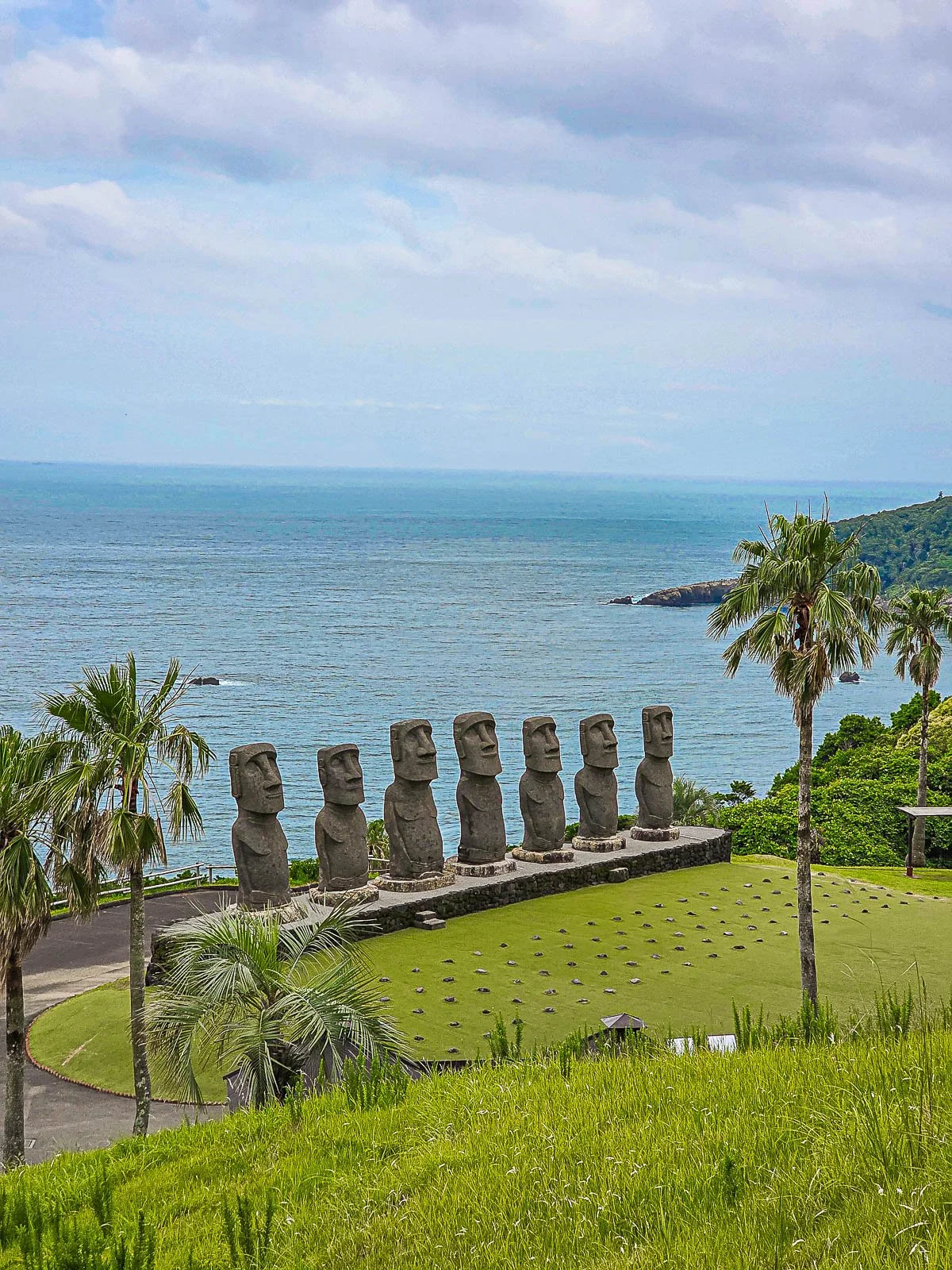
Moai statues at Sun Messe Nichinan in Kyushu Japan
Udo Jingo Shrine
Just a few minutes further south of Sun Messe Nichinan is the Udo Jingo Shrine, a Shinto shrine located in a coastal cave above waves crashing into rocks and is one of the best places to visit in Kyushu that’s also beautifully unique.
This is another location that I thought, if this were close to Tokyo it would be overrun with visitors!
There were definitely a few more people here than most of the other locations that I’ve mentioned so far, but it was not busy at all.
The shrine is free to visit.
You can go down the steps to the shrine in the cave where you’ll find the shrine stalls and you can buy clay wishing stones, you try to toss these inside the rope circle on a rock surrounded by the sea below, if your stone lands inside the circle you’ll get good luck.
We also got a goshuin stamp in the cave here and spent some time enjoying the beautiful coastal location.
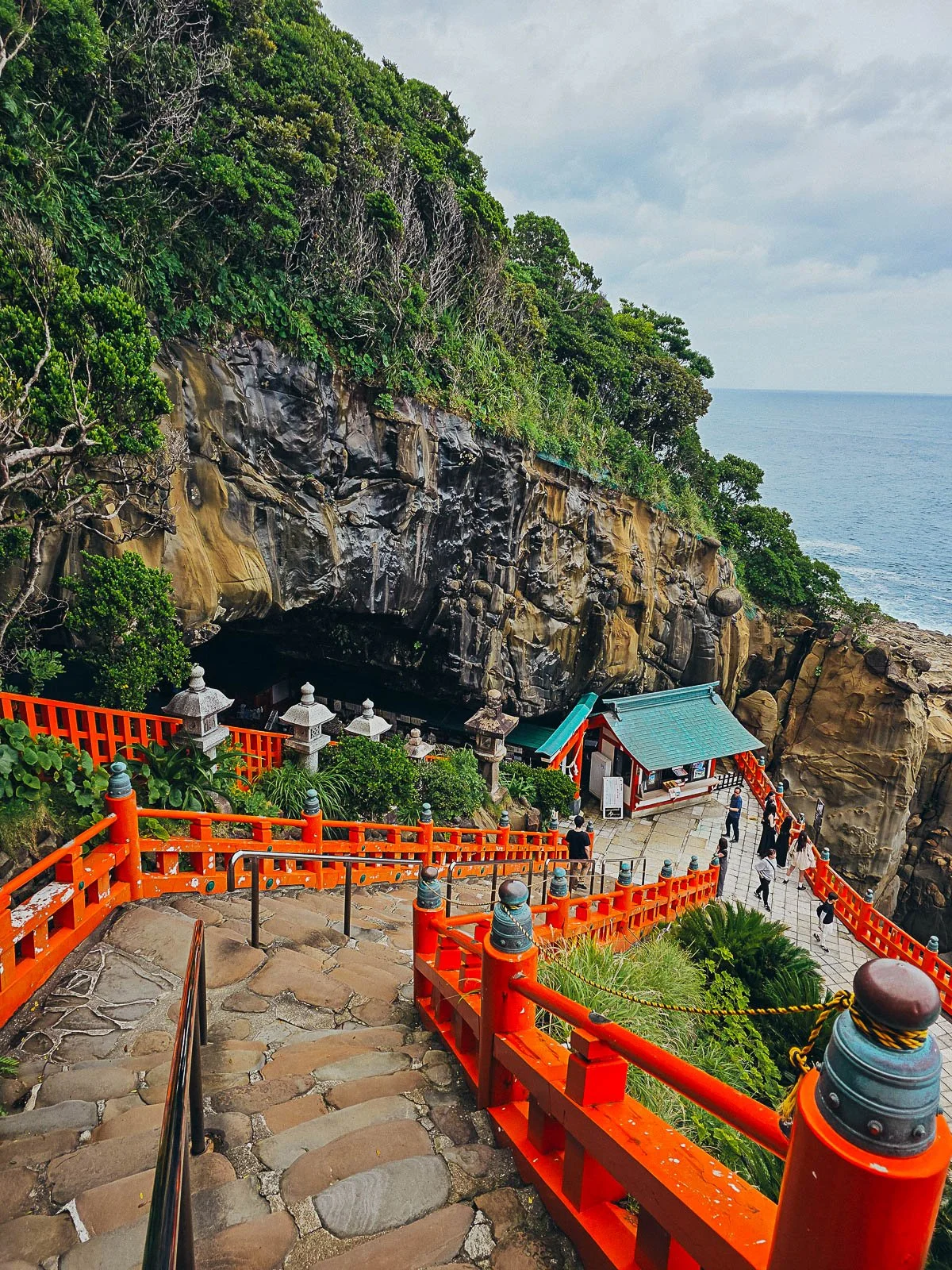
Udo Jingo Shrine
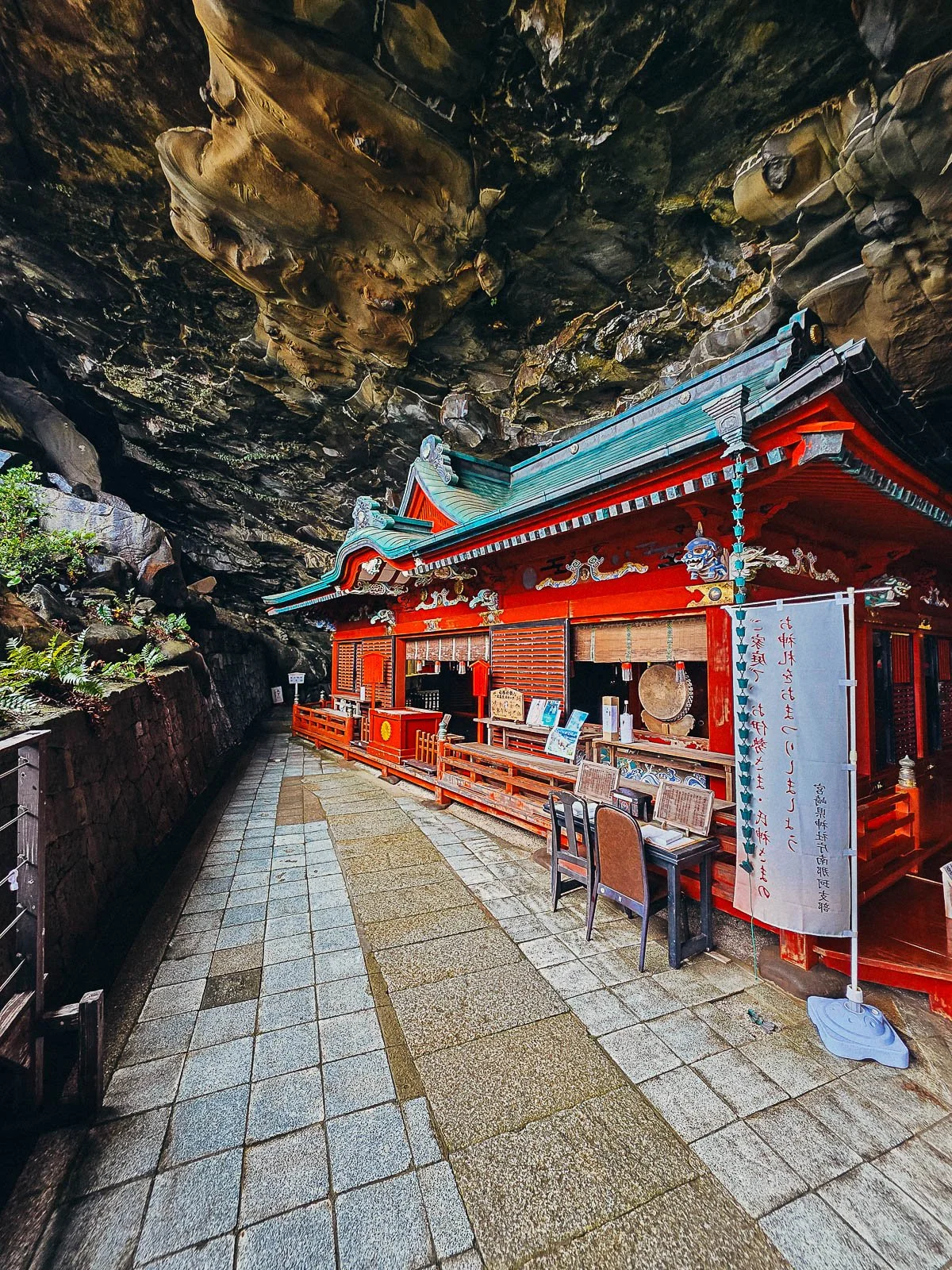
Udo Jingo Shrine in a cave in Miyazaki
Nanzoin Temple
This is a popular temple to visit just a short train ride from Fukuoka Hakata Station on the Fukuhokuyataka Line to Kidonanzoin-Mae Station.
Entrance to the temple costs 300 yen per person and there are strict dress codes here, your knees and shoulders must be covered for women, they will give you a skirt to borrow if you are wearing shorts or a short skirt/dress.
This is a Buddhist temple most famous for the huge 41m long reclining Buddha statue - said to be the largest bronze statue in the world. However the temple complex is big and you can spend an hour or two exploring the walkways, paths through the trees, various shrines and caves in the area, as well as the reclining Buddha.
There are also 4,000 nokotsudo statues at Nanzoin which are small statues with faces on them, all lined up along steps, rocks and cliffs. Sometimes these store the ashes of deceased people.
The temple is beautiful and feels like an adventure to explore, it’s definitely worth an afternoon trip from Fukuoka if you have time and I think this is one of the best places to visit in Kyushu - the complex is so large and feels mystical with so many caves, paths through trees, waterfalls and eerily quiet areas to explore.
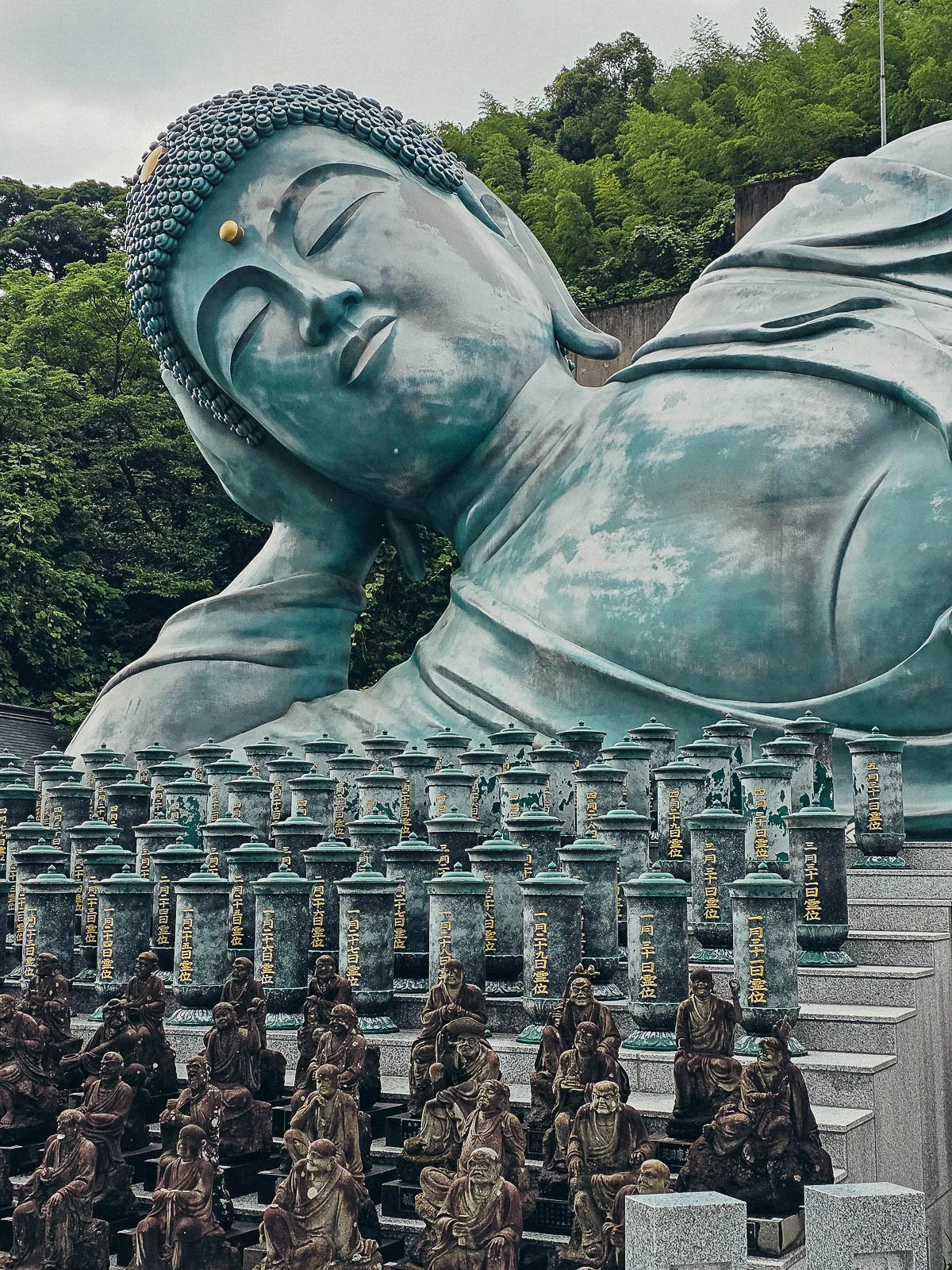
The reclining Buddha at Nanzoin Tmple
Aoshima Shrine
Have you ever visited a shrine on a tropical island before?
Now you can, here in Kyushu.
Aoshima shrine is a Buddhist shrine on a tiny island just off the coast of Aoshima, south of Miyazaki.
You can walk there at all times of day thanks to the bridge that crosses the water here. If the tide is out you can also see the unique rock formation underneath called the Devil’s Washboard.
On the island is a small shrine complex with the usual stalls for offerings and luck. You can also get goshuin here too.
The shrine itself is through the main courtyard and to the right, then you’ll walk through the lush jungle canopy to reach the shrine.
It’s a unique location for a shrine that makes it worth a visit while you’re in Kyushu.
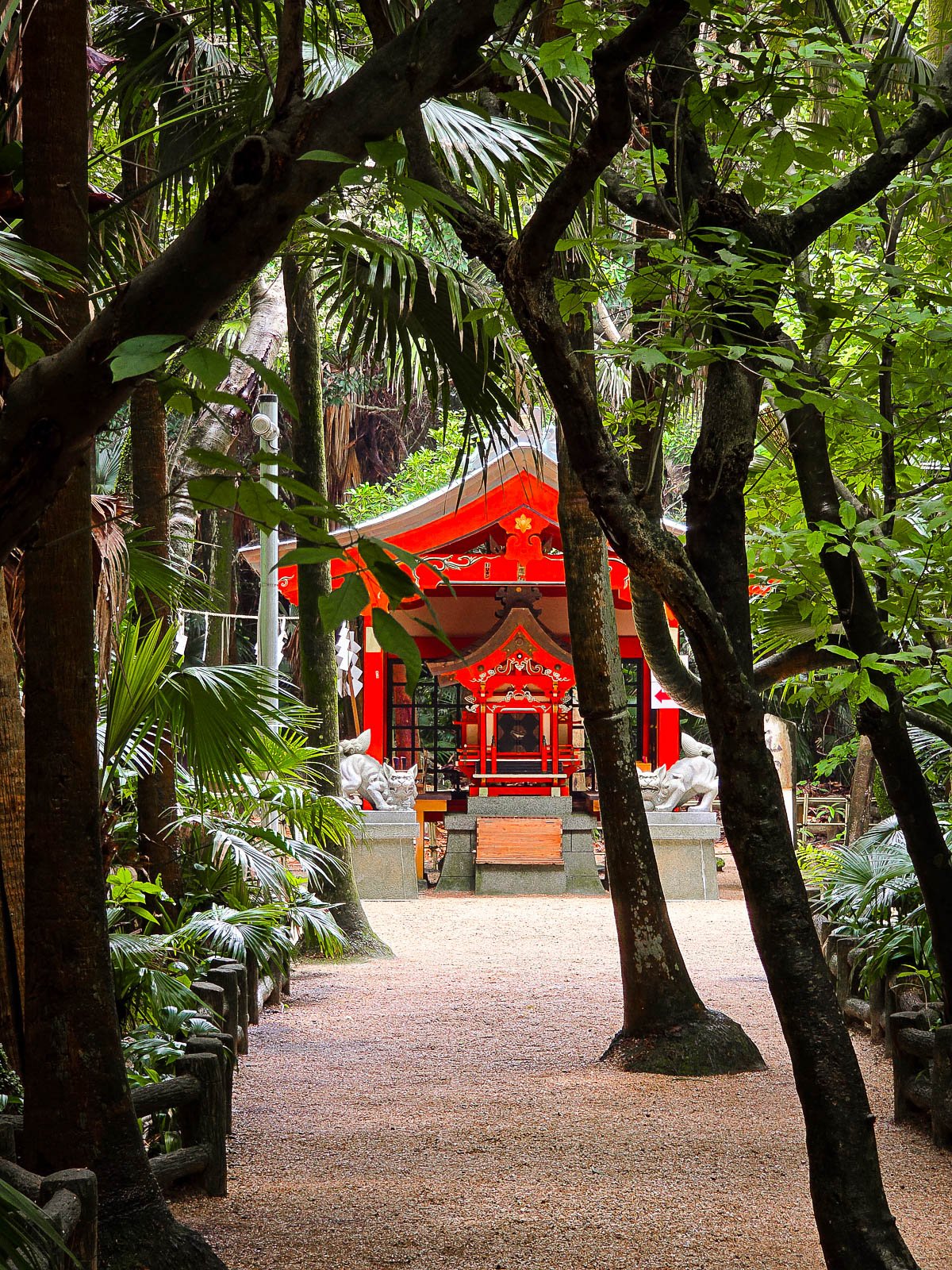
Aoshima shrine in a jungle
Beppu Hells and Beppu Onsens
Visiting Beppu is one of the top things to do in Kyushu and I’m sharing more about the city in the cities section below. But if you’re planning memorable experiences and places to visit in Kyushu, then the Beppu Hells and onsens in the town are a must.
The Hells of Beppu are a series of hot springs and geothermal pools around the city. You can’t swim in these, they’re too hot and contain high levels of dangerous gases and substances, but they are fascinating to see.
You can get a ticket to see all 7 pools, however two of them are a drive away, so if you can only see the main 5 pools then you can get the cheaper ticket.
You’ll see cobalt-blue Umi Jigoku or the vibrant iron-red of Chinoike Jigoku or the Tatsumaki Jigoku geyser which erupts every 30 minutes.
I’d recommend adding the Hells of Beppu to your Beppu itinerary - we stayed in Beppu for two nights.
During our stay we also visited one of the famous coin operated onsens in Beppu. If you search for day onsen on Google Maps in Beppu there are loads of options, but we ended up going to Sakura-yu (their manager is a cat!).
We didn’t book ahead, just turned up and picked which room we wanted from the board at the reception. There are different sizes and styles depending on the price you want to pay. We purchased a mid-range size with a traditional rock-style pool and open air doors. Each room is private, you put your coin in the slot and fresh water fills the pool, then you get 60 or 90 minutes to enjoy it. You have the shower facilities in the room for afterwards.
We paid 3,000 yen for 60 minutes but because we were there mid-morning on a weekday and it wasn’t busy they allowed us to use it for 90 minutes without additional charge.
We loved this experience as we both love onsens but public onsens in Japan are usually single sex, so my husband and I never actually get to go into an onsen together. Also my husband has tattoos and many public onsens in Japan don’t allow tattoos, so if you have tattoos, or you’re just a bit self-conscious about going in the public onsens, then a private day onsen is a great option.
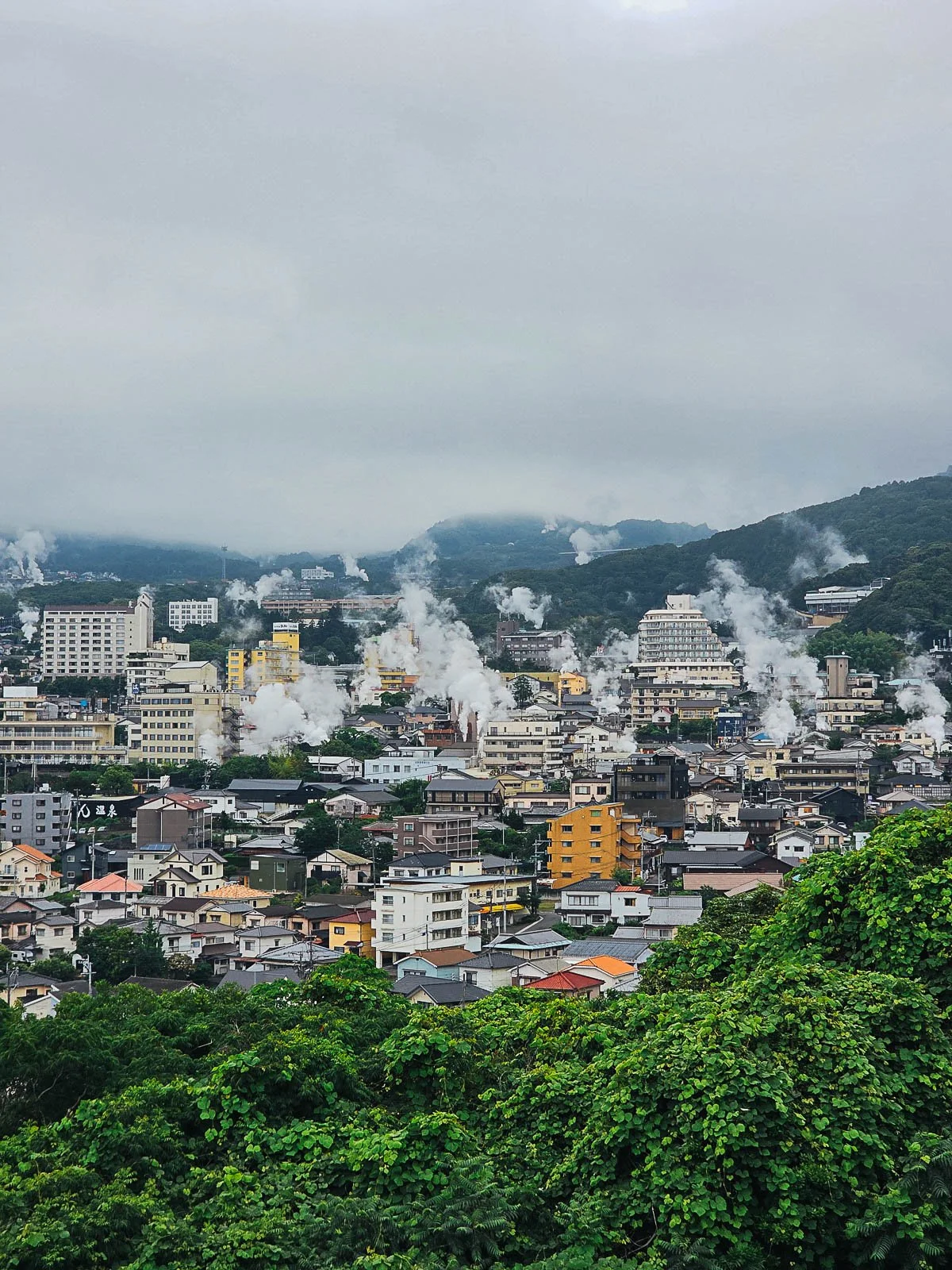
Beppu city view
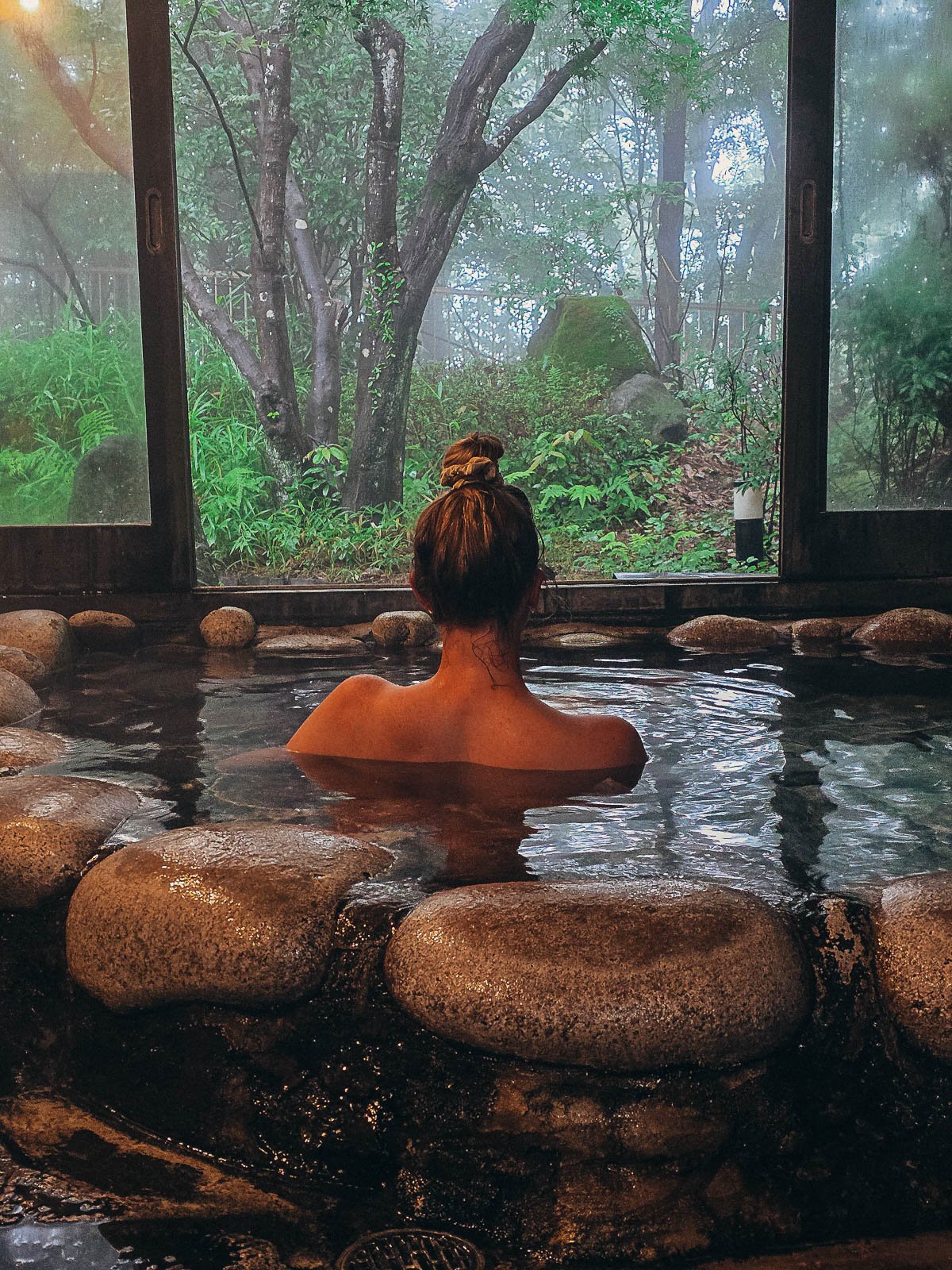
Private day onsen room in Beppu
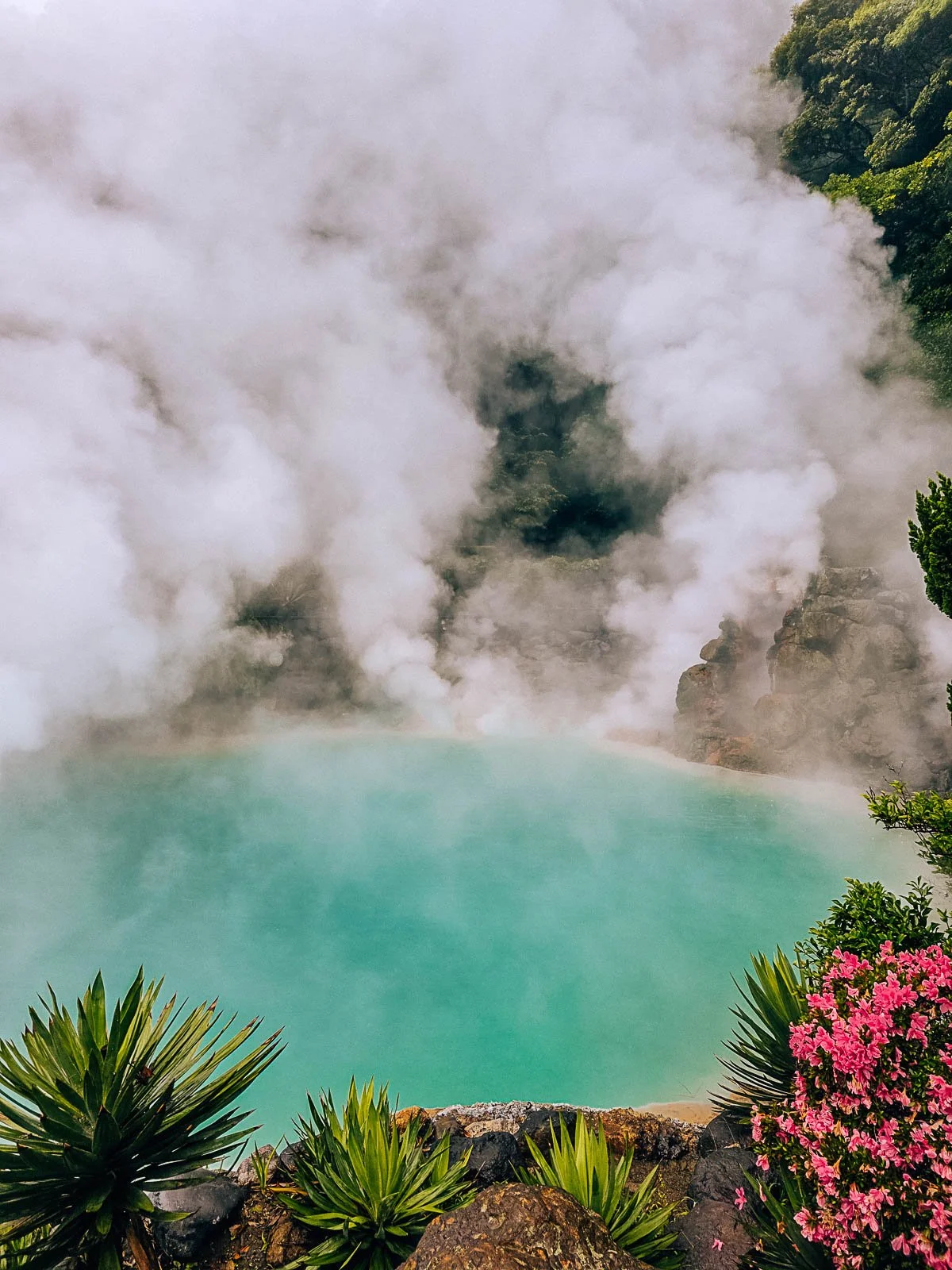
Hells of Beppu
Amanoiwato Shrine
This is a great stop to include when you’re in the area visiting Takachiho Gorge as it’s only a short drive from Takachiho.
Amanoiwato Shrine is a simple wooden torii gate and shrine surrounded by hundreds of stacked stones, but what makes this shrine unique is its location in the mouth of a large cave along the side of a river.
The trail from the shrine entrance takes you through the river valley on a trail alongside the riverbed, where you’ll come to the large cave.
It’s dark and cool inside with a beautiful view looking out from the torii gate to the lush greenery hanging over the entrance of the cave.
Another unique shrine to visit in Japan and one of the unique and beautiful places in Kyushu that we experienced on our road trip.
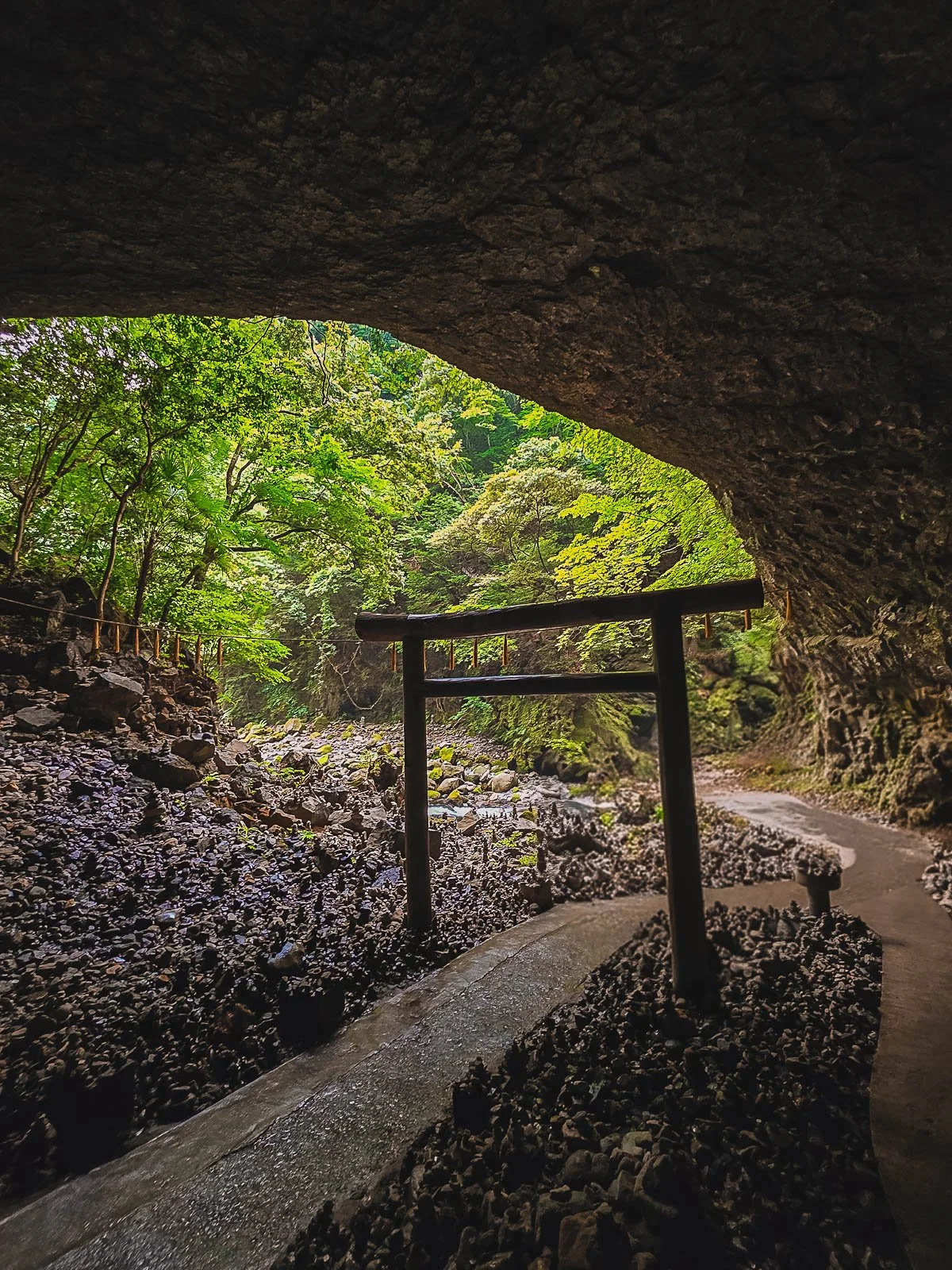
Amanoiwato Shrine
Sakuradaki Waterfall
I had this waterfall pinned on my Google Maps but we almost didn’t stop here as it was our last day driving back to Fukuoka before flying back home.
However it was a long drive from Beppu to Fukuoka and we used this as a break to stretch our legs. It turned out to be such a hidden gem in Kyushu!
This is a waterfall that is just a short 5-10 minute walk from the car park along a well-marked path, the car park and waterfall are both free to visit.
The waterfall itself is huge and spectacular, with crashing water onto boulders in the pool below. You can walk all the way along the path to the pool, right in front of the falls. But if there’s been heavy rain, prepare to be soaked!
This is probably one of the best things to do in Kyushu in autumn or after the rainy season when the waterfall is flowing at full power - just magical!
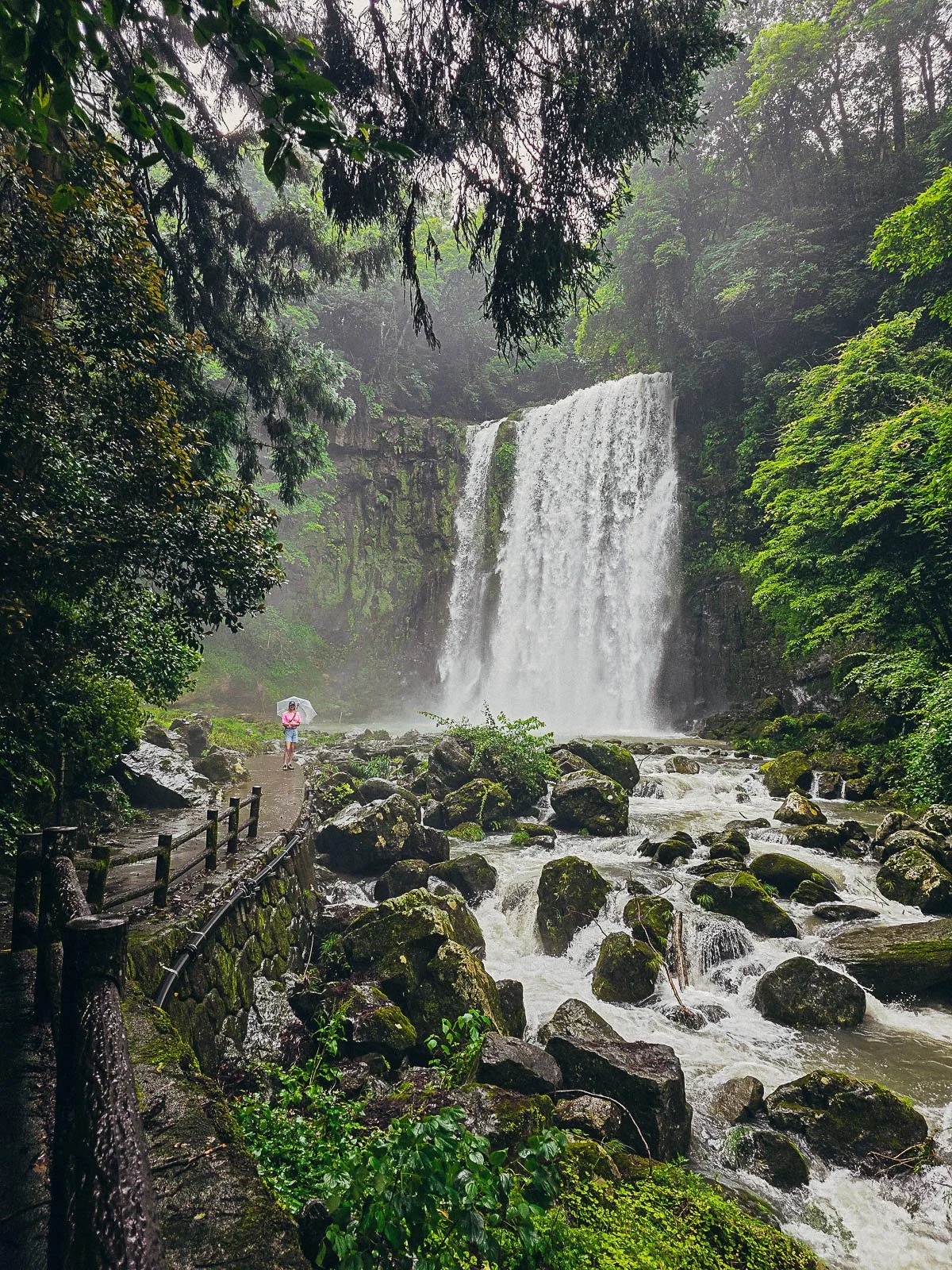
Sakuradaki Waterfall
Iwato rice terraces or Ogi terraced rice fields
There are plenty of beautiful rice terraces in Kyushu and you’re likely to spot them just by driving around, especially in Central Kyushu.
We stumbled on some in Iwato by accident and even though the weather wasn’t great, the views were beautiful.
Ogi terraced rice fields are another beautiful spot, although we didn’t get there on this trip. Or check out Tokubetto Rice Terraces - we also drove through them on our way to Takachiho Gorge and you’ll be stopping the car every 500m to take pictures!
Be aware that a lot of the roads to get to the specific fields are narrow and not suitable for cars. We only stuck to the main roads. Also the terraces are filled with water during the spring time - around May. So if you visit at another time of year, you likely won’t see the lush green or reflected views in the water.
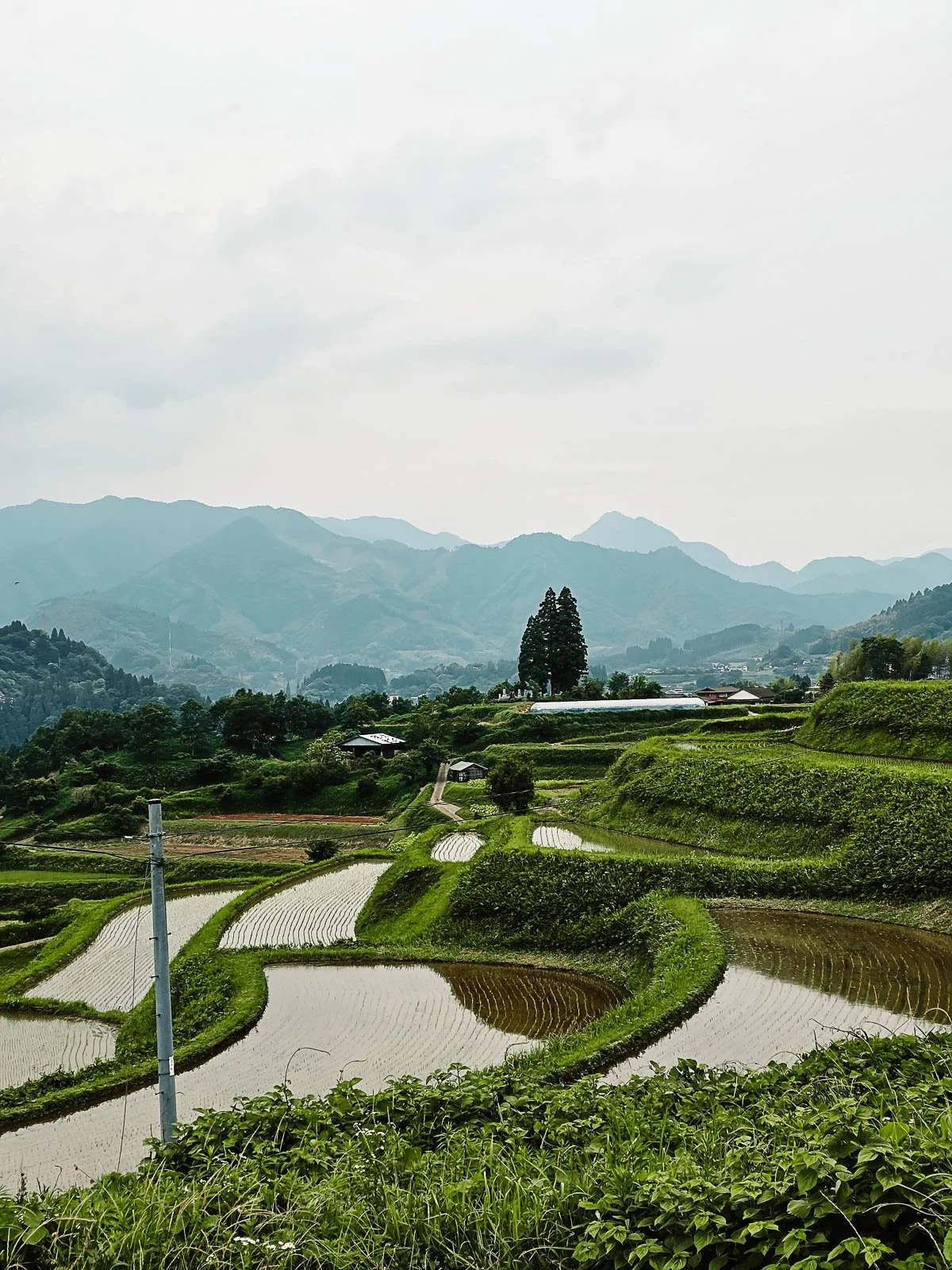
Kyushu rice terraces
Aso-Kuju National Park
Home to Mount Aso, an active volcano, there are 5 volcano peaks and multiple viewing platforms to see it from.
Aso Nakadake Crater 1 is the most popular crater to visit as it’s an active volcano that can be accessed by vehicles and on foot. There are even day tours from Fukuoka to visit the crater and surrounding National Park grasslands if you don’t have your own car to explore the area.
Even just driving through the national park was stunning though with lush green rolling hills and mountains as we drove along winding roads.
Kusasenri Observatory is another popular spot in the park for viewing Mount Naka and this is also close to Kusasenrigahama, the grassy plains where you can see wild horses.
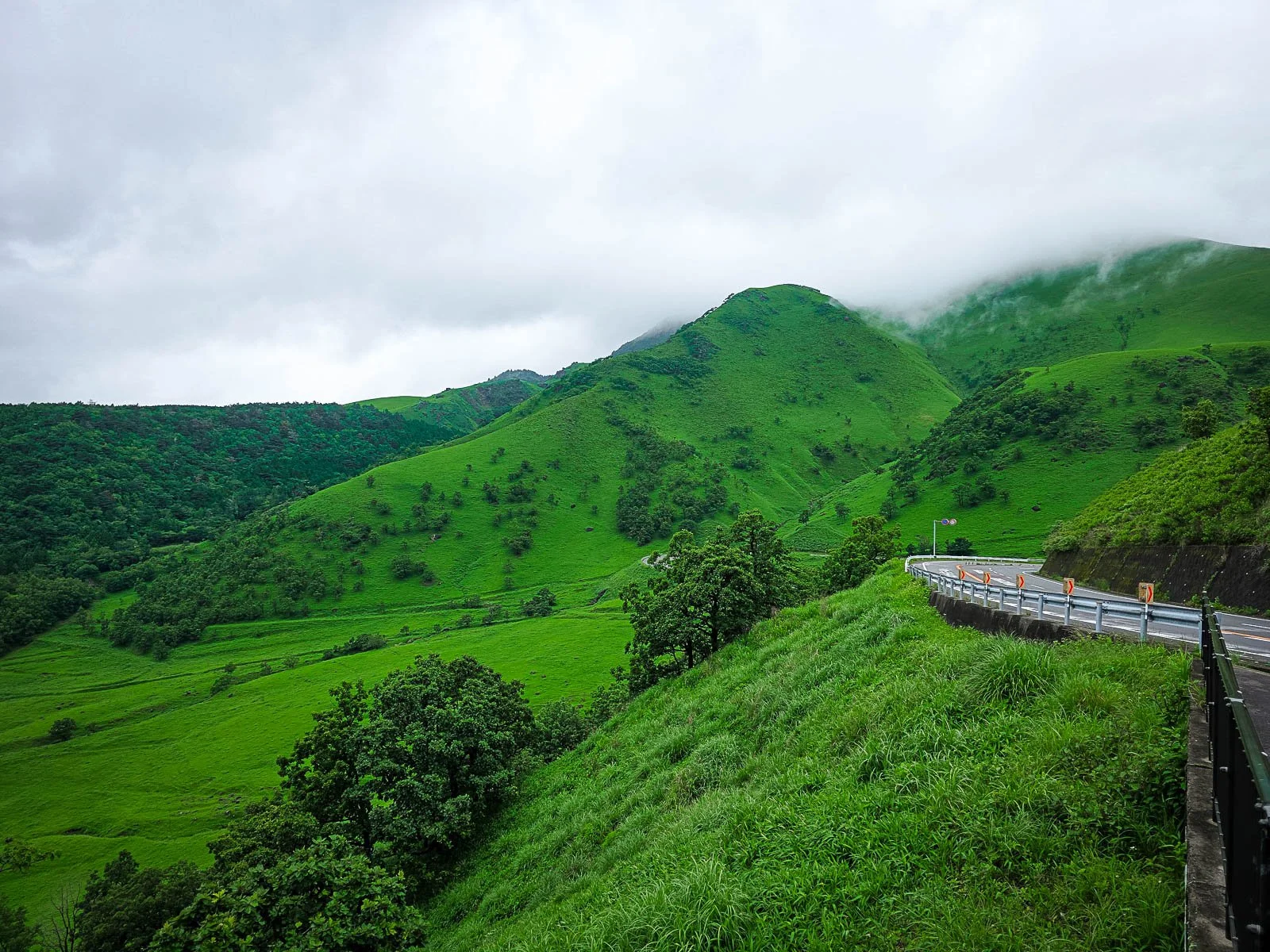
Aso-Kuju National Park landscape
Sakurajima
There is no shortage of active volcanos in Kyushu!
And this volcano erupts almost every day - you can see smoke rising from the crater often on clear days, even from Kagoshima city on the other side of the bay!
Sakurajima is an active volcano in Kagoshima. Although jima means “island” in Japanese, an eruption in 1914 actually caused this island to connect to the mainland. However the connection is on the far side of the island, to the Osuni peninsula.
The most common way to visit Sakurajima is by ferry from Kagoshima city which is a short 20 minute ferry ride and costs 250 yen one way (you pay when you arrive on Sakurajima and again when you leave the island)
I highly recommend spending a whole day on Sakurajima as there’s a lot to see and do.
We started by taking the sightseeing bus from the ferry terminal which costs 230 yen (in 2025).
The bus has several stops so it’s totally up to you how you spend your day on the island.
The most popular spot is the Yunohira Observation Deck which has panoramic views of the volcano and surrounding island as well as the lava fields and Kagoshima Bay. Unfortunately the weather was not great on the day we visited so visibility was low - I would recommend going on a clear day so you can see the volcano and the smoke rising from the equator.
The bus also stops at the Sakurajima Visitor Center which is very informative and the Sakurajima Magma Onsen Hot Spring.
While we didn’t go to the onsen, there is a free hot spring foot bath on the other side of the road from the visitor center which is a beautiful spot to enjoy the hot spring water and the views.
We met a German couple while at the foot baths who had been on some of the hiking trails and said the hiking is incredible on the island too - worth it if you have a full day to explore. They were also soaked though thanks to the weather so make sure you prepare if you’re visiting in the rainy season!
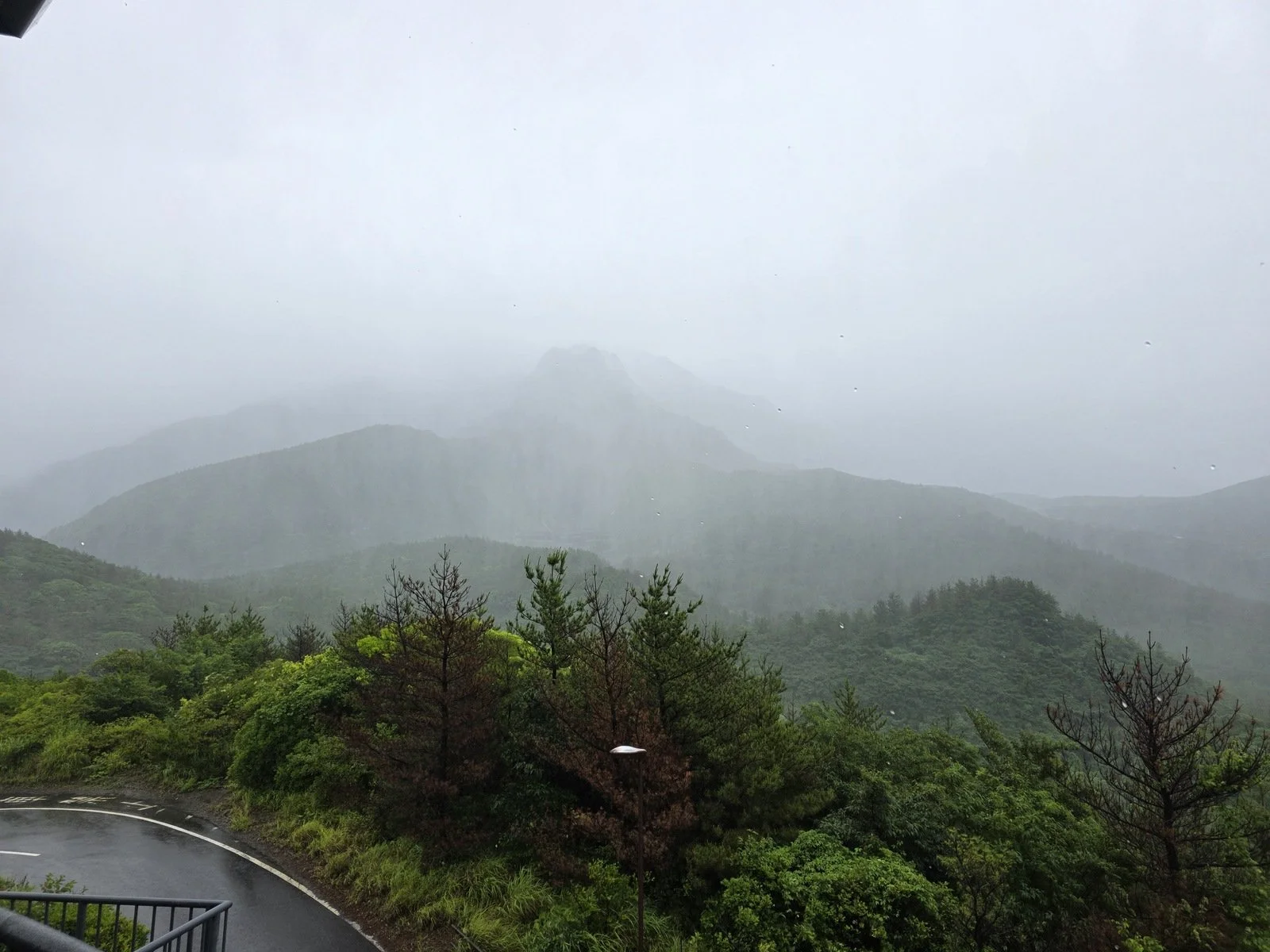
Sakurajima volcano in Kagoshima, obscured by the heavy rin!
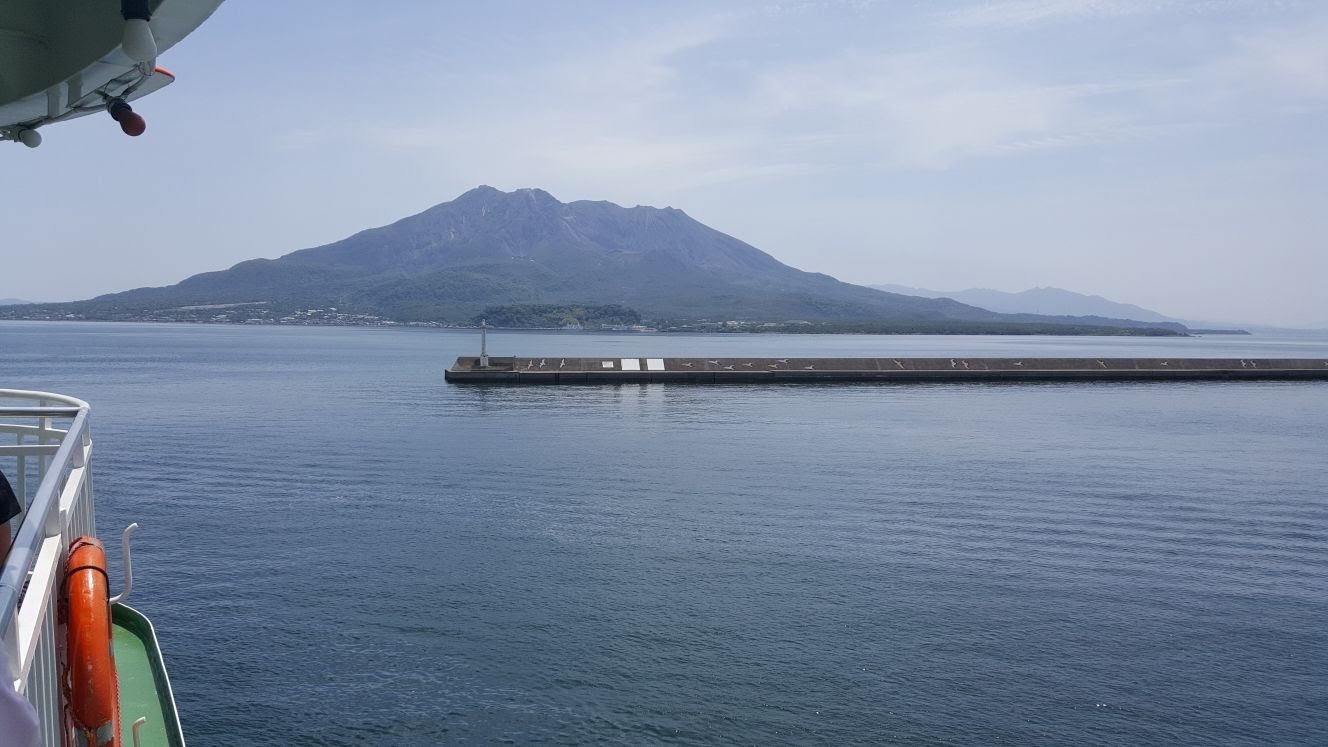
Sakurajima volcano visible on a clear day
Yanagawa
Yanagawa is most popular as a short day trip from Fukuoka where you can go punting on the Yanagawa canals in the city - often called the Venice of Japan.
The canals include the moat of a samurai castle and many bridges which you may have famously seen some of the Japanese boat men jump over the bridges as they steer the boats through the canal system.
Head to the Suigo Yanagawa Kanko area to find the wooden punt rentals and the old town area.
This area is especially popular in spring when cherry blossom trees hang over the canals.
Yanagawa is also famous for the Wisteria Tunnel of Nakayama - a wisteria covered walkway that blooms during the spring and is incredibly popular to visit.
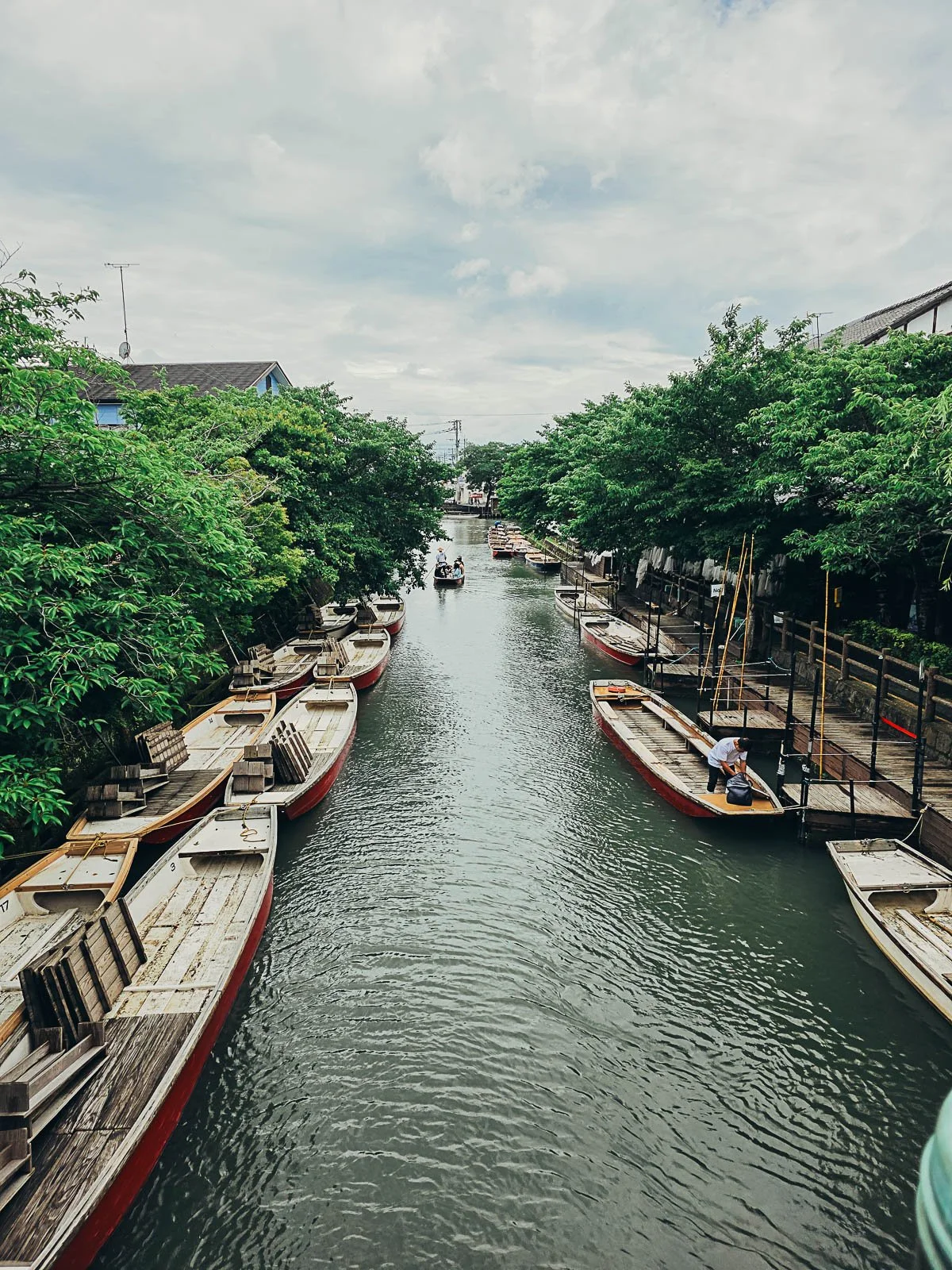
Yanagawa canal
Ukiha Inari Shrine
This hillside shrine is a little out of the way but I really wanted to visit because it has a line of torii gates descending down the hill with views of the town and hills beyond.
The shrine complex itself is fairly small, but I was amazed to find no one else here when we visited!
While I don’t want to make a direct comparison to the famous Fushimi Inari Shrine in Kyoto because they are very different, if you are looking for that line of torii gates in a unique setting, this is a great spot to visit.
I recommend driving up the hill and parking at the shrine itself rather than ascending the steps through the torii gates - you’ll get exhausted fast - especially in the humidity!
The shrine is free to visit!
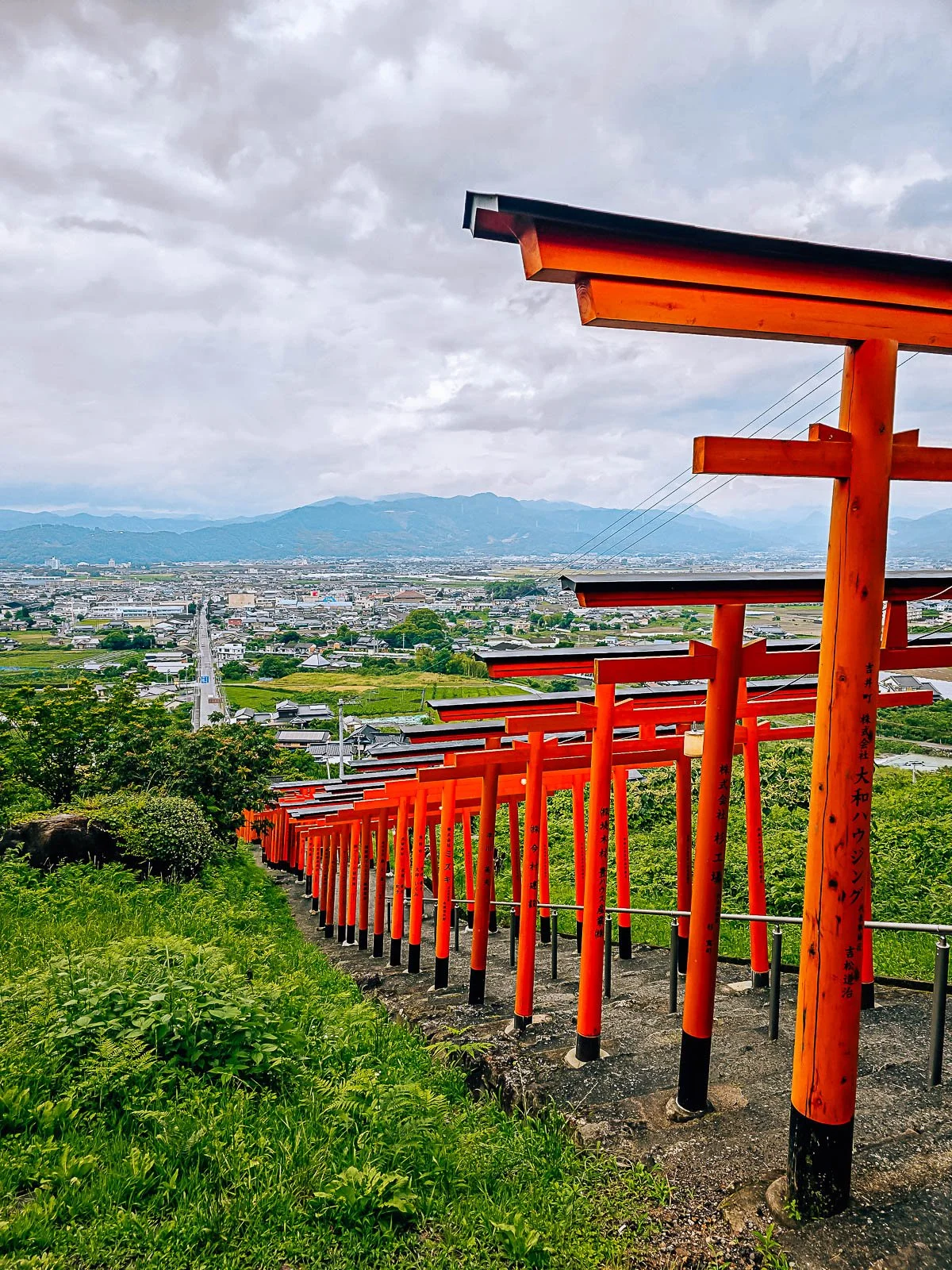
Ukiha Inari Shrine
Daihonzan Naritasan Kurume Temple
While I wouldn’t say this is a “must-visit” in Kyushu, if you have extra time in the Fukuoka area, I’d highly recommend coming down to Kurume and visiting this shrine, Koura Taisha Shrine and nearby Dazaifu Tenmangu Shrine.
I’ve included this shrine on the list because it’s probably one of the most unusual and unique places to visit in Kyushu thanks to the HUGE white statue of Kannon, the Goddess of Mercy. We actually spotted the statue from the road and decided to make a detour to check it out.
At 62 metres tall, you can climb the statue as well as explore the grounds and temple.
Honestly this part of the complex felt like I was back in Southeast Asia somewhere!
The main shrine is free to visit but to enter the area with the statue and stone temple, it’s 500 yen.
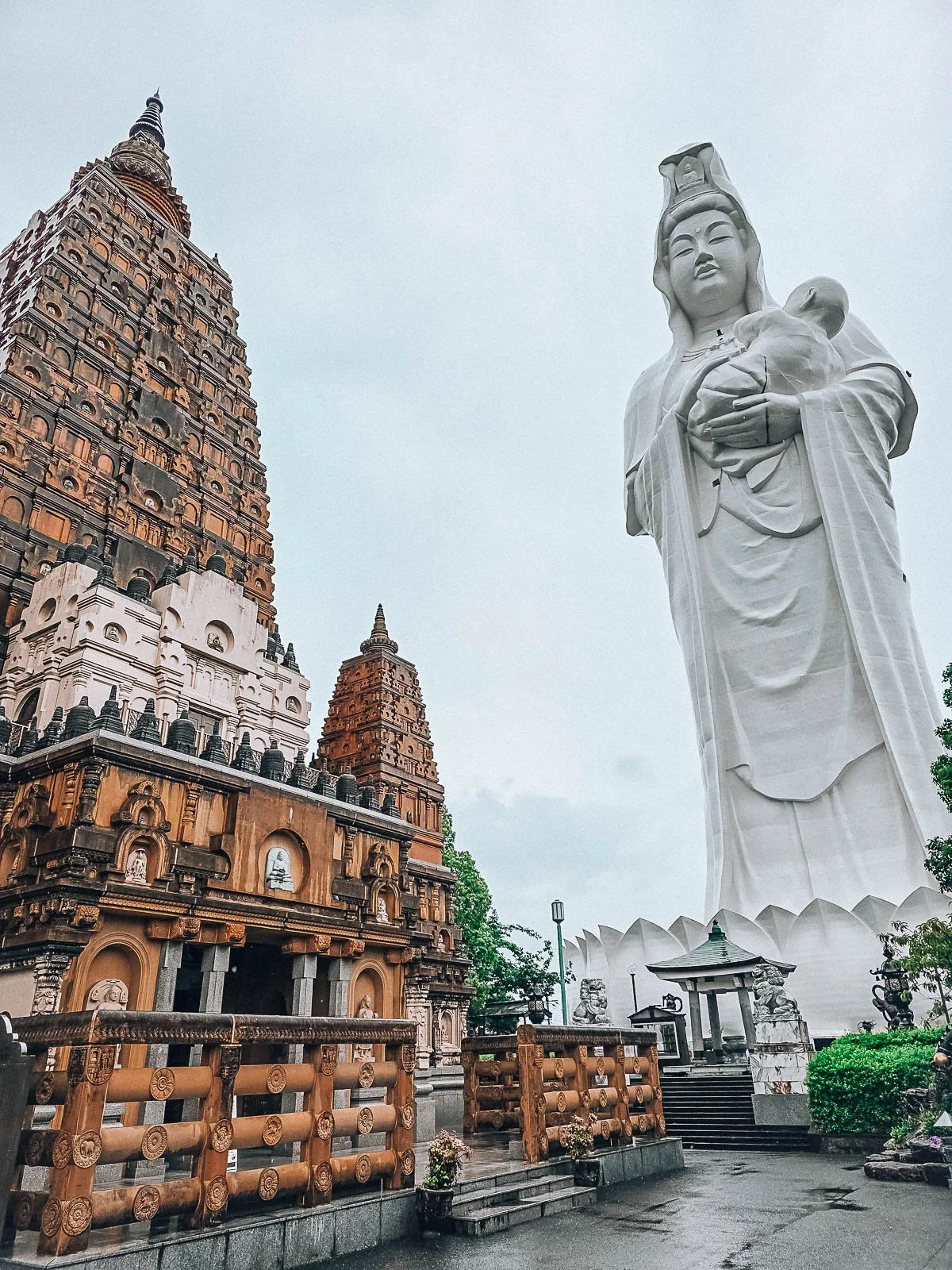
Daihonzan Naritasan Kurume Temple
Dazaifu Tenmangu Shrine
This is one of the most famous and popular shrines to visit just a short journey outside of Fukuoka.
This temple complex is HUGE. There are various car parks which you need to pay for around the complex as there are several entrances, but the shrine itself is free to enter.
There’s even a lake, a museum and an amusement park in this temple - that’s how big it is!
We just checked out the main shrine area which is dedicated to the God of Learning and got our Goshuin stamp.
There were also gorgeous hydrangeas floating in the water which was beautiful to see at this time of year.
Again, I don’t think this is necessarily a must-see shrine, but if you have longer in the Fukuoka area then it’s definitely worth a visit.
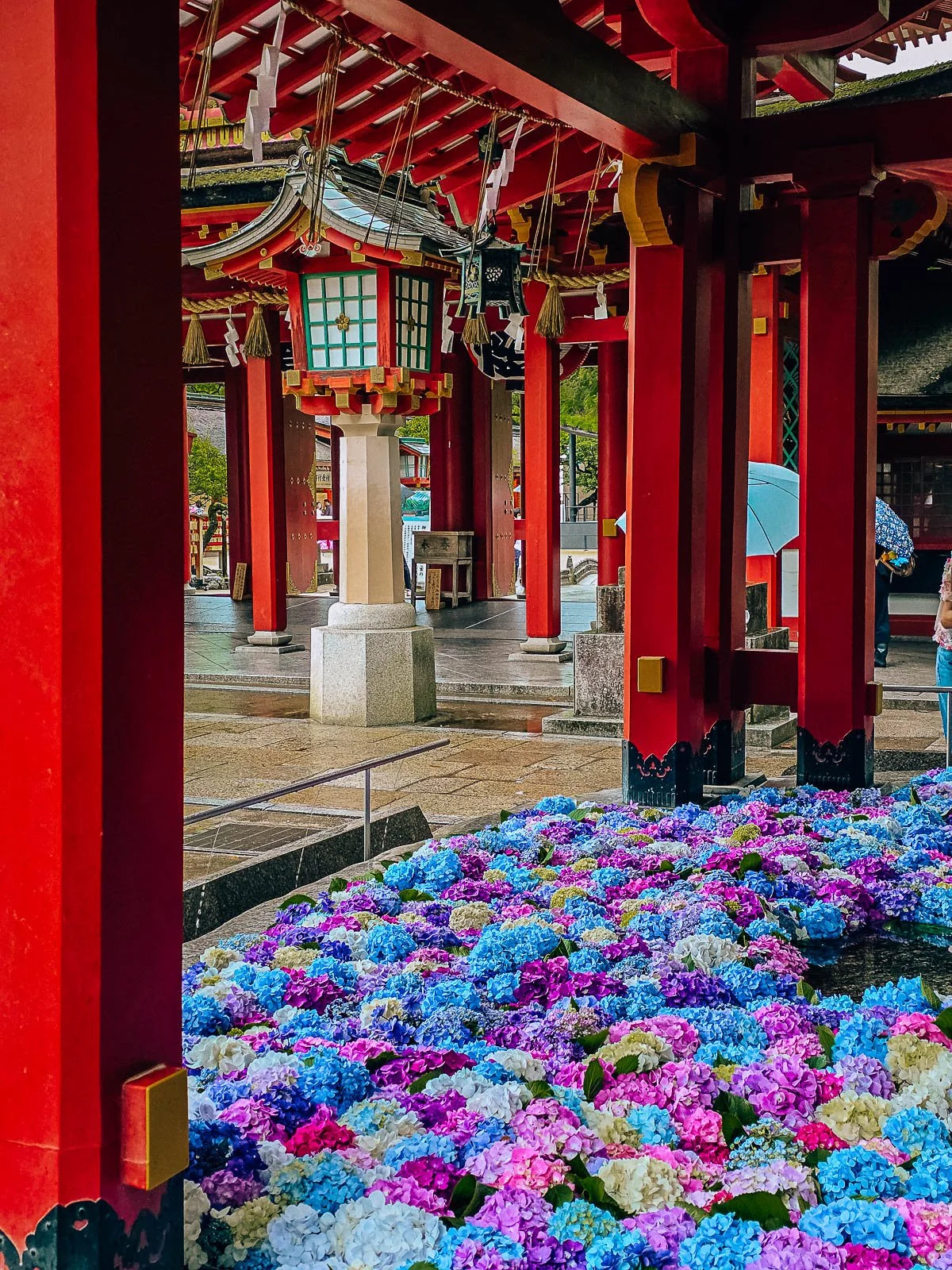
hydrangeas at the Dazaifu Tenmangu Shrine
The best cities in Kyushu to visit, Japan
Fukuoka
Where we stayed: Best Western Plus Fukuoka Tenjin-minami
We spent 5 days in Fukuoka in total, 2 at the start of our Kyushu road trip and 3 at the end and I absolutely RATE this city.
It's much quieter and less touristy than the big hot spots like Kyoto, Tokyo and Osaka but there’s so much to do that I think 5 days there is actually a great amount of time!
There’s lots of cultural activities, popular tourist and local activities, a great food scene, vintage shopping there is great, I loved the cafes and bakeries and it’s well connected - did you know you can get from Osaka to Fukuoka’s Hakata Main Station in just 2.5 hours on the Shinkansen?!
My top things to do in Fukuoka:
Go and see a baseball game
Eat Hakata Ramen (it’s from Fukuoka!) I loved the Ramen Stadium in Canal City
Visit teamLab Forest Fukuoka (it’s right next to the baseball stadium)
Visit Nanzoin Temple (just a short train ride from Hakata Station)
Tochoji Temple
Kushida Shrine
Eat at the Fukuoka nakasu street food stalls
Nakagawa River Cruise
Go vintage shopping in the Daimyo area
Do the Chikugo Rail Kitchen train ride
There are also a couple of scenic train journeys from Fukuoka which we didn’t do but are very well reviewed: 7 Stars Kyushu journey, the Aru Ressha train and the Yufuin no Mori train
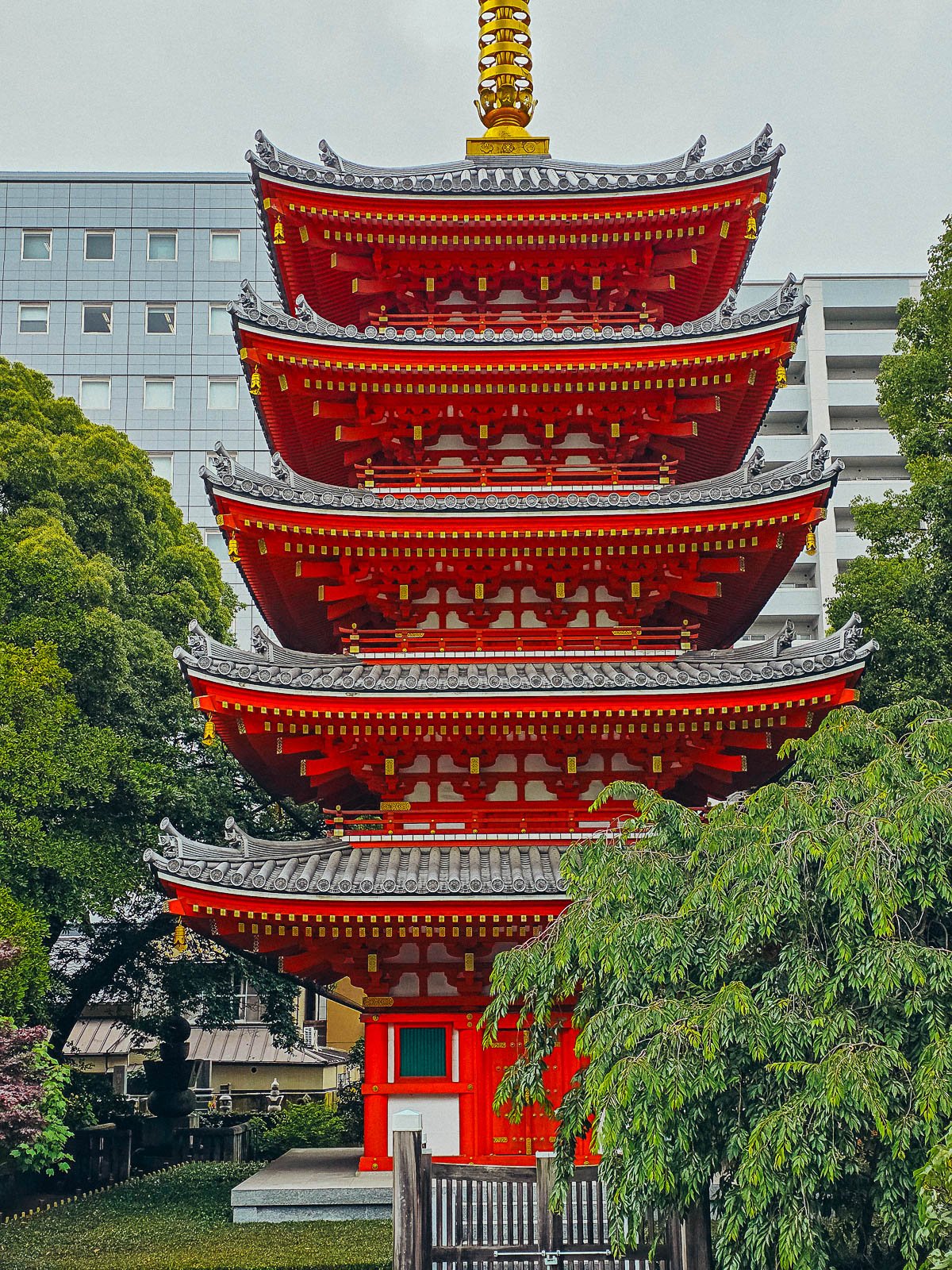
Pagoda at Tochoji Temple in Fukuoka
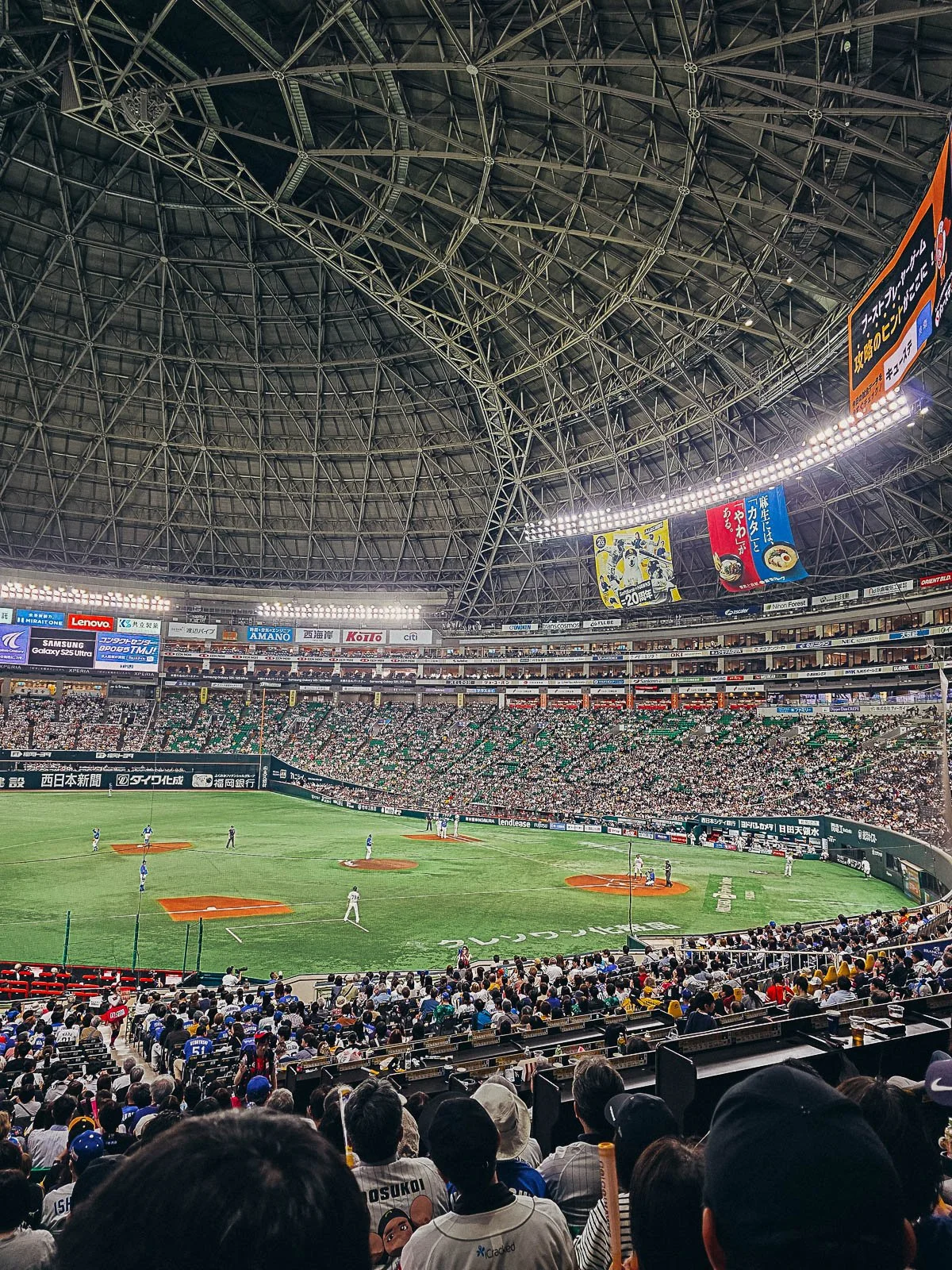
A Softbank Hawks baseball game
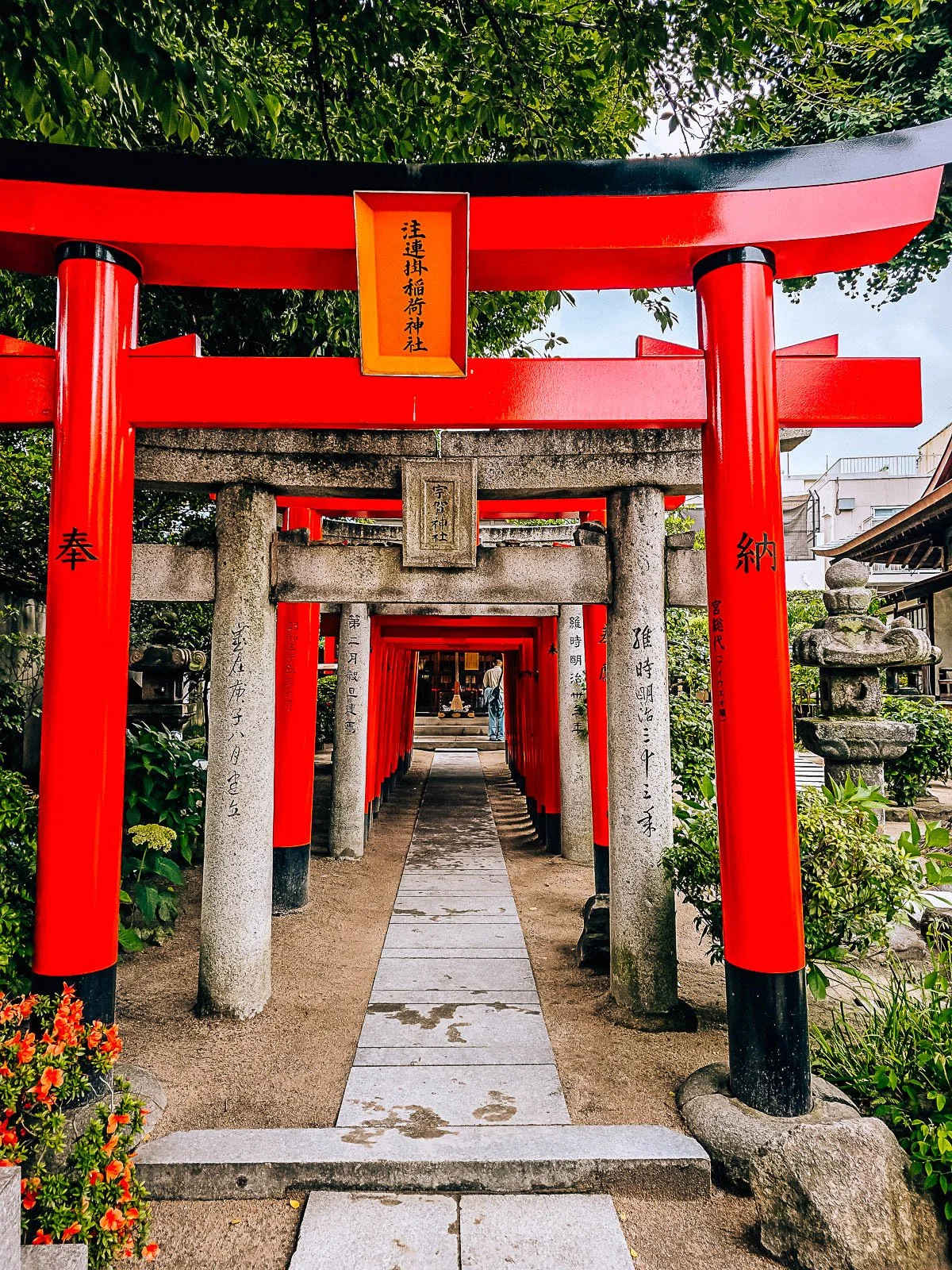
Part of the temple complex at Kushida Temple in Fukuoka
Nagasaki
Where we stayed: Hotel Forza Nagasaki
Nagasaki was my favourite city on this trip, I think it’s such an underrated Japanese city and hardly anyone visits because it’s so far south in Kyushu!
We had two days and three nights in Nagasaki and I wish we had longer to do some day trips and see more of the prefecture.
Nagasaki is of course known globally for being the second city in Japan to be hit with an atomic bomb by the US in August 1945, 3 days after another atomic bomb was dropped on Hiroshima.
I highly recommend you visit the Nagasaki Atomic Bomb museum. I not only learnt so much about that horrific day in history but also the aftermath, both on a global and political scale, and also on a human scale - the museum does a great job of sharing survivor testimonies. And the stories of regular people in this museum are horrific, the deaths that people suffered, the stories of those left behind, the destruction of families… It is a heavy museum to visit but an important one.
The museum also has sections that explain the physics of the A-bomb and what the long term impacts were on humans physically as well as effects on the landscape. There is also a section on the use and testing of nuclear weapons that has continued into the 21st century, including accidental detonations, all of which is a terrifying reminder of why we must stop this ever happening again.
Interestingly, many stats after the atomic bomb said nothing would grow on the land of Nagasaki for 75 years. We were visiting almost exactly 75 years later (2 months shy) and Nagasaki is one of the greenest, lushest cities I’ve visited in Japan.
Read my 2 days in Nagasaki itinerary.
My top things to do in Nagasaki:
Visit the Atomic Bomb Museum
Visit the Atomic Bomb Hypocenter and monument (just down the road from the museum)
Visit the Peace Park
Take Ropeway and see the amazing view of Nagasaki from Mt Inasa overlook
See the Sannon Shrine one-legged torii gate, the only part left standing after the atomic bomb hit
Visit Glover Garden and the Former Glover House
Explore the shops and street food around Inori Hill
Eat Nagasaki’s famous tomato-based ramen (we went to Ramen Hiiragi)
Walk through Nagasaki Chinatown
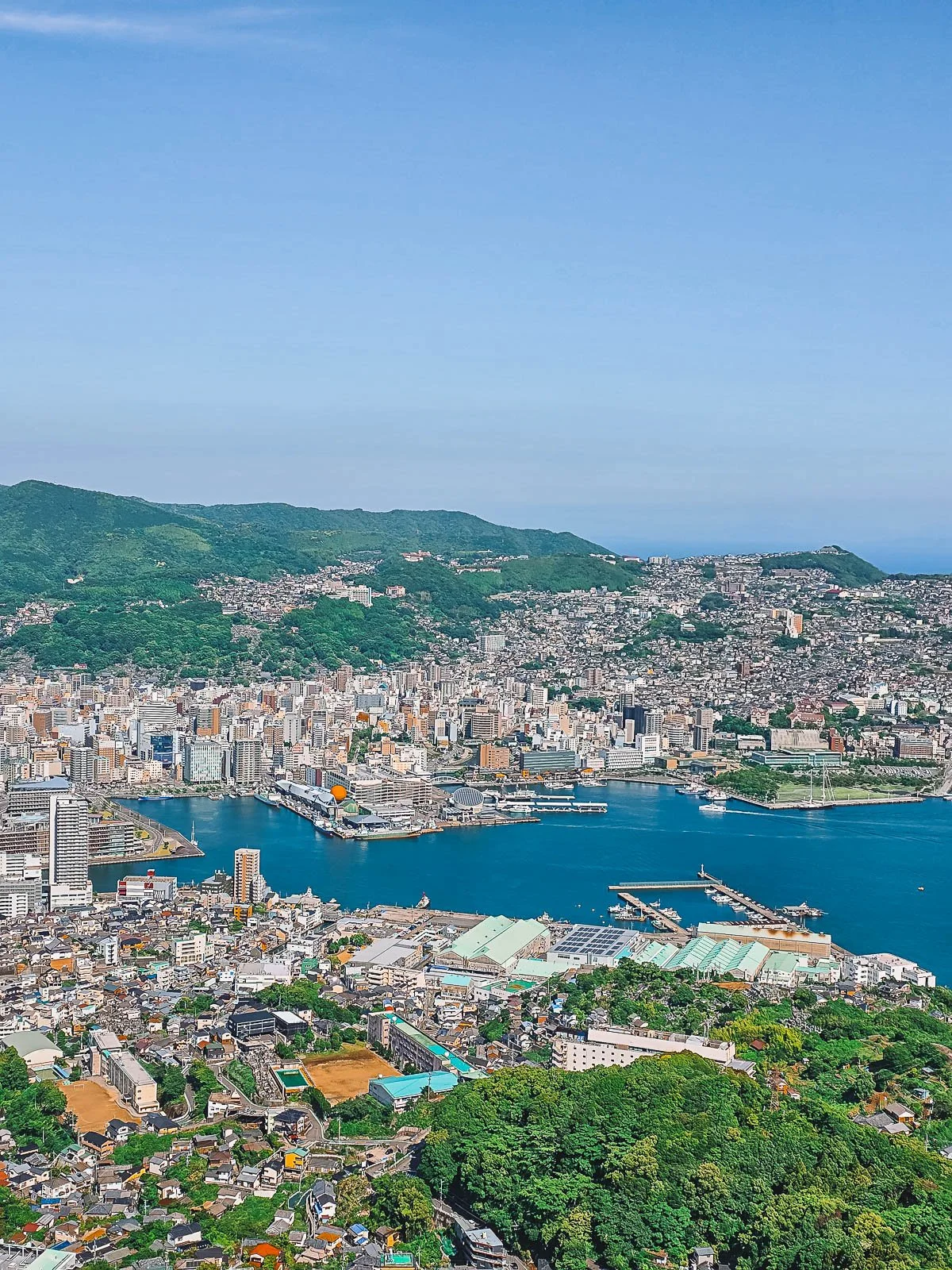
Nagasaki harbour
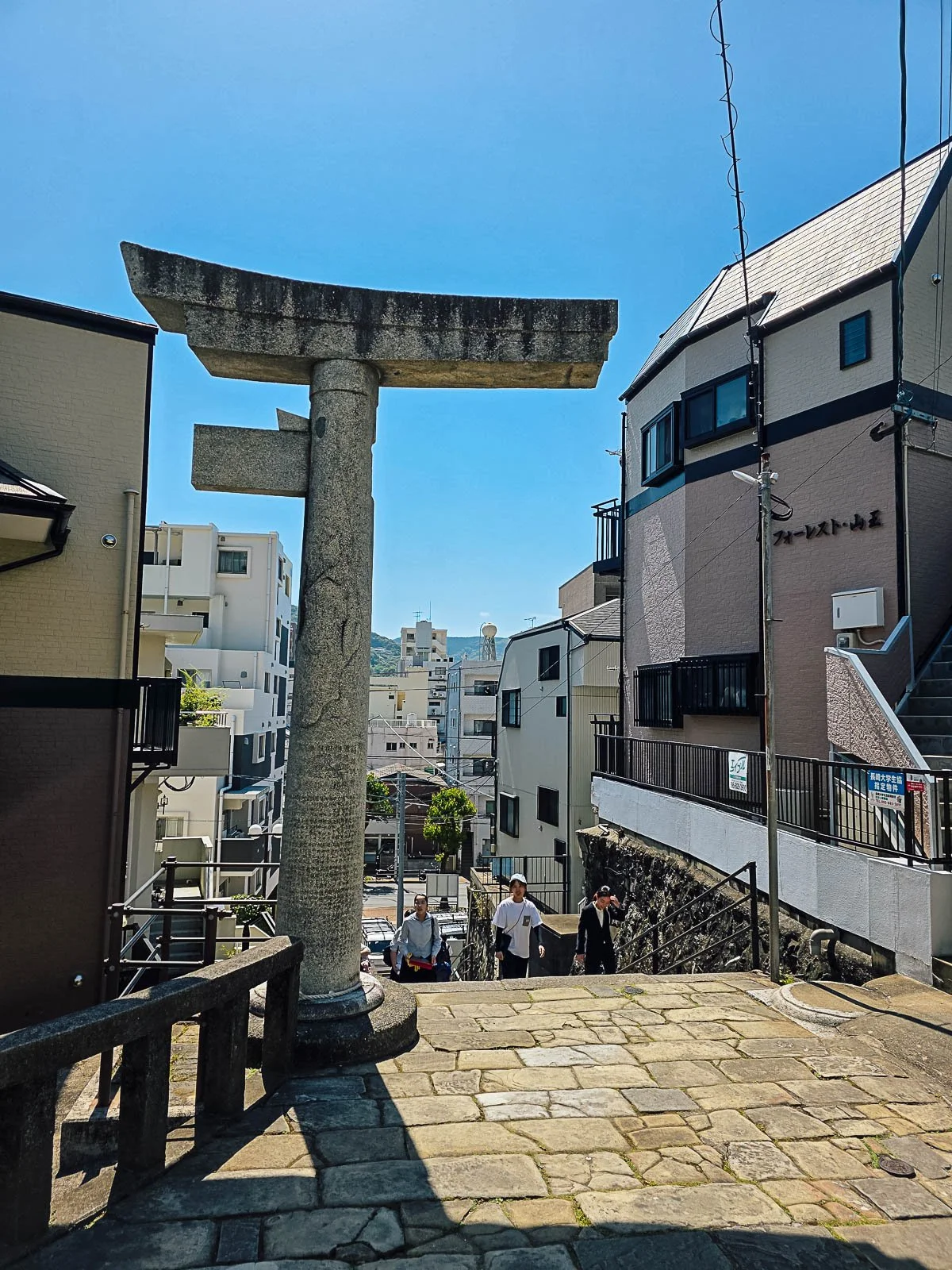
the single legged tori gatet in Nagasaki
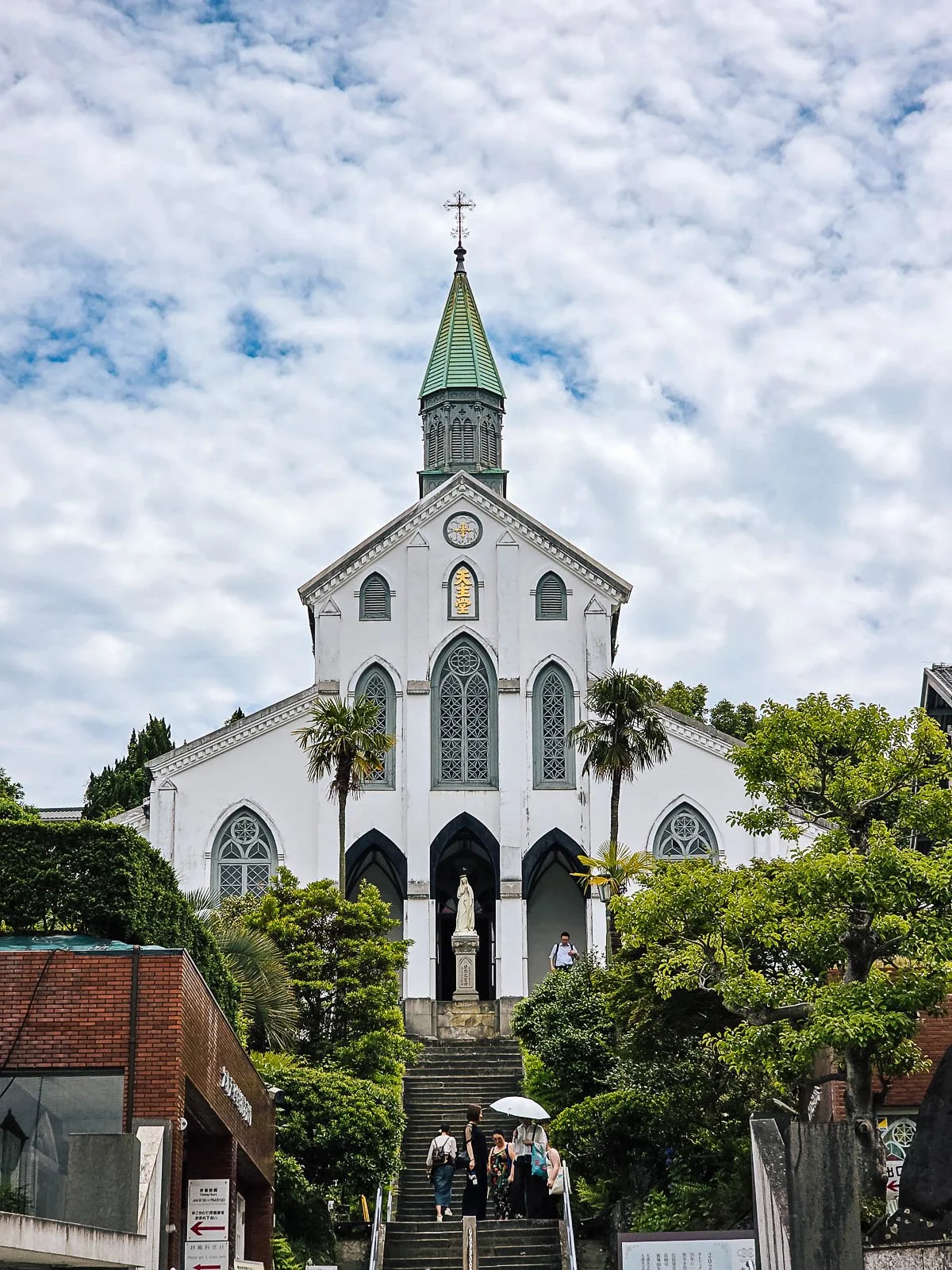
Oura Cathedral
Kagoshima
Where we stayed: Henn na Hotel Premier Kagoshima Tenmonkan
Another underrated city, although I think I would have enjoyed Kagoshima more if I’d been there for longer and explored some of the surrounding prefecture.
It also rained for the entire 2 days we were there… and when I say rained, I mean poured!
Our main reason for visiting was to take the ferry over Kagoshima Bay and visit the active volcano: Sakurajima. However, the weather was so bad that I never saw the top of the volcano because it was obscured by clouds and rain!
However there are plenty of other things to do in and around Kagoshima. Thanks to the volcanic activity, there are countless onsen hotels, day hot springs, foot paths, hot sand baths and more to enjoy!
Top things to do in Kagoshima:
Take the ferry to Sakurajima: go up to the volcano view point, enjoy the onsen or foot bath onsen, visit the museum or go on a hike
See the city and the volcano from Shiroyama Park Observation Deck
Explore the shops and eateries in Higashisengokucho
Have a hot sand bath at Saraku Sand Bath Hall
Or enjoy Tamatebako Open-air Onsen
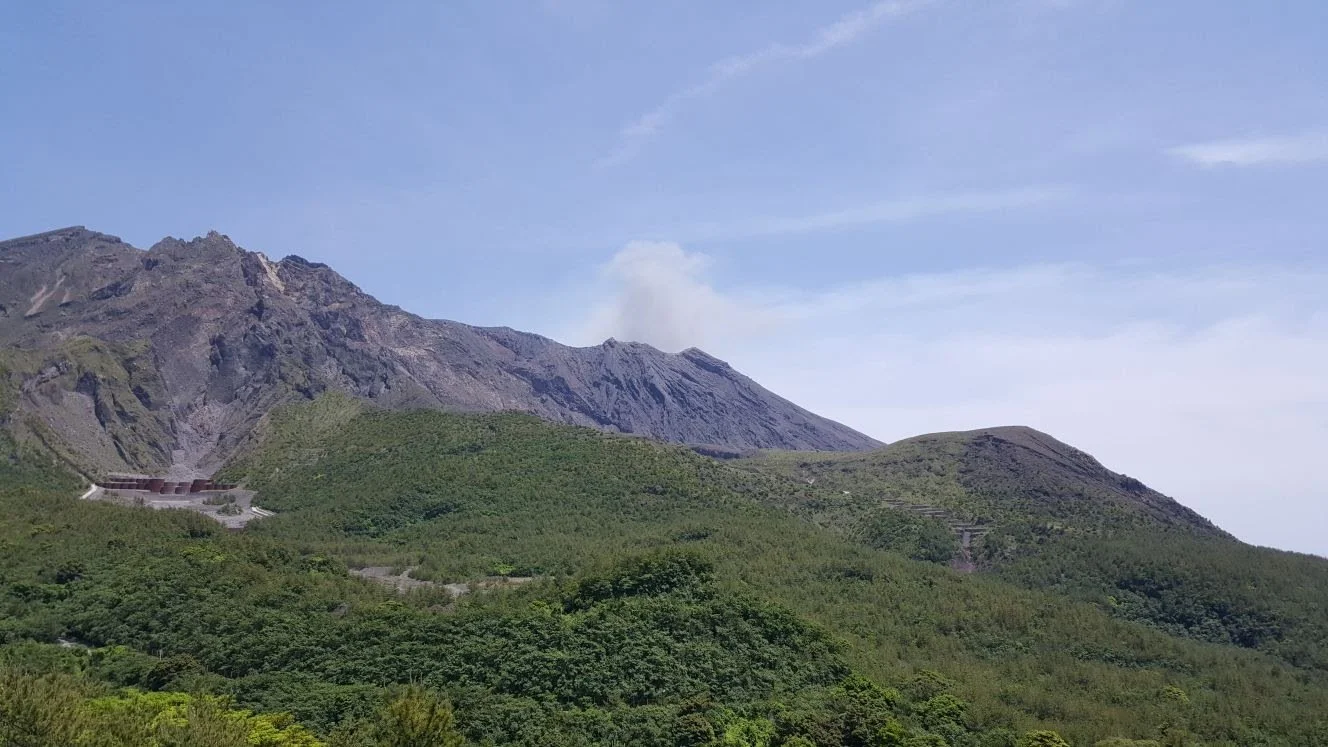
Smoke plumes from the volcano on Sakurajima
Miyazaki
Where we stayed: ANA Holiday Inn Resort Miyazaki
We actually didn’t spend any time in Miyazaki city, but stayed a bit further south along the coast and used it as a base to explore the prefecture and coastal area.
Miyazaki is a popular spot for surfers, so definitely spend longer there if that’s your scene!
Top things to do in and around Miyazaki:
Aoshima shrine - a shrine on a tropical island reached by a bridge
Nichinan Coast Road is gorgeous to drive
Sun Messe Nichinan - the only authorised Moai status outside of Easter Island
Udo Jingu Shrine - a stunning shrine in a cave next to the sea
Ajisai Park is famous for its hydrangeas in late spring/early summer
Hayahirakitohiuri Shrine - the most incredible and memorable part of our trip (see my section about it above)
Minato Shrine - blue torii gates on the beach
Amanoiwato Shrine Nishi Hongu - mentioned above but another shrine in a cave near Takachiho
Takachiho Gorge is also in Miyazaki prefecture and I’ve spoken about it in the section above
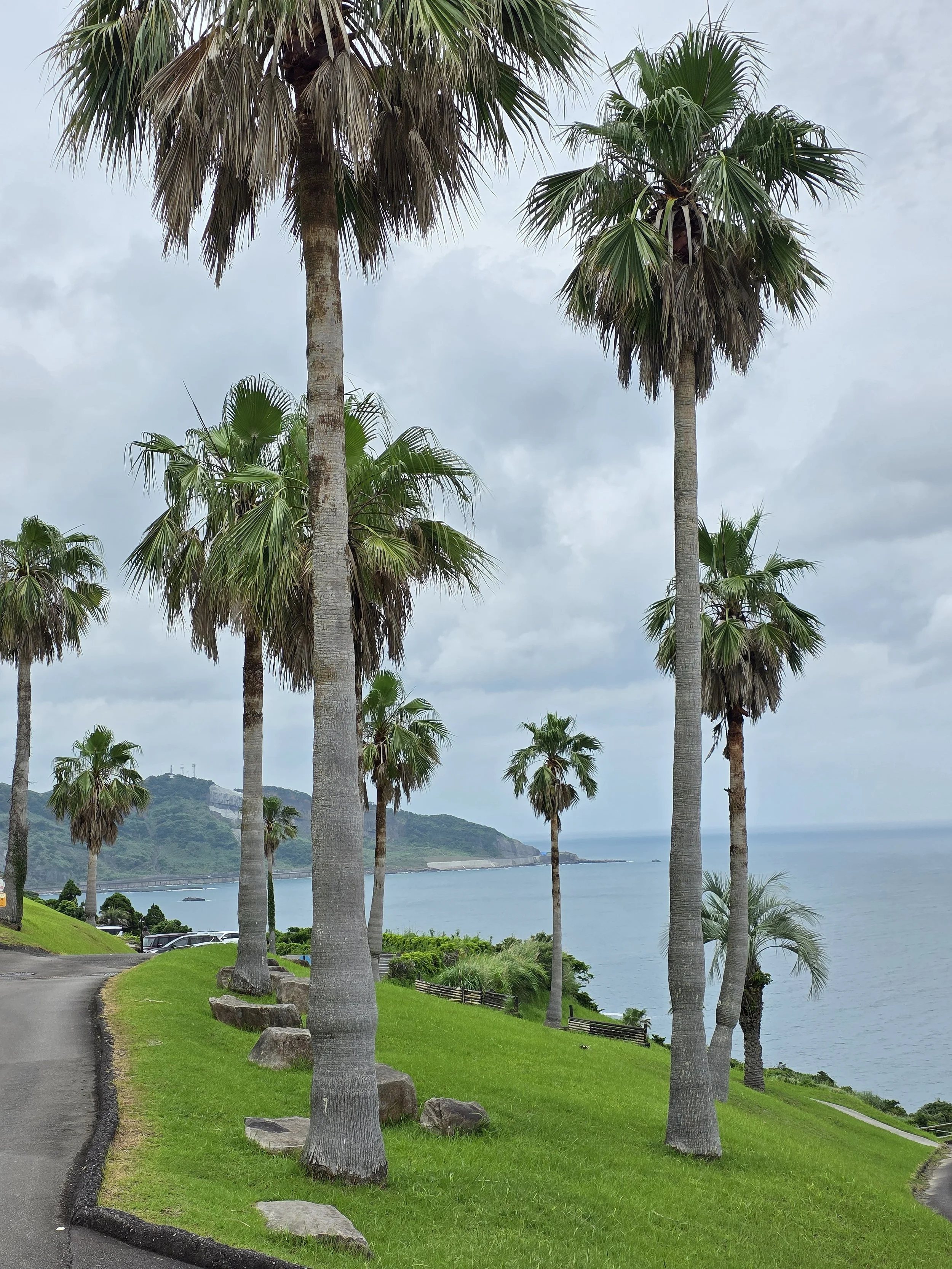
Miyazaki coastline
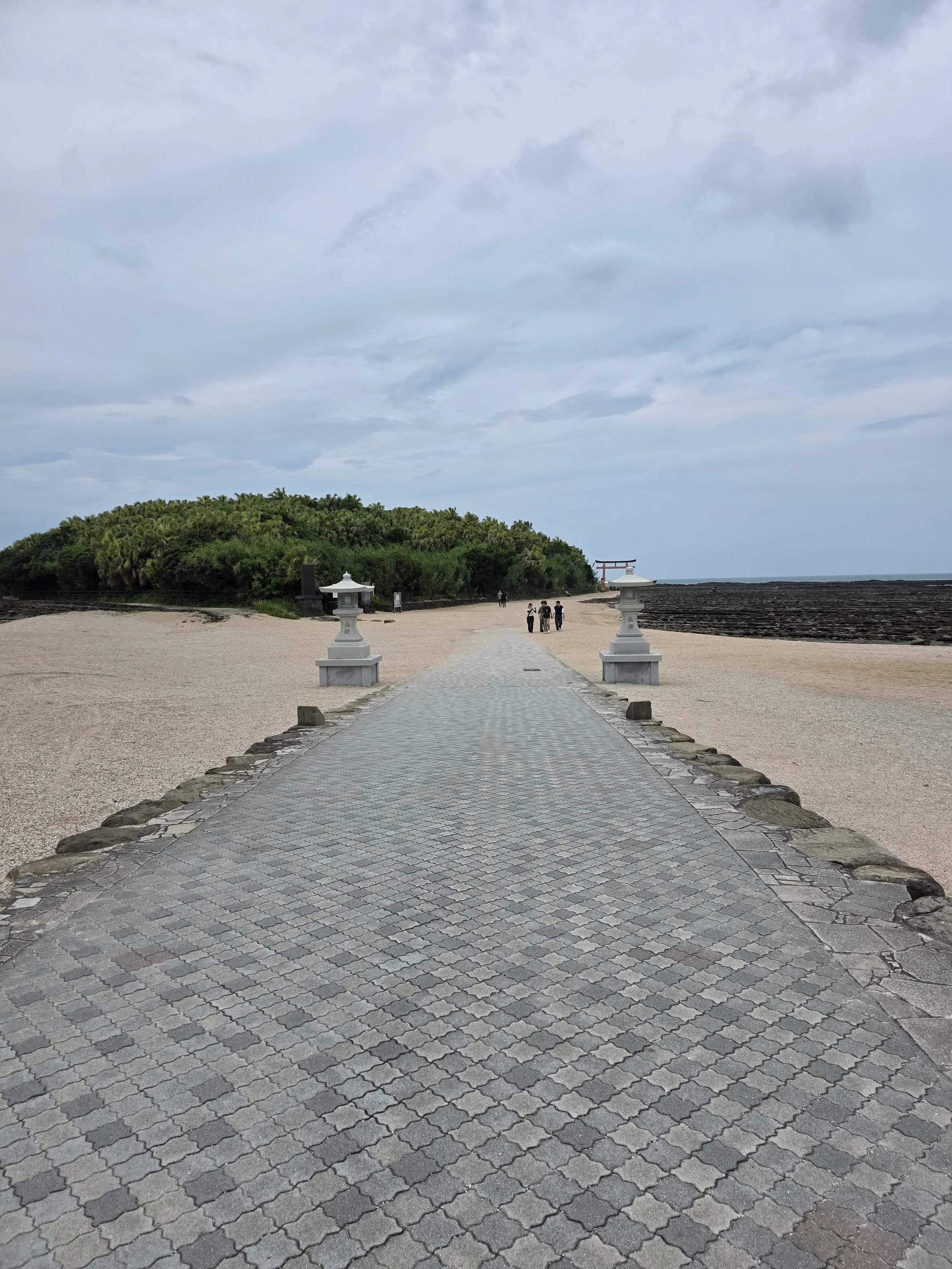
the walkway connecting the mainland to the island and Aoshima shrine
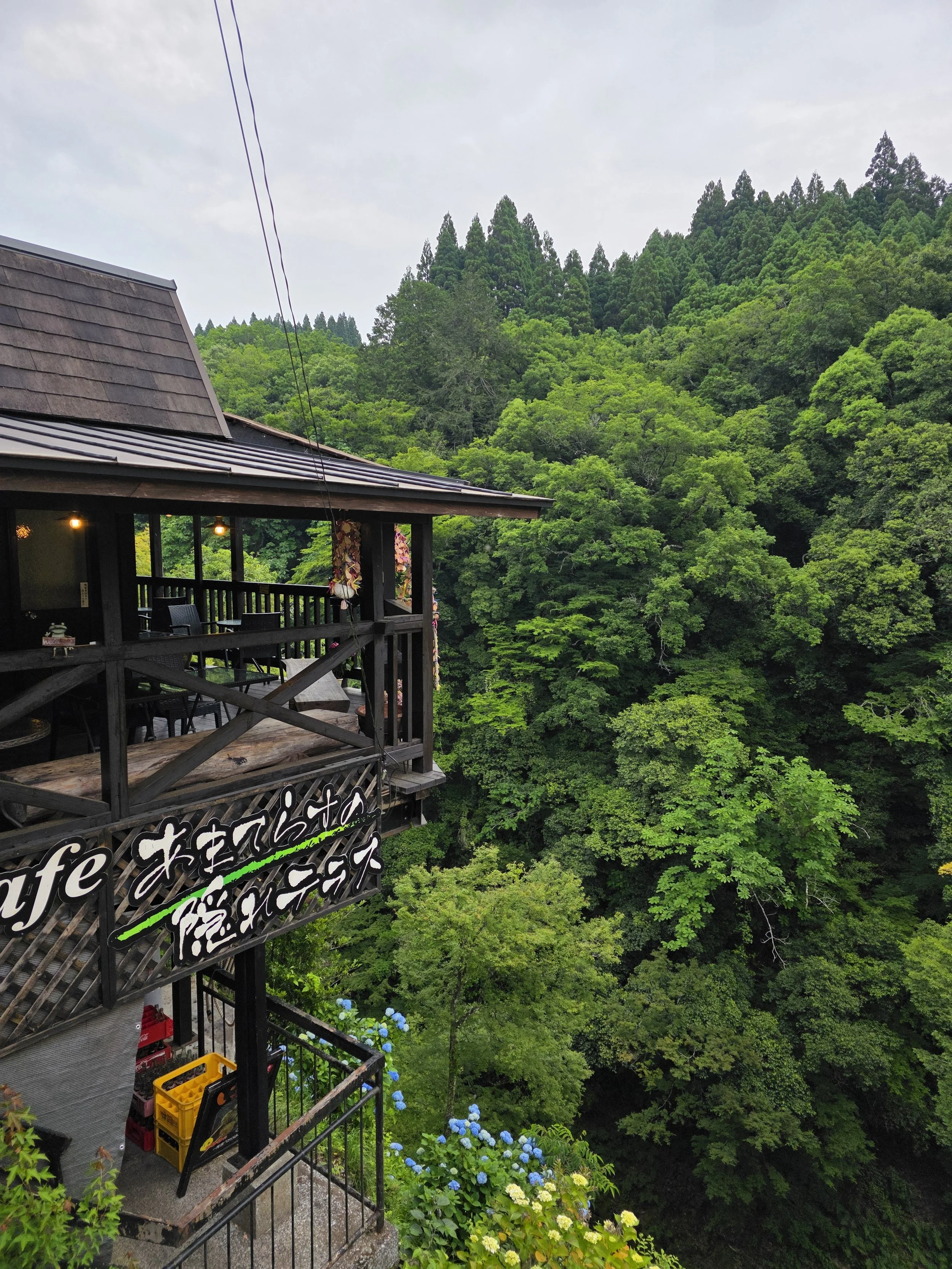
A restaurant over a gorge in inland Miyazaki
Beppu
Where we stayed: AMANEK Beppu YULA-RE
Beppu is the largest hot spring town in the whole of Japan with more than 2,000 onsens.
Around the city you’ll see steam rising from drains, from houses and from the ground. And if you head up to the Yukemuri Observation Deck, you can see just how many plumes of steam there are all over the city.
We spent 2 nights in Beppu and it was the perfect amount of time, there’s lots to do but also you need to make time to explore and enjoy the onsens, whether that’s one at your hotel, day use onsens or public baths.
We went to Sakura-yu day-use onsen and it was amazing. You pick and pay for the room you want, then you have it for yourself for 90 minutes. It includes a changing area, a shower area and the doors open so you can enjoy the open air while you’re in the onsen. This day-onsen even has a cat as a manager!
The best things to do in Beppu:
Visit the Hells of Beppu
Go to a day use onsen
See the city view from Yukemuri Observation Deck
Visit Kifune Castle
Enjoy foot baths
Eat Jigokumushi Kobo - this is Hells steamed food, literally food cooked with the steam of the hot springs
Beppu Tower
Explore the downtown area about Yasaka Street where you’ll find lots of izakayas
Read my full Beppu itinerary here.
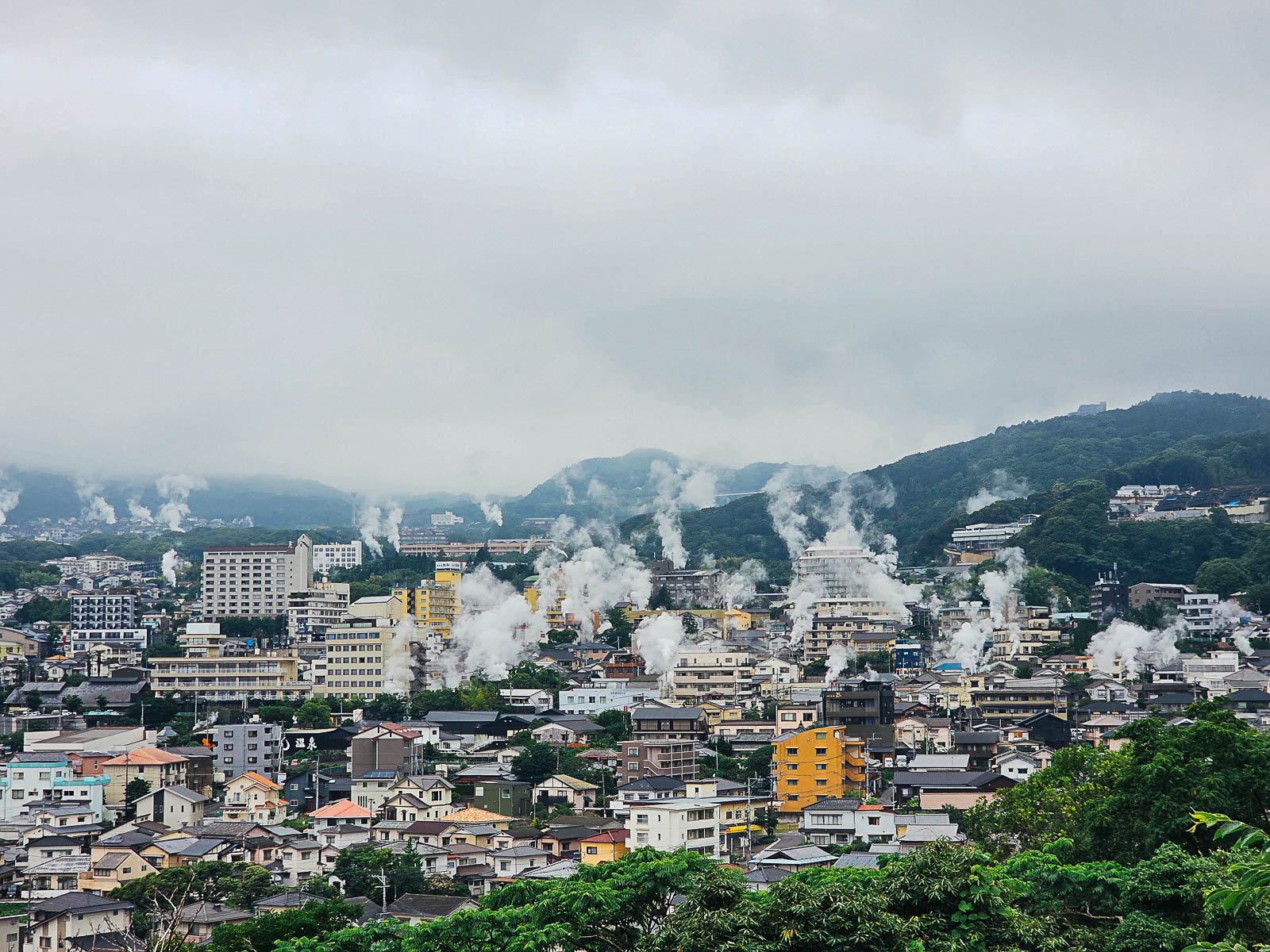
Beppu city with steam rising from the hot springs around the city
Kitakyushu
I don’t think I’d say that Kitakyushu is a must-visit on a Kyushu itinerary, but if you have extra time in Fukuoka, it’s worth a day trip. Or if you’re coming on the Skinkansen from Osaka then you could also stop here.
We did it as a day trip from Fukuoka which amazingly is only 15 minutes away if you take the Shinkansen. But if you drove to Kitakyushu it would take 2 hours!
We mostly went to Kitakyushu to see the Toto Toilet Museum (yes, the famous Japanese toilets are from Kitakyushu and are still manufactured there). The museum is free to visit and was opened to celebrate the company’s 100 year anniversary.
Read how we spent the whole day in Kitakyushu here.
Best things to do in Kitakyushu:
Toto Toilet Museum
Kokura Castle and Japanese Gardens (you can do a tea ceremony here)
Yasaka Shrine
Moji Red Brick Place
Mojiko Retro
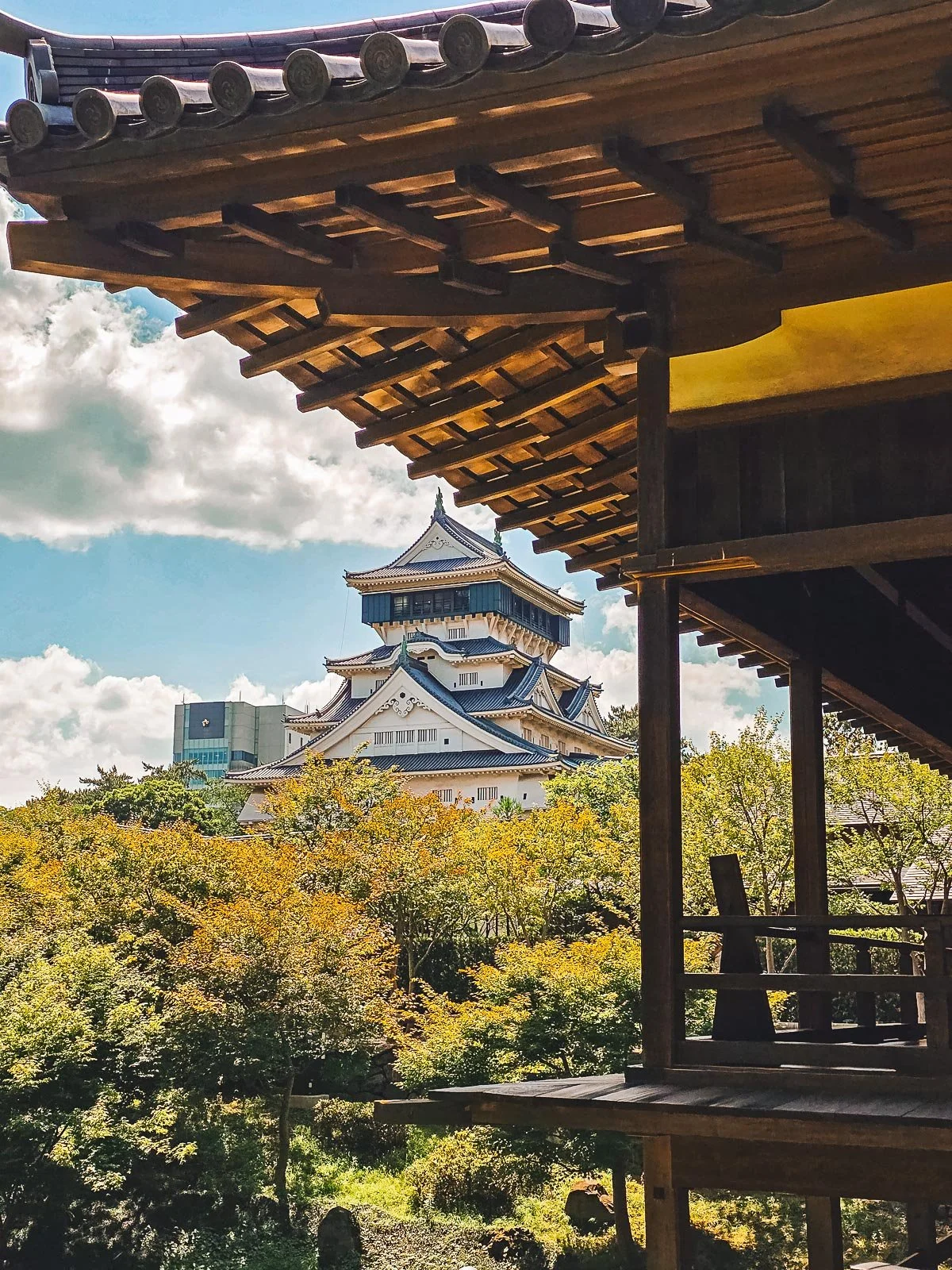
Kokura Castle in Kitakyushu
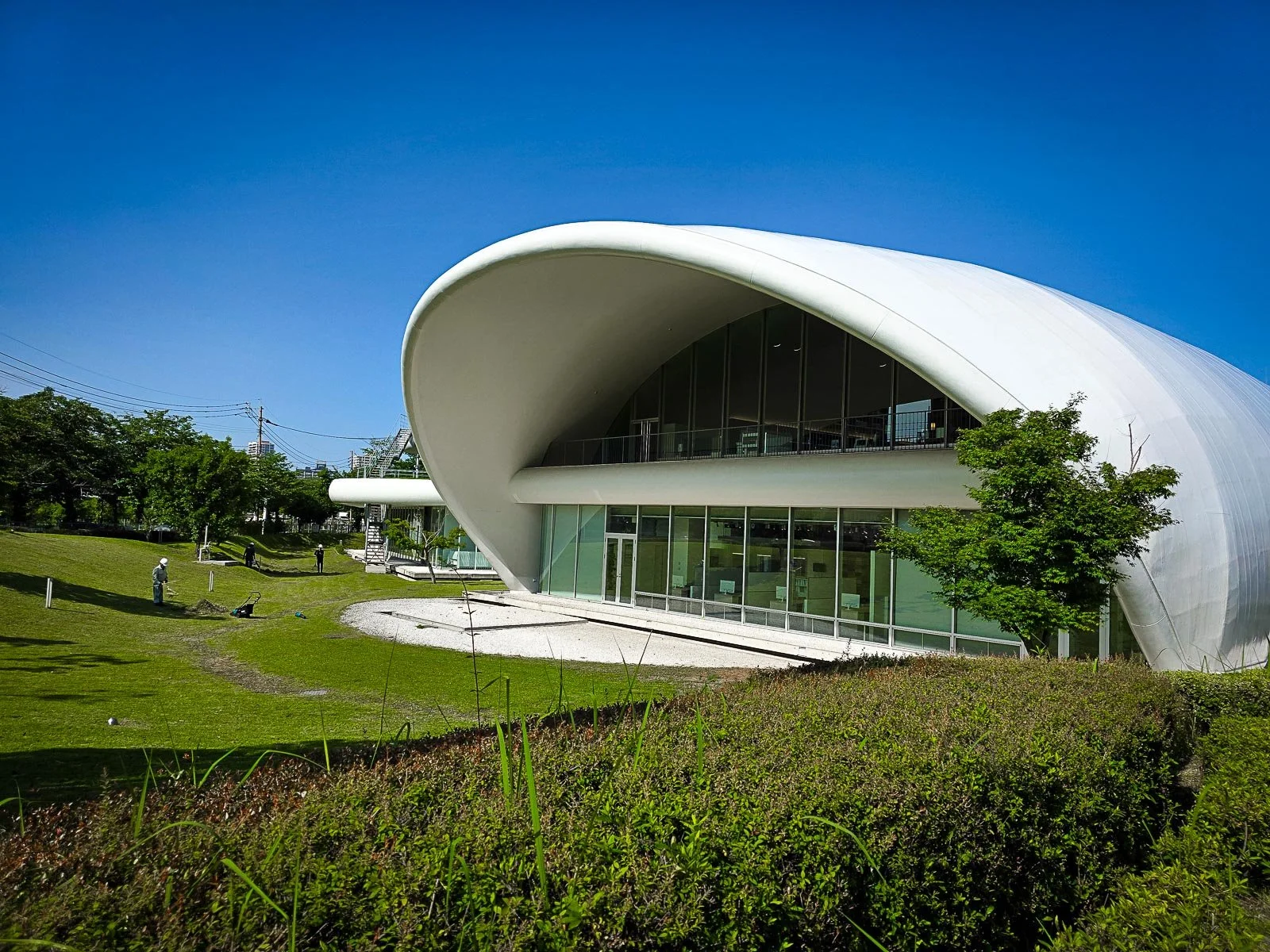
The Toto toilet mueum
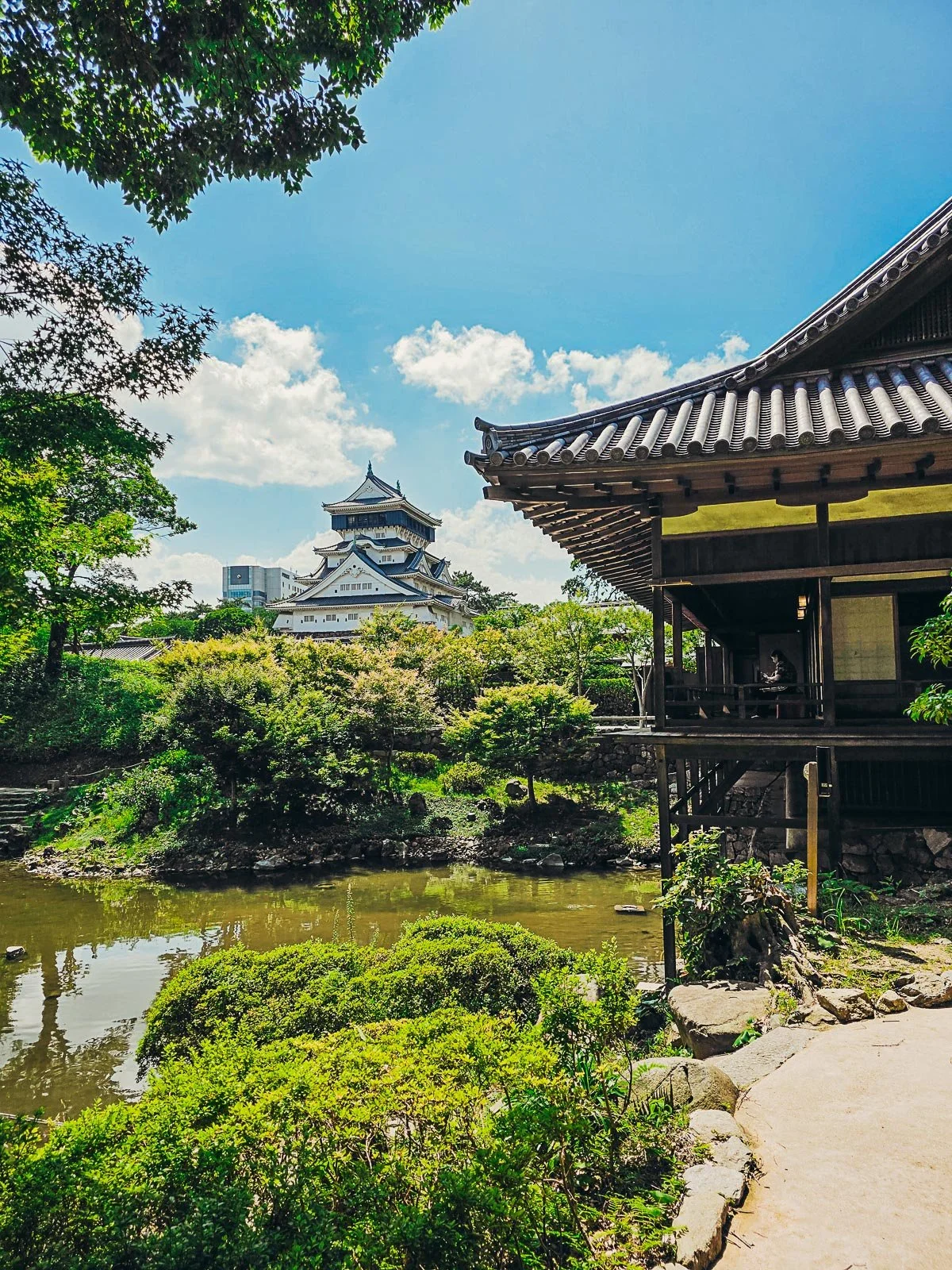
Japanese gardens
Summary: the best things to do in Kyushu, Japan
I hope this travel guide helps you plan what to do in Kyushu and if you’re wondering, is Kyushu worth visiting, the answer is a resounding yes!
Kyushu has been my favourite Japan road trip we’ve ever done and even though these are some of the best areas to visit in Kyushu, there is truly so much to see that this guide can’t do it justice - but if anything it’s encouraged me to go back again at another time to see even more of this region!
